Alright, so here’s a little story for you. Picture this: you’re trying to decide what to have for dinner. You really can’t choose between sushi or pizza. Both sound amazing, right?
Now, imagine if you had some fancy way of figuring out the best choice based on past meals. That’s kinda what “mean variance” does in science and decision making! It’s like your personal chef but for data.
Basically, mean variance helps us weigh options by looking at risks and rewards. It’s not just about picking dinner; it’s a big deal for all sorts of decisions in research and beyond.
So, let’s take a closer look at how this math-y concept pops up everywhere—even in your takeout choices! Cool, huh?
Enhancing Decision-Making in Science: The Role of Mean and Variance in Data Analysis
When scientists dive into a research project, they often find themselves knee-deep in data. And then comes the need to make sense of it all. So, how do researchers sift through complex information to arrive at solid conclusions? Well, that’s where the concepts of mean and variance come into play.
Let’s start with mean. Basically, it’s just the average of a set of numbers. If you have five test scores—80, 85, 90, 95, and 100—you can find the mean by adding those scores up (yep, that’s 450), then dividing by how many scores there are (which is 5). So the mean here would be 90. This number gives you a quick snapshot of where most data points land.
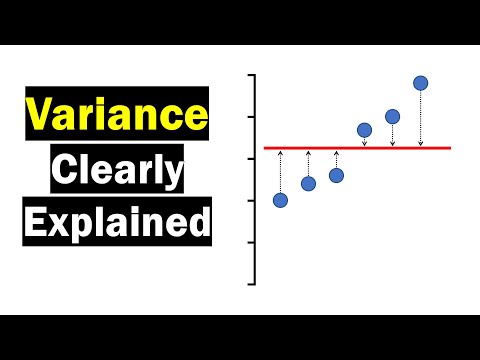
Now, onto variance. This one’s a bit trickier. It tells you how spread out your data is from that mean. Think about it like this: if all your test scores were exactly 90, your variance would be zero—there’s no spread! But if those scores ranged widely from 70 to 100? That shows a higher variance. To calculate it, you take each score’s difference from the mean (in this case, each score minus 90), square those differences to avoid negative values (because who wants math drama?), add them up and divide by the number of scores.
So why do these two concepts matter when making decisions? Here are some key points:
- Understanding Trends: The mean helps identify general trends within data sets while variance sheds light on consistency or inconsistency.
- Risk Assessment: In fields like finance or healthcare research, knowing both mean and variance can help assess risks better.
- Aiding Comparisons: By using mean and variance together, scientists can compare different experiments or interventions more effectively.
- Simplifying Complex Data: It turns piles of numbers into digestible bits; letting scientists grasp what’s going on at a glance.
Let me tell you about a time I was really struck by how important this was for decision-making. A friend was working in environmental science and had gathered water quality data from several lakes. At first glance, her data seemed promising—most lakes had averages indicating good quality water based on their tests. But when she dove deeper into the variance of her results? Wow! Some lakes showed huge swings in quality depending on location and time sampled. Realizing that made her rethink which lakes needed intervention—and which could wait—saving time and resources.
So yeah, using mean helps with understanding overall performance while variance reveals inconsistencies hidden below surface level stats. They’re like two sides of the same coin in scientific decision-making.
In short, blending these two measures enhances not only scientific research but also everyday decisions we all face! You could say they form a solid foundation for sound conclusions in any field driven by data. And that’s pretty awesome if you ask me!
Understanding the Mean-Variance Decision Rule: A Key Concept in Scientific Decision-Making
So, let’s talk about the **Mean-Variance Decision Rule**. It’s a concept that pops up a lot in scientific decision-making and can be super helpful in figuring out the best choices when you’re dealing with uncertainty. Imagine you’re trying to decide between two different study methods for your next exam. You’d want to know not just how well you might do, but also how risky each method is. That’s where this rule steps in.
The mean-variance approach basically looks at two main things: the **mean**, which is like the average outcome, and the **variance**, which tells you how spread out those outcomes are. In simpler terms, it helps you weigh the rewards against the risks when making choices.
Now, let’s break it down a bit more with some key points:
- Mean: This is all about what you can expect your results to be on average. For example, if Method A gives an average score of 85% and Method B gives 80%, then Method A looks better at first glance!
- Variance: This part measures how much your results fluctuate around that average. So if Method A has a variance of 5 and Method B has 1, you’re risking more with Method A even if its average is higher.
- Risk vs Reward: The key idea here is to balance these two factors carefully. A high mean isn’t always worth it if there’s a huge variance—think about whether you’re okay with unpredictability.
Let me give you an example from research to make this clearer. Imagine scientists are studying a new drug’s effectiveness. They want to know not only how well it works (the mean effect) but also how variable those effects are across different patients (the variance). If Drug A shows promising results on average but causes extreme side effects in some cases (high variance), researchers might hesitate to recommend it right away despite its good averages.
And here’s something interesting: even though scientists love numbers and data, human emotions sneak into these decisions too! Picture this—you’ve been studying hard for weeks, but your grades have been all over the place because of tricky tests or personal stuff happening in life. If you were using the mean-variance decision rule here, you’d think twice before picking that last-minute cram session method that could end up stressing you out even more.
In essence, **the Mean-Variance Decision Rule** is like having a little internal guide when faced with tough choices in science or life in general. It nudges you to consider not just what seems good on paper but also how likely those results are to actually happen—and whether you’re ready for any surprises along the way.
So next time you’re weighing your options—like choosing between two projects or deciding on an experiment—remember this handy framework! It’s all about finding that sweet spot between potential gains and their corresponding risks.
Understanding Mean and Variance: Key Statistical Concepts in Scientific Research
Understanding mean and variance is crucial in the world of scientific research. These two concepts help us make sense of data, which is like trying to find the melody in a cacophony of sounds. So, let’s break it down!
Mean is basically what you’d call the average. To get this, you take all your data points and add them up, then divide by how many points you have. For instance, if you’re looking at how tall five friends are—let’s say they are 150 cm, 160 cm, 170 cm, 180 cm, and 190 cm—you’d add those numbers together (150 + 160 + 170 + 180 + 190 = 950) and then divide by five. The mean height here would be 190—950/5 = 190 cm!
But why does this matter? Well, using the mean gives researchers a quick snapshot of what’s typical in their data set. But it has limits. If one friend was really tall or short compared to everyone else—like if one friend was actually a giant at 250 cm—it could skew the mean significantly! That leads us to variance.
Variance measures how much your data points differ from the mean. If everyone’s height is pretty similar, variance will be low; if there’s a big range—like having that giant friend—variance will be high. To calculate it:
1. Find the mean (you already did that).
2. Subtract the mean from each data point and square the result.
3. Then average those squared differences.
Let’s break it down with our earlier example:
– Mean = 190 cm.
– Differences from the mean: (-40, -30, -20, -10, 0) for those non-giant friends.
– Squared differences: (1600, 900, 400, 100, 0).
– Average those squared differences for variance! (1600 +900 +400 +100)/5 = **400**.
So now you know that this group has some amount of variability around their average height!
What makes variance so cool is that it helps with understanding how consistent or reliable your data is! If you’re conducting an experiment and see low variance in results across trials? That means there’s real reliability there—you can trust your findings.
In scientific research and decision-making:
Mean helps identify trends and central tendencies while variance reveals reliability and consistency within the data set. When researchers present findings or make decisions based on averages without considering variability? They might end up with flawed interpretations or bad conclusions.
This combo of mean and variance plays a significant role in fields like psychology or medicine where understanding human behavior or treatment effectiveness is vital!
In summary: these statistical concepts are fundamental tools for researchers navigating through mountains of data—and thankfully they give us insight into what might just be noise versus something truly meaningful in our studies!
Okay, so let’s talk about mean variance. Sounds a bit dry at first, but stick with me. It’s actually super relevant for a ton of stuff in scientific research and decision-making.
So, imagine you’re back in school, right? You’re waiting for your math test results. You hope you did well, maybe you think you nailed it! But then, as you look around, some friends are confident while others are sweating bullets. The thing is: it’s not just about the average score everyone expects. It’s also about how those scores vary—like some people ace the test while others struggle big time.
That brings us to mean variance. Basically, it’s a way to measure that consistency—or inconsistency—in data. In science, researchers gather all kinds of information. Think of it like collecting tons of puzzle pieces without knowing how the finished picture looks yet. The mean gives you a rough idea of where most of the data lies—like finding the center of your puzzle—but variance tells you how spread out those pieces are.
Let’s say scientists are studying a new drug’s effectiveness. If they look at mean recovery times and notice that most patients recovered quickly but some took ages or didn’t respond at all—that kind of variance is crucial info! A drug might have a decent average result but if the results aren’t consistent across different patients, well, that’s something to think about.
You see it in decision-making too! Picture this: you’re deciding between two options for lunch—sushi or pizza. Sushi usually makes you feel fancy, but sometimes they overdo it on the wasabi! Pizza is always safe… usually tasty without surprises. If someone tells you sushi has an average satisfaction score of 8/10 but sometimes it tanks at 3—while pizza consistently sits around 7—you might lean towards that reliable slice instead.
But here’s where it gets emotional too. In high-stakes scenarios—like medical research or climate studies—it isn’t just numbers on a page; real lives hang in the balance based on these decisions. Researchers must grapple with data that can be ambiguous and unpredictable because understanding not just what happens on average but how much things vary is critical to making responsible choices.
So yeah, mean variance isn’t just some abstract math concept; it affects how we understand risks and make choices in science and everyday life alike. It teaches us to look deeper than averages and ask ourselves: what does this really mean for people? In doing so, we not only become better researchers or decision-makers—we become more thoughtful humans navigating uncertainty together!