So, picture this: you’re at a family gathering, and everyone’s raving about their amazing cooking skills. Your cousin makes the best lasagna, your aunt bakes cookies that could make an angel cry, and then there’s your Uncle Bob, who somehow burnt water. Seriously! It’s like a culinary rollercoaster in there.
Now, what if I told you that figuring out why food tastes different is kinda like what scientists do with data? Yup! Variance models in research are all about understanding the differences—like why some lasagnas are heavenly and others taste like cardboard.
Anyway, in the vast world of scientific research, variance is crucial. It’s not just about averages; it’s about the spread of data points and how they relate to each other. Think of it as finding the hidden stories behind numbers.
So let’s go on a little journey together. We’ll break down these variance models and learn how they help us make sense of all that data swirling around us. Like, trust me—you’ll want to know more!
Understanding Variance in Scientific Research: A Comprehensive Guide to Interpretation and Implications
Variance in scientific research is a fundamental concept that helps us understand how data points differ from one another. Have you ever noticed how sometimes your friends’ opinions on a movie can be all over the place? One person thinks it’s the best thing since sliced bread, while another can’t stand it. That spread of opinions is a bit like variance in data—some values are far from others, and that tells us something important.
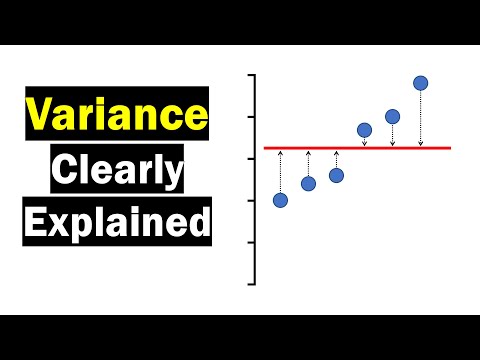
So, what exactly is variance? It’s a statistical measurement that indicates how much individual data points deviate from the average (or mean) of a dataset. Basically, if you have a small variance, most of your data points are pretty close to the mean. If you’ve got high variance, however, the numbers are all over the place.
Now let’s talk about why variance matters in research. You know those studies where scientists give volunteers different doses of a drug? They analyze how effective it is by looking at responses across different doses. If everyone responds similarly, you get low variance; if there’s a wide range of reactions, that’s high variance! This spread can tell researchers whether they’re onto something or if they need to dig deeper.
Also, variance isn’t just about differences; it can also reflect uncertainty in measurements or experimental conditions. Picture this: you’re measuring how tall plants grow under different light conditions. If your measurements vary wildly each time you record them, it might indicate an issue with your setup or external factors at play.
When analyzing variance, researchers often use different models like ANOVA (Analysis of Variance) or regression models to interpret the data meaningfully. These tools help to determine whether differences among groups are statistically significant or just random noise.
Some key implications:
- Improved accuracy: Understanding variance helps improve experimental designs by identifying sources of error.
- Bigger picture insights: It allows scientists to see trends and patterns which might otherwise go unnoticed.
- Guides decision-making: High variance can suggest more investigations are needed before reaching conclusions.
Let’s say you’re looking into the effects of exercise on stress levels among college students. If some students report feeling much less stressed after working out while others feel no change at all, that difference could guide future studies on personalized fitness programs aimed at reducing stress.
In summary, understanding variability isn’t just about crunching numbers; it’s about interpreting what those numbers mean for real-world phenomena! So next time you hear someone mention “variance,” remember—it’s kind of like being aware that not everyone’s opinion will mirror yours and that’s perfectly okay! Embracing those differences can lead to some fascinating discoveries in science and beyond.
Exploring the Three Types of Variance in Scientific Research: A Comprehensive Overview
When you’re diving into the world of scientific research, one term that keeps popping up is variance. But what does it really mean? Basically, it’s all about understanding how much something varies or spreads out. Let’s break down the three key types of variance you’re likely to encounter: total variance, within-group variance, and between-group variance.
Total variance is the overall spread of your data. Imagine throwing a handful of darts at a board. If all your darts land close together, your total variance is low. But if they scatter all over the place, that’s high variance! Total variance helps researchers see how much variation exists in their measurements or observations.
Within-group variance, on the other hand, looks at how individual data points differ from each other within a specific group. Think about it—let’s say you measure the heights of five basketball players on one team. Some might be towering giants while others are just tall. The differences in their heights represent within-group variance. You get insights into how consistent or varied a group is.
Now, let’s move to between-group variance. This one compares different groups to see if there are significant differences between them. Say you’re studying two basketball teams from different schools—if one team is generally taller than the other, then there’s a notable between-group variance at play here! It helps researchers understand if different conditions or categories lead to varied outcomes.
The beauty of these types of variances lies in their application. Researchers use them to build what we call models. These models can help predict outcomes under different scenarios based on observed data patterns. For example, let’s say you’re researching plant growth under various light conditions; using these variances can help you draw conclusions about what works best!
You could also think of these variances as tools in a toolbox for analyzing data. Total variance gives you the big picture, while within- and between-group variances dig deeper into specifics and comparisons.
In science, understanding these types helps not only in interpreting results but also in designing better experiments and making informed decisions based on solid evidence! So next time you come across these terms in research papers or class discussions, you’ll know just what they mean and why they matter.
Understanding the Three Types of Analysis of Variance in Scientific Research
Variance analysis can feel like a beast to tackle, but that’s just because it’s really about understanding variability in data. Imagine you’re at a party, and you can see three groups of people chatting. Each group represents a different type of analysis of variance (ANOVA). Let’s break this down into three simple types: **one-way ANOVA**, **two-way ANOVA**, and **repeated measures ANOVA**.
One-Way ANOVA is like checking out how different schools perform on math tests. You have students from various schools—these are your groups—and you want to see if one school consistently outperforms the others. So, you throw out the test scores for each school and compare the averages. If there’s a significant difference, it tells you that at least one school does better in math than the rest. Simple enough, right?
- Think of it as asking: “Is School A’s score different from School B?”
- This type gets used when you have only one independent variable affecting your dependent variable.
Now, let’s get into something a bit more complex: Two-Way ANOVA. Imagine you’re not just looking at scores from different schools but also considering grades and gender. Here, you’d have two independent variables—school (Group A vs Group B) and gender (boys vs girls). This method helps you figure out if there are interaction effects too—like maybe boys in School A are performing way better than boys in School B because of their teaching method.
- You’re asking questions like: “Does each school have different performance based on gender?”
- This model helps analyze whether the effect of one factor varies depending on another factor.
Then we have Repeated Measures ANOVA. This one’s really special; think of it as checking how a group improves over time. Say you’re measuring how much weight people lose over several months while following the same diet plan. You measure their weights every month for six months—all from the same group of people! It’s neat because it controls for individual differences since everyone is basically their own control.
- You’re looking at changes within the same subjects across multiple conditions or time points.
- This allows for stronger conclusions about any interventions or treatments being tested.
So yeah, whether you’re testing student performances, cooking up some tasty recipes while tracking who enjoys each best, or monitoring health outcomes over time, understanding these three types of ANOVAs helps researchers pull insights from messy data! It gives clarity where there might be confusion—and that’s science working its magic!
You follow me? Just remember that these analyses are all about comparing means across different groups or conditions while keeping an eye on how variation plays its part in our findings!
So, variance models, huh? At first glance, they can seem kind of boring, but trust me, they’re super important when it comes to scientific research and data interpretation. I remember back in college when I first learned about them. We were analyzing a dataset for an experiment on plant growth. The group was all pumped and eager to show our results, but many of us were confused about why certain plants thrived while others didn’t. That’s where variance models stepped in.
Basically, these models help us understand how data points differ from one another. Think of it this way: if you’re measuring the heights of your friends, variance tells you how spread out those heights are. Are most of your friends around the same height? Or do you have a tall buddy towering over everyone? This is crucial because it helps scientists figure out if their findings are due to real differences or just random chance.
Now, why does this matter in research? Well, when we analyze data without addressing variance, we can make some really shaky conclusions. Like that time my friend confidently claimed she could predict which team would win based on their stats—only to realize later that some teams had massive ups and downs throughout the season. If she’d looked at the variance instead of focusing on averages alone, she might’ve saved herself some heartache.
In scientific studies, high variance might suggest that there are other factors at play—like environmental changes in our plant experiment or genetic variances among species. When scientists take these factors into account with variance models, they get a clearer picture and can make more informed decisions.
But here’s the kicker: using these models isn’t always straightforward. Different types exist—like ANOVA or regression—that can feel like a maze at times! Each model has its own assumptions and limitations that can trip researchers up if they aren’t careful. So yeah, it’s not just plug-and-play stuff; you gotta know your way around a little.
To wrap things up—variance models might seem like just another statistical term at first glance but they’re like the unsung heroes of scientific research! They bring clarity to chaos and help reveal the story behind the numbers, opening doors for better understanding in everything from medicine to environmental science. So next time you’re sifting through data or watching your friends compare stats—you’ll know there’s more than meets the eye!