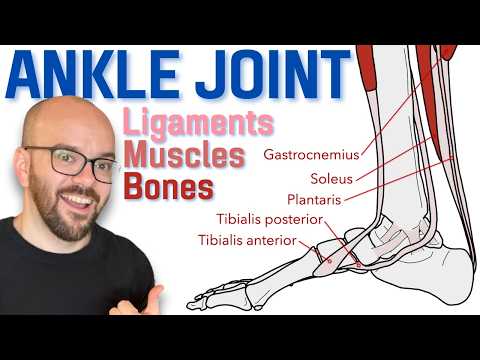
You know that moment when you trip over absolutely nothing and feel like your ankle just whispered, “Not today”? Yeah, we’ve all been there.
Well, the medial ankle is kind of a big deal in those awkward moments. It’s not just some boring anatomy term—this little part is key to how we move, balance, and do the funky chicken on the dance floor!
Imagine trying to walk on a tightrope without that medial ankle doing its thing. Spoiler: it wouldn’t end well. So let’s break down what makes this part of your body so important in the grand scheme of movement mechanics. Seriously, you’re gonna want to stick around for this!
Understanding Medial Support Structures of the Ankle: Movements They Resist and Implications for Biomechanics
The ankle is like a complex puzzle made up of bones, ligaments, and tendons that work together so you can walk, run, and play. If you take a closer look at the **medial** part of the ankle, which is the inner side, you’ll find some really important support structures. These elements help keep your movements stable and prevent injuries.
To start with, let’s talk about some key parts. The **deltoid ligament** is one of the main players here. This triangular-shaped ligament provides stability to the ankle by resisting excessive movements that could lead to sprains or avulsions—basically when part of your bone tears away from its attachment point due to tension on the ligament.
***Movements they resist:***
– **Eversion:** This happens when your foot rolls outward. It sounds harmless until you realize it can lead to instability and injury! The deltoid ligament resists this motion.
– **Excessive dorsiflexion:** You know that motion when you’re up on your toes? Too much bending back at the ankle can strain ligaments, but medial support structures lessen this risk by keeping everything in check.
Now, why does this matter for biomechanics? Well, every time you take a step or change direction while running—think soccer or basketball—the medial structures play a key role in ensuring stability. They help maintain alignment and absorb shock as well. When these elements are strong and healthy, they improve performance; when they’re not, well… that’s when things can start to go wrong!
A neat little example: consider an athlete who suffers from chronic ankle sprains. Often, it’s because their medial support structures are either too loose or damaged. In cases like these, strengthening exercises for your ankles might be recommended to help restore some of that crucial stability.
Keeping all this in mind helps us understand injuries too. If someone tweaks their ankle during an activity—like twisting it awkwardly—the deltoid ligament could be under serious stress. You could experience pain on that inside section of your ankle after such mishaps.
So what do we take away from all this? Medial support structures are essential for proper movement mechanics at the ankle. They resist certain harmful movements and protect against injuries while also enhancing performance during physical activities.
Remember to stretch properly before those high-energy sports! Ensuring flexibility around those medial structures can go a long way in injury prevention—a little care makes a big difference!
Understanding the Medial Aspect of the Ankle: Anatomy and Function in Human Biology
The medial aspect of the ankle is, like, super important for how we move around. So, when we’re talking about the anatomy of the medial ankle, we need to cover a few key players that help us walk, run, and jump.
First off, let’s check out the **bones** involved. The main bones here include:
- Tibia: This is the larger bone in your lower leg; it supports most of your body weight.
- Fibula: The thinner bone alongside the tibia; it provides structure but bears less weight.
- Talar bone: This guy sits right above the heel bone (calcaneus) and is crucial for ankle movement.
These bones work together to form what’s known as the **ankle joint**. This joint allows for movements like flexion and extension (you know, pointing your toes up and down).
Now, moving on to **ligaments**, which are like super strong bands connecting bones. The medial side is home to a big one called the **deltoid ligament**. This ligament has several parts that help stabilize the ankle when you’re doing stuff like walking on uneven ground or making quick turns. If you’ve ever sprained your ankle, this area might have been involved—ouch!
You can’t forget about those **tendons**, too! Tendons connect muscles to bones and play a huge role in how we move our feet. For instance:
- The tibialis posterior tendon supports the arch of your foot and helps with inversion (rolling your foot inward).
- The flexor digitorum longus tendon helps with curling your toes.
Having strong tendons keeps everything working smoothly.
Then there’s also how all this anatomy relates to our overall movement mechanics. Think about when you’re walking or running—your foot needs to absorb impact while providing stability. The medial aspect helps keep your balance as you push off with each step.
I remember once I was hiking on a trail that went up and down pretty steeply. I noticed my ankles were doing some serious work! Every time I pushed off from one foot onto another or adjusted on rocky terrain, it was all thanks to that medial side keeping everything in line.
In summary, understanding the medial aspect of the ankle gives you insight into not just its structure but also its essential function in daily activities and sports. It’s pretty amazing how these little components come together for something as simple yet complex as walking!
Exploring Medial Ankle Anatomy and Its Impact on Movement Mechanics: A Comprehensive Presentation
The medial ankle may not often be the star of the show in anatomy, but it plays a pretty big role in how we move around. Basically, it’s like that unsung hero who is super important yet doesn’t always get the recognition. So, let’s break down what this area is all about and how it affects our movement mechanics.
What’s in a Name?
The term “medial” refers to the inner side of the ankle, which comes into play when we think about our foot positioning and balance. This area includes important structures like ligaments, tendons, and bones. You’ve got your tibia and fibula — those are two major bones in your lower leg that connect to the ankle. Think of them as the sturdy pillars supporting your movement.
Ligaments at Work
Ligaments are those tough bands connecting bones to other bones. On the medial side of your ankle, you’ll find several ligaments—like the deltoid ligament—that keep things stable. They help prevent excessive movement and provide support during activities like running or jumping. When you roll your ankle (ouch!), these guys can take a hit!
Tendons Matter Too
Tendons are another key player here; they connect muscles to bones and help with movement. The posterior tibial tendon is particularly crucial for maintaining arch support in your foot while walking or running. If this tendon isn’t functioning well, you might experience flat feet or other issues that can lead to discomfort when you’re out being active.
- Balance: A healthy medial ankle aids balance during various activities.
- Shock Absorption: It helps in absorbing impacts when your foot hits the ground.
- Injury Prevention: Strong ligaments reduce injury risk during sports.
The Role of Muscles
Muscles surrounding the medial ankle also influence movement mechanics significantly! The tibialis posterior muscle supports inward foot motion (inversion). This muscle helps keep you from rolling over on your ankle so much, especially during uneven terrain walking—so no more tripping over tree roots while hiking!
Now here’s a little personal touch: I remember spraining my ankle during a soccer match once (classic!). That experience made me realize how vital every single part—especially around the medial side—was for even just standing on one foot! It was like losing control of my body with every slight movement.
If Things Go Wrong
When we look at injuries related to this part of our anatomy, there are a few common ones regarding movement mechanics:
- Ankle Sprains: These happen when ligaments stretch too far or tear.
- Tendinitis: Inflammation occurs in tendons due to overuse.
Both can really impact how well you walk or run afterward.
The Overall Impact on Movement Mechanics
So what does all this mean for movement? Well, having a well-functioning medial ankle means better stability and efficiency while moving around. If there’s an issue with any part of this anatomy—like weak ligaments or inflamed tendons—it can throw off balance and lead to compensation patterns that might cause other joint problems further up like knee or hip issues.
In short, everything is connected! Proper function here aids in smooth walking patterns and athletic performance overall.
As we wrap up this little exploration into medial ankle anatomy, remember just how intricate our bodies are. This small area deserves all its recognition; without it working efficiently, we’d find ourselves struggling even with daily tasks! So next time you’re out there enjoying some physical activity, give a nod to your medial ankle for all its hard work!
So, let’s chat a bit about the medial ankle anatomy and how it really does its thing when you move around. You know, we often don’t give our ankles enough credit. They’re like the unsung heroes of our body, quietly holding everything together while we do all sorts of fun stuff—running to catch the bus or just strolling through the park.
Alright, so first things first: what’s going on in there? The medial ankle is situated on the inside part of your ankle. It includes some pretty important parts like ligaments and tendons, which are basically the tough bands that connect bones to bones and muscles to bones. There’s this big ligament called the deltoid ligament. It’s kind of like a safety belt for your ankle, keeping everything stable when you’re twisting around.
When you walk or run, every step sends shock waves through your body. The medial ankle helps absorb some of that shock while helping you maintain balance. Imagine you’re playing soccer—when you pivot or kick, the medial structures kick into gear (pun intended!). They’re working hard to keep you from rolling your ankle and taking a tumble.
I remember this one time when I was playing basketball with friends—loved that game! I went for a layup and landed just a tad awkwardly on my foot. It hurt like crazy! Turns out, my medial ankle wasn’t too happy about my landing technique. Luckily, it bounced back after some rest and ice. But man, it was a reminder that those little ligaments do so much work behind the scenes.
You see, understanding this anatomy helps not only in injury prevention but also in improving performance in sports and daily activities. When we know how our ankles function mechanically—the way they adapt during various movements—we can train more effectively and avoid those sudden “oops” moments.
So next time you slip on your sneakers or lace up for that evening jog, give a little nod to your medial ankle anatomy! It’s doing its part to keep you moving smoothly through life’s little adventures.