So, picture this: you’re in a kitchen, right? And you’re trying to make cookies. You’ve got your flour, sugar, and chocolate chips laid out. But here’s the kicker—if you add too much flour or not enough butter, your cookies might end up as hard as rocks!
That’s kind of how enzymes work in biochemistry; they need just the right conditions to do their thing. This is where Michaelis-Menten kinetics struts in like a superstar at a party.
You see, it helps us understand how enzymes speed things up in our bodies. It’s all about finding that sweet spot where they work best without turning into cookie bricks!
So let’s break it down and see what makes this whole thing tick. No science degree needed—just your curiosity and maybe a snack on hand!
Understanding the Michaelis-Menten Plot in Biochemistry: Key Concepts and Applications
So, if you’re diving into biochemistry, you might stumble upon something called the **Michaelis-Menten plot**. It’s a way to look at how enzymes work and how quickly they turn substrates into products, using a pretty neat mathematical model.
First off, what do we mean by an **enzyme**? Well, enzymes are like little workers in your body, speeding up chemical reactions. Think of them as super-efficient chefs whipping up meals—without them, reactions would take ages. The **Michaelis-Menten equation** helps us understand this cooking process in a more scientific way.
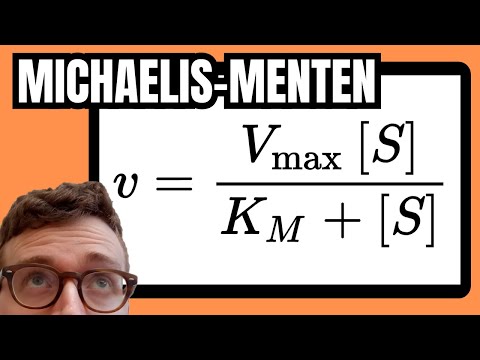
Now let’s break it down a bit: the equation is often written like this:
v = (Vmax [S]) / (Km + [S])
Here’s the scoop on those terms:
- v: This is the reaction rate or velocity—how fast your enzyme is working.
- [S]: This represents substrate concentration—the amount of stuff the enzyme is working on.
- Vmax: This is basically the maximum speed of the enzyme when it’s totally saturated with substrate.
- Km: Known as the Michaelis constant, it’s like measuring how well an enzyme binds its substrate; low Km means strong binding!
So here’s where it gets interesting. If you plot this equation—a graph with substrate concentration on the x-axis and reaction velocity on the y-axis—you get that classic curves shape that levels off. At low concentrations of substrate, small changes can lead to big increases in reaction speed. But once much of your enzyme is busy working (think overloaded chef), adding more substrate doesn’t really change things much anymore. You hit that Vmax point!
You might wonder why all this matters in real life. Well, understanding Michaelis-Menten kinetics helps scientists figure out how drugs work too! For example, when developing medications that target specific enzymes in diseases like cancer or diabetes, knowing exactly how fast those enzymes can react helps design better treatments.
There are also some common scenarios where you see these concepts pop up:
- In metabolic pathways: Different enzymes have different Km values which tell us about their efficiency and roles.
- In drug interactions: Some drugs might inhibit enzymes by changing how they interact with substrates—this can be crucial for therapeutic effectiveness.
But wait—it doesn’t stop there! Sometimes things aren’t so straightforward in nature. Inhibition types like competitive and non-competitive can shuffle everything around without breaking our beloved Michaelis-Menten model entirely. And honestly? That only makes it more exciting since every new piece of research adds layers to our understanding.
So next time you hear someone mention **Michaelis-Menten kinetics**, just remember—it’s not just a dry concept out of a textbook! It has real implications for biology and medicine alike. And getting comfortable with this stuff opens doors to even cooler scientific adventures down the road!
Understanding Km: Its Role and Significance in Biochemistry
Let’s chat about Km, also known as the **Michaelis constant**, and why it matters in biochemistry. You see, enzymes are like those cool kids at a party who speed things up—well, in the chemical sense, anyway. They help reactions happen faster without getting all tired out. But to understand how they work, we need to talk about Km.
What is Km?
Km is a number that tells you how well an enzyme can bind to its substrate. Think of the substrate as a puzzle piece and the enzyme as the board it fits into. A low Km means that the enzyme has a strong affinity for its substrate—like two best friends who can’t be apart too long! On the other hand, a high Km indicates a weaker bond—kind of like that friend who keeps leaving parties early.
How is it used?
When scientists study how enzymes work, they often look at how quickly they transform substrates into products. This rate is affected by many factors, but one big one is substrate concentration. Here’s where Michaelis-Menten kinetics comes into play.
When we graph this relationship, we often get an S-shaped curve. But there’s this magical point on the graph called **Vmax**, where all of the enzyme active sites are filled up and working overtime. The Km value gives us an idea of what substrate concentration we need to hit half of that maximum velocity (Vmax/2).
- Low Km
- High Km
: Strong binding; low substrate concentration needed.
: Weaker binding; needs more substrate to keep things moving.
Why does Km matter?
Understanding Km helps us figure out how enzymes function under different conditions. For example, if you’re studying metabolic pathways or drug interactions, knowing the Km value helps predict how effective an enzyme will be when various substances are around.
There was this time in my biochemistry class when our professor had us watch enzymes in action with some colorful diagrams. It was super enlightening to see how changes in substrate concentration shifted reaction speeds! Honestly? It made me think about enzymes like actors on a stage—some work really well with their partners while others take a bit longer to warm up!
In summary, Km is crucial for understanding enzyme efficiency and behavior in biological systems. Whether you’re learning about new pathways or exploring drug design, keeping an eye on this value can give you insights into what’s going down at the molecular level. So next time you’re talking enzymes, don’t forget about that little constant making big waves behind the scenes!
The Significance of Enzyme Kinetics in Biochemistry: Understanding Reaction Mechanisms and Metabolic Pathways
So, let’s talk about enzyme kinetics. It’s like the secret language of how enzymes work in your body. Basically, enzymes are these amazing proteins that speed up chemical reactions. But not all reactions are created equal, and that’s where enzyme kinetics comes in.
You see, when scientists study enzyme kinetics, they’re figuring out how fast an enzyme works and why it does what it does. Think of it as a dance between the enzyme and its substrate (the molecule it acts on). The way they move together can tell you a ton about their relationship.
A key concept you’ll run into is Michaelis-Menten kinetics. This model breaks down how enzymes interact with substrates. Here’s the gist: when a substrate meets an enzyme, they form an enzyme-substrate complex. Then, depending on different factors like concentration and temperature, this complex will either break down into products or not.
Now, what makes Michaelis-Menten special? Well, it helps explain two important parameters:
- Vmax: This is like the maximum speed of our enzymatic dance! It’s the point where adding more substrate won’t make things go any faster.
- Km: This value gives you a sense of how well an enzyme grabs hold of its substrate. A low Km means it likes its substrate a lot; a high Km means it’s more picky.
Picture this: imagine you’re baking cookies, and you need flour (the substrate) to get started. If you have all the flour in the world but no sugar (the enzyme), good luck making those cookies! On the flip side, if you have only a sprinkle of flour but plenty of sugar, well… still no cookies! Enzymes need just the right amount of substrate to be super effective.
And let me tell you—enzyme kinetics isn’t just science fluff. It plays a big role in understanding metabolic pathways, which are like complex roadmaps showing how our cells use nutrients to generate energy or build new molecules. Knowing how enzymes work helps scientists figure out what goes wrong in conditions like diabetes or cancer. For example, if an enzyme is slower than usual because of some genetic mutation or environmental factor? That can cause major chaos in our metabolism.
The thing is—understanding these detailed interactions can lead to better drugs too! By knowing how an enzyme behaves under different conditions, researchers can design inhibitors that target these enzymes effectively. Imagine crafting a medicine that fits perfectly with a rogue enzyme causing problems—that’s some next-level biochemistry!
So yeah, while enzymes may seem small and simple at first glance—understanding their kinetics opens up a whole universe. It’s not just about knowing speeds and quantities; it’s about making sense of life itself at its most basic level!
You know, when you start digging into biochemistry, you run into all sorts of fascinating stuff. One term that pops up a lot is Michaelis-Menten kinetics. It’s kind of a mouthful, but don’t worry, it’s not as complicated as it sounds.
So, picture this: Imagine you’re baking cookies for the first time. You’ve got your recipe in front of you, and you’re anxiously measuring out flour and sugar. The cookie dough represents substrates—the ingredients that enzymes (like the lovely lady on the recipe) are going to work on. The better your measurements and mixing technique (like enzyme activity), the more delicious cookies you get at the end!
Michaelis-Menten kinetics basically helps us understand how enzymes interact with these substrates—like how quickly they can turn dough into cookies, so to speak. In simple terms, this model shows how the rate of an enzymatic reaction depends on the concentration of substrates. As those ingredients pile up (or substrate concentration rises), the enzyme whips through them faster, until it gets to a point where adding more flour won’t make any difference at all because there’s already enough dough to work with.
It’s super helpful for scientists trying to figure out how different conditions affect reactions in living things—not just cookies! For instance, think about when someone is sick. Knowing how fast an enzyme works can help researchers design medications that speed things up or slow them down.
I still recall this one time in lab class, we were doing experiments around enzyme activities. My partner mixed everything perfectly while I spilled half the solution everywhere—classic me! But what stuck with me was observing how slight changes in our measurements could totally alter the results. That hands-on experience showed just how delicate those biochemical processes could be.
In short, Michaelis-Menten kinetics is like a guiding light through the complex maze of biochemistry. It allows researchers to make sense of how enzymes work and why they’re critical for life itself—kind of like why your grandma’s secret cookie recipe works perfectly every single time!