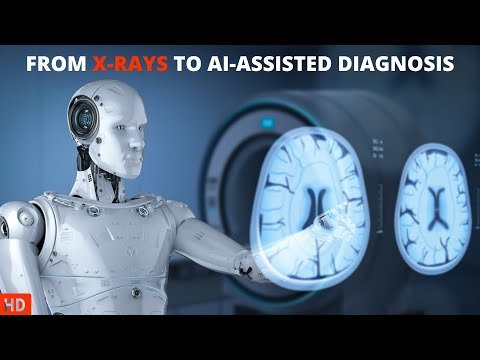
You know that moment when you’re flipping through a magazine, and you see those crazy, colorful images of the human body? Like, is that really what’s going on inside us? Well, it turns out those cool pictures come from MRI imaging.
Seriously, I remember the first time I saw my own MRI scan. My brain looked like a cosmic swirl—a mix of spaghetti and clouds! I couldn’t help but think about all the science behind how they get such detailed images.
Advancements in MRI tech are happening faster than you can say “What’s that weird noise?” And those improvements aren’t just for show. They’re changing the game for how doctors diagnose and treat illnesses.
So let’s chat about how this technology is evolving and what it means for our health! It’s kinda mind-blowing.
Advancements in MRI Technology: Transforming Medical Diagnostics and Scientific Research
Magnetic Resonance Imaging, or MRI for short, has come a long way since it was first used in medical settings back in the 1980s. You know, when they first came out, people were pretty amazed. Instead of poking and prodding around in surgery or using X-rays, doctors could now see inside your body without any of that fuss! But the thing is, MRI is constantly evolving and getting better, like a favorite video game that just keeps releasing updates.
So, what’s new, exactly? Well, one major advancement is higher resolution imaging. This basically means the pictures are clearer and can show more detail. Imagine you’re looking at a picture of your friend from a distance, and then someone hands you binoculars. You’d see all the little details better—kind of like that! This higher resolution helps doctors spot problems earlier and more accurately.
Another cool thing is faster imaging techniques. Traditional MRIs can take quite some time—sometimes up to an hour or more! But today’s new technology means scans can be done in minutes. This is huge because if you think about it, patients who might feel anxious laying there for too long will only have to wait a little while before getting their results. And hey, less time in the machine means less discomfort overall!
Let’s talk about functional MRI (fMRI). This type actually measures brain activity by detecting changes in blood flow. It’s like seeing where the action is happening right now instead of just getting static images! fMRI has become super important for researchers studying how our brains work during different tasks—like trying to remember where you left your keys.
And then there’s MRI-guided interventions. Imagine if doctors could not only see what’s wrong but also do something about it right then and there? Yeah, that’s happening now! It allows professionals to perform certain procedures with real-time imaging guidance. Picture someone fixing your car while still being able to watch the engine from above—that’s kind of how this works!
You know what’s also really exciting? Artificial Intelligence (AI) plays a role too! AI algorithms help analyze MRI scans faster than ever before. It’s like having an extra set of eyes that can catch things humans might miss sometimes. With AI coming into play, diagnosing diseases could get much quicker and possibly even more accurate.
In summary:
- Higher resolution imaging
- Faster imaging techniques
- Functional MRI (fMRI) for brain activity
- MRI-guided interventions for immediate action
- The impact of AI on analysis speed and accuracy.
Each step we take in MRI technology pulls us closer to smarter medical diagnostics and groundbreaking scientific research. Just think about it: what was once considered science fiction is becoming a reality before our eyes! How cool is that?
Revolutionizing Healthcare: The Impact of MRI Technology on Medical Science
So, let’s talk about MRI technology and how it’s been flipping the script in healthcare. You’ve probably seen or heard about these big, fancy machines that look like giant donuts. But they’re not just for show! They play a huge role in diagnosing all sorts of medical conditions.
First up, what is an MRI? Well, MRI stands for Magnetic Resonance Imaging. It uses strong magnets and radio waves to create detailed images of the inside of your body. It’s super useful because it can show soft tissues—like your brain, muscles, and organs—much better than regular X-rays or CT scans. And get this: the resolution is so high that doctors can spot things they might miss with other technologies.
Now, let me tell you a little story. A friend of mine went in for some headaches that wouldn’t quit. The doctor thought it might be something simple like tension or maybe even sinus issues. But they decided to run an MRI just to be safe. And sure enough, they found a small anomaly in his brain that needed attention right away! Without that MRI, who knows what might have happened?
So why is MRI technology such a game-changer? Here are some key points:
- Non-invasive: Unlike surgeries or biopsies, getting an MRI doesn’t require cutting you open! You just lie down inside the machine while it does its magic.
- Detailed imagery: The clarity of images means doctors have a better chance of making accurate diagnoses. They can see tumors, inflammation, and even blood flow problems.
- No radiation: This is a biggie! MRIs use magnets instead of harmful radiation like X-rays do. It makes them safer for repeated use.
- Diverse applications: From checking out what’s going on in your spine to assessing joint injuries or looking for heart issues—MRI has got your back (and everything else!) covered.
And here comes another cool part: advancements in this technology are happening all the time! Newer machines are getting faster and more efficient. Some can deliver high-quality images in minutes instead of hours—and who wouldn’t want to spend less time being stuck in that tube?
There are also interesting new ways to enhance MRIs further using contrast agents that help highlight specific areas or conditions more clearly. Think about how much easier it is for doctors when they have such clear visuals to work from.
But here’s something important: while MRIs are incredibly useful, they’re not perfect. They can be expensive and sometimes aren’t available everywhere you’d want them or need them.
In wrapping this up (not literally though!), it’s clear that MRI technology has revolutionized healthcare significantly by improving diagnosis accuracy and patient safety across various medical fields. If my friend hadn’t gotten his MRI when he did? Well… things could have turned out really differently for him.
So next time you hear about an MRI machine whirring away at your local hospital, just remember—the tech behind it is doing some serious heavy lifting when it comes to keeping us healthy!
Enhancing Medical Diagnosis: The Impact of Imaging Technologies on Our Understanding of Human Anatomy
It’s pretty amazing how far we’ve come with imaging technologies in medicine, especially when it comes to things like MRI, or Magnetic Resonance Imaging. You might have seen one of these machines in your doctor’s office or at a hospital—those big tubes you lie inside. But what does that even mean? Well, it’s like having a superpower that lets doctors peek inside your body without needing to cut you open.
Imaging technologies help doctors visually understand what’s going on inside our bodies. They can see bones, muscles, organs, and even tissues. It’s like having a detailed map of your insides! MRI is particularly cool because it uses strong magnets and radio waves instead of harmful radiation like X-rays or CT scans. This makes it safer for patients when they’re getting checked out for all sorts of stuff.
So, what’s the deal with advancements in MRI? Oh man, sit tight because there’s a lot going on!
- Better resolution: Newer MRI machines can create images with incredible clarity. You know how annoying it is to look at a blurry picture? Well, the same goes for medical images! High-resolution scans can reveal tiny details that older machines might miss.
- Functional imaging: This is where it gets really cool! Some MRIs can show not just structures but also how well organs are working. For example, fMRI (functional MRI) captures brain activity by measuring blood flow. So you can literally see which part of the brain lights up when you’re thinking about something!
- Swift diagnosis: Time is often critical in medicine. Advanced technologies allow quicker scans and faster results so that doctors don’t have to wait ages before making decisions about treatment.
- Patient comfort: Some modern MRIs are designed to be less claustrophobic (thank goodness!). New features include wider openings and quieter machines so people feel less anxious when getting scanned.
You ever think about how important all this is? I remember hearing about a friend whose mom was diagnosed with early-stage breast cancer thanks to an MRI. The doctors spotted something unusual during a routine check-up that could’ve been easily overlooked otherwise. Because of that early detection, treatment started right away and made such a huge difference in her mom’s life.
But it’s not just about finding problems; there’s also a big potential for using these technologies in research! Scientists are constantly learning more about human anatomy and diseases through detailed imaging studies. This knowledge can lead to new treatments or even preventive measures.
In summary, advancements in MRI technology are reshaping the landscape of medical diagnosis. By allowing clinicians to observe our insides with greater detail and insight than ever before, they’re not just diagnosing conditions—they’re saving lives! So yeah, the impact on our understanding of human anatomy is profound and still evolving each day.
When you think about getting an MRI, it’s easy to picture that big, noisy machine and the slightly claustrophobic feeling of being slid inside it. I remember when my friend had to get one for her knee. She was so nervous sitting there, but once she got through it, she felt a bit relieved knowing it could help doctors see what was really going on inside.
MRI, or Magnetic Resonance Imaging, has come a long way in the past few years. It’s like upgrading from a flip phone to the latest smartphone. You’re trading in old tech for something that not only looks cooler but also does way more than you thought possible.
You know how sometimes you can’t quite see what’s happening in a blurry picture? Well, advancements in MRI imaging are helping doctors take sharper and clearer images, which is super important for diagnosing conditions more accurately. For instance, new techniques allow radiologists to differentiate between healthy and unhealthy tissues much better than before. That means if there’s something concerning like a tumor or an injury, they can spot it right away and act accordingly.
And here’s where it gets really interesting: scientists have started using artificial intelligence (AI) to help interpret those images too! Imagine having a savvy buddy who knows all the latest medical stuff looking over the doctor’s shoulder. AI can help flag issues in scans that might be missed otherwise. It’s not about replacing doctors; it’s more like giving them an extra pair of eyes.
But there are some emotional ups and downs with this tech as well. The thought of more detailed imaging means more information—sometimes good news and sometimes bad news. It can be overwhelming for patients trying to wrap their heads around all these new findings. I mean, who wouldn’t feel anxious when faced with medical jargon?!
At the end of the day, these advancements are leading us toward better health outcomes. They’re transforming diagnosis from a guessing game into something much more precise and reassuring for both patients and doctors alike. And honestly? That feels pretty amazing!