You know that moment when you look up at the night sky, and it feels like a million tiny eyes are staring back at you? Honestly, I used to think those stars were just there to make us feel tiny. But then I found out there’s way more to them—like NASA’s Constellation Program.
So check this out. Back in 2004, they announced this ambitious plan to send humans back to the Moon and even aim for Mars. Imagine packing your bags for a vacation on another planet! Sounds epic, right?
But here’s the kicker: it wasn’t just about hopping from rock to rock in space. There was a whole scientific legacy behind it all. Seriously! From new tech to groundbreaking research, this program held some big ideas.
Let’s dig into what made Constellation tick and how it left its mark on science and exploration—I’m telling you, it’s way cooler than just stargazing!
Exploring NASA’s Constellation Program: Advancements in Space Exploration and Technology
So, let’s jump into NASA’s Constellation Program, which was all about pushing the boundaries of space exploration. Even though it’s often overshadowed by newer initiatives, its impact on technology and exploration is pretty significant.
What was the Constellation Program?
It started in 2005 and aimed to develop new spacecraft that could take astronauts back to the Moon and eventually beyond to Mars. Just think about the excitement of landing back on the Moon! That was one of their big goals. They wanted to create a sustainable presence there—like, just imagine human habitats popping up on lunar soil!
Technological Advancements
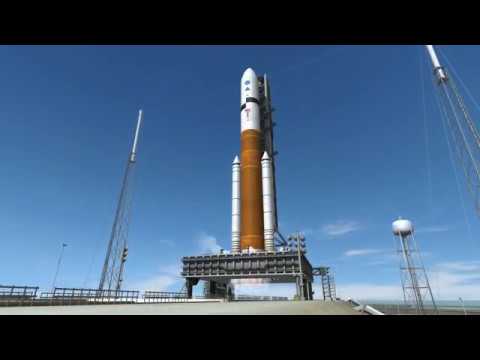
One of the coolest things about Constellation was how it pushed new technology. For instance, they developed rockets like the Ares I and Ares V. The Ares I was supposed to carry astronauts, while Ares V would be capable of heavy lifting for missions beyond low Earth orbit. You know, launching stuff into space isn’t like tossing a basketball; it requires serious planning and engineering.
Also, they were working on a spacecraft called Orion. It’s designed to carry humans safely through space, kind of like an upgraded version of what we used for Apollo missions in the ’60s! Orion also featured advanced systems to enhance astronaut safety during re-entry—a major concern since that part can be super risky.
Scientific Legacy
While Constellation faced budget cuts and shifts in focus—eventually being canceled in 2010—it did lay down some groundwork for future projects like NASA’s Artemis program. You see how each step builds off another? Artemis aims to go back to the Moon with more modern technology but takes inspiration from what Constellation attempted.
Now let’s not forget about the work ethic behind these projects. Imagine scientists and engineers pulling all-nighters, fueled by coffee (and maybe a little anxiety), determined to solve complex problems. It’s a big deal—seriously cool if you think about it!
The Human Element
There’s also a human side worth noting! Many people had hopes tied up in this program. Families looked forward to seeing their loved ones come home after missions or even catch glimpses of them as astronauts preparing for liftoff. There’s something really emotional about that connection—you know?
In summary, while NASA’s Constellation Program didn’t fully achieve its lofty goals due to funding issues and shifting priorities, its impact continued through subsequent programs and technological advancements that paved the way for future explorations into deep space! So yeah, looking back at its legacy gives us insight into how far we’ve come—and what might still be ahead!
NASA’s Artemis Program Reaches Major Milestone: Advancements in Lunar Exploration and Science
Nasa’s Artemis Program is the thrilling next chapter in humanity’s quest to explore the Moon. This program, if you haven’t heard, is all about returning astronauts to the lunar surface, and it’s building on the rich history of the Constellation Program, which was initiated back in 2005 but eventually got stalled.
So, what’s different now? Well, one major milestone recently achieved is the successful launch of the Artemis I mission. This mission was uncrewed, but it sent a powerful message. The Orion spacecraft was tested during its trip around the Moon and back, showing that we can safely send humans into deep space again. Imagine that! It’s kind of like sending a test pilot into an unknown world before inviting everyone else to join.
Now onto what this means for science. The Artemis program isn’t just about getting boots on lunar soil again; it’s also a giant leap for scientific breakthroughs. The idea is to establish a sustainable presence on the Moon by 2028. This will let us conduct all sorts of experiments and gather data that could help us understand our own planet better—like investigating lunar geology or studying solar radiation more closely.
You might be thinking, “Why study the Moon?” Well, it turns out that understanding our nearest celestial neighbor can illuminate Earth’s past while helping us prepare for future missions to Mars and beyond. And there’s something poetic about exploring our own neighborhood first before heading off into deeper space.
Key advancements from Artemis are great! Here are some highlights:
- Collaborative Efforts: Artemis has fostered international cooperation with space agencies worldwide.
- The Lunar Gateway: A planned space station orbiting the Moon will serve as a hub for scientists and astronauts.
- Sustainable Landings: New technologies aim for safe landings in diverse lunar environments—think polar regions!
What did we learn from Constellation? That project laid down some groundwork but struggled with funding and focus. With Artemis, Nasa seems better equipped financially and strategically—like they’re armed with lessons learned from past bumps along the way.
A little anecdote: When I think about space exploration, I remember an old documentary where they interviewed Apollo astronauts who spoke about seeing Earth from above—the “blue marble” effect. It brought them a sense of peace and unity that changed how they viewed life on our planet! That emotional connection could be something today’s explorers might rediscover through Artemis too!
In short, NASA’s Artemis Program represents so much potential—not just for exciting missions but also for expanding our understanding of science in ways we can hardly imagine right now. As we inch closer to stepping foot on lunar soil again, who knows what discoveries might await?
Exploring the Science Behind Constellations: Astronomy’s Role in Understanding Celestial Patterns
So, constellations, huh? Those twinkling patterns in the night sky have been capturing our imaginations for ages. But they’re not just pretty pictures; there’s real science behind them.
First things first, constellations are basically groups of stars that form patterns. Ancient cultures looked up and created stories around these dots of light. You might’ve heard of Orion or Ursa Major, right? These aren’t just random arrangements—they helped people navigate and tell time before GPS or clocks.
Astronomy plays a major role in helping us understand these starry patterns. It’s like the ultimate treasure hunt! Astronomers study how stars move and how far they are from us. What’s mind-blowing is that some of those stars we see might not even exist anymore! Light travels at a crazy speed, but it can still take years—sometimes thousands—to reach us. So when you’re stargazing, you could be looking at the distant past.
Now enter NASA’s Constellation Program. This initiative wasn’t just about cool rockets and space missions; it aimed to push the boundaries of human exploration beyond Earth. It sought to return astronauts to the Moon and eventually prepare for Mars missions. Think of it as taking our understanding of constellations to a whole new level!
You see, with every mission and data collected from deep space using advanced telescopes or satellites, scientists refine our understanding of those celestial structures. The way NASA has gathered data helps unlock mysteries about the universe—including how stars are formed in other galaxies!
As you watch those constellations shift across the sky, remember that they’re part of a bigger cosmic puzzle we’re still trying to piece together. It’s like each star you see is telling a story—about its birth, life cycle, and sometimes an explosive death!
And speaking of stories, here’s something personal: I remember lying on my back during a camping trip as a kid, tracing Orion with my finger while my friend told me about Greek mythology surrounding him. We were just kids back then but it felt like we were exploring the universe together.
In short, constellations blend history with science. They connect cultures across time while also challenging modern scientists to explore beyond our planet’s grip. Every time you gaze into that mesmerizing sky full of stars, think about all those journeys—past and future—driven by curiosity and wonder!
The Constellation Program’s been a wild ride, hasn’t it? You know, it’s one of those chapters in NASA’s history that gets you thinking about the big picture of space exploration. I mean, we’re talking about dreams of returning to the Moon and eventually setting foot on Mars. It really tugs at those childhood dreams of being an astronaut, zooming around in zero gravity and planting flags on distant worlds.
So, here’s the deal: the Constellation Program was born out of the need to replace the Space Shuttle and make our way back to the Moon by around 2020. Sounds ambitious, right? It included projects like the Orion spacecraft and Ares rockets. There were moments when you could feel the excitement bubble up as folks imagined new frontiers in science and technology. You wanted to believe that this was just the beginning.
But then reality came crashing in—like, well, a rocket not quite reaching its destination. Funding issues and technical challenges hit hard, leading to its eventual cancellation in 2010. It’s one of those bittersweet stories where you can’t help but feel a little heartbroken over it all. I remember watching news reports about it like you watch your favorite series get canceled; just heartbreaking!
What’s kind of cool though is that even if Constellation itself didn’t fully launch as intended, its legacy is still pretty powerful. The technology developed during this program didn’t just vanish into thin air! Stuff like advances in spacecraft design and new materials have trickled down into other programs—like Artemis, which aims to put humans back on the Moon and eventually explore Mars.
Plus, there’s something really inspiring about humanity’s persistent desire to reach for the stars despite setbacks. It reflects a core part of who we are—you know? Like chasing after dreams even when they seem out of reach. So while Constellation may have stumbled in some ways, its spirit lives on whenever anyone looks up at the night sky with wonder or plans their next step toward Mars.
In a way, it reminds us that space exploration isn’t just about hitting milestones or collecting data; it’s about pushing boundaries and asking questions that stretch our imagination further than we ever thought possible. That pursuit—it’s what keeps us looking up!