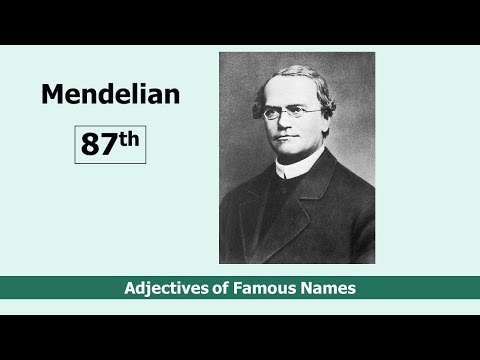
Imagine a monk, right? Just chilling with his peas in the garden. No, seriously! This dude, Gregor Mendel, was just doing his thing back in the 1800s when he stumbled on some pretty gnarly stuff about how traits get passed down.
Now, you might be thinking, “Peas? Really?” But hold on; this guy set the stage for everything we know about genetics today. Wild, huh?
Fast forward to now, and Mendel’s findings are more than just a bit of trivia. They’re the foundation of modern genetics and how we understand biological inheritance. Plus, his legacy lives on in ways that go beyond just science books.
So let’s chat about this pea-loving monk and see why he is still such a big deal in both genetics and scientific outreach today!
Mendel’s Enduring Legacy: Shaping Modern Genetics and Scientific Innovation
Mendel’s story is pretty cool. This dude, back in the 1800s, took some time to study peas and came up with these ideas that changed the game for genetics. You know, most people thought traits just blended together like paint colors. But Mendel? He figured out that traits are inherited in specific ways. Pretty mind-blowing, right?
Mendel’s laws of inheritance are like the foundation of modern genetics. He had two big ideas: the Law of Segregation and the Law of Independent Assortment. So, the Law of Segregation basically says that each organism carries two alleles for each trait, but only one gets passed on to the offspring. Imagine flipping a coin twice but only keeping one result—either heads or tails.
Now let’s talk about the Law of Independent Assortment. This one claims that different traits are passed on independently of each other. Like if you have a tall plant and a purple flower plant, you can get tall plants with white flowers or short plants with purple flowers. It’s all a mix-and-match kinda deal!
His work wasn’t widely recognized until after he died, which is kind of a bummer. But once people did start to see what he was onto, everything changed! His ideas laid down the groundwork for later scientists who discovered genes and DNA. Can you believe it? When Watson and Crick were piecing together the structure of DNA in the 1950s, they were indirectly standing on Mendel’s shoulders.
Mendel’s ideas also sparked scientific innovation. For instance, his research is key to fields like agriculture and medicine today. Breeding better crops? Yup! Understanding genetic diseases? Definitely! The whole idea that we could mess with an organism’s genetics to improve it is rooted in his findings.
And let’s not overlook how Mendel’s legacy shaped scientific outreach too! His principles help explain complex topics like genetic engineering in simple terms. Schools teach his stuff as basics because it helps everyone grasp how characteristics get passed down through generations.
So yeah, whether it’s farmers selecting seeds or doctors understanding genetic disorders, Mendel’s fingerprints are everywhere in science today. It really makes you think about how one person’s curiosity can push humanity forward—like ripples spreading across water.
Mendel didn’t just shape genetics; he ignited a scientific revolution that still impacts our lives today. It’s wild to think how something as simple as pea plants could lead us to groundbreaking discoveries in everything from health care to biotechnology!
Mendel’s Legacy: Transforming Genetics and Shaping Modern Science
Let’s talk about Mendel’s legacy, shall we? This guy, Gregor Mendel, was a total game-changer in the world of genetics. He laid down the foundation of how traits are passed down through generations. Can you imagine a world where we don’t understand inheritance? Well, thanks to Mendel, we don’t have to!
So, here’s the scoop: back in the 1850s and 1860s, Mendel was busy experimenting with pea plants in his garden. He wasn’t just gardening for fun; he was digging into the mysteries of heredity. You know how some kids get their mom’s brown eyes and others get dad’s green ones? Mendel figured out patterns to this stuff by crossbreeding different pea plants and tracking their traits.
- Dominant and Recessive Traits: He discovered that some traits show up more often than others. For example, if you mix a plant with yellow peas and one with green peas, guess what? The first generation will mostly have yellow peas! That’s because yellow is a dominant trait.
- Mendelian Laws: His findings led to two main laws: the Law of Segregation and the Law of Independent Assortment. These laws basically explain how alleles (that’s genetic info) segregate during gamete formation and how different traits independently separate from one another.
Now fast forward to today. Imagine Medel as a rock star in genetics. His ideas weren’t fully recognized until decades later when scientists started connecting his work with chromosomes! It was kind of like rediscovering treasure. People began to realize that genes, which were initially mysterious entities, actually follow rules—and these rules can lead us to understand everything from eye color to serious health conditions.
And this is where it gets really cool: Mendel’s work has had ripple effects on modern science that go beyond just understanding traits. We’re talking about fields like genetics research, agriculture (think better crops), medicine (hello gene therapy), and even evolutionary biology!
- Agriculture: Farmers utilize Mendel’s principles to breed plants for desirable traits like pest resistance or higher yields.
- Medicine: Understanding genetic disorders has opened doors for personalized medicine—treatments tailored just for you based on your DNA!
The emotional part? There are real stories where Mendelian genetics made a difference in people’s lives. Like when families learn they carry genes linked to certain diseases; they can take steps for prevention or treatment based on their genetic makeup. It turns knowledge into power—and that’s super impactful!
Mendel didn’t have all the answers back in his day—the technology just wasn’t there yet—but his brilliant observations set off an entire field of science! Now scientists continue building on what he started over 150 years ago.
In essence, if you think about genetics today—like all those breakthroughs in CRISPR technology or gene editing—just remember that it all ties back to good ol’ Gregor Mendel and those little pea plants he loved so much!
Exploring Mendel’s Pivotal Contributions to Genetics and Modern Science
So, you’ve probably heard of Gregor Mendel, right? He’s often called the father of genetics. His work in the mid-1800s changed the way we understand inheritance. Let me share a bit about what he did and why it matters!
Mendel’s Experiments were pretty straightforward but groundbreaking. He mainly worked with pea plants—yeah, those little green things you might find in your garden. By crossbreeding pea plants with different traits, like flower color and seed shape, he noticed patterns in how traits were passed down from one generation to another. It was like unlocking a secret code of life.
He focused on seven specific traits that had clear contrasting options. For example:
- Flower color: Purple or white
- Seed shape: Round or wrinkled
- Pod color: Green or yellow
Mendel discovered that traits don’t blend together but instead stay distinct. This idea led him to formulate what we now call Mendelian inheritance. Basically, he proposed that each trait is controlled by pairs of factors (what we know as genes today) that separate during reproduction.
You know what’s really cool? Mendel’s results laid the groundwork for the concept of dominant and recessive traits. For instance, purple flowers are “dominant” over white flowers. If you cross a plant with two purple flowers with one that has white flowers, all the offspring will have purple flowers! It’s like their genes are having a little shout-out party.
Beyond just peas, Mendel’s principles apply to many living organisms—which is wild when you think about it! This is where his work gets tied into modern science.
Mendel’s Legacy stretches far beyond his own time. Although he went unnoticed for years after he published his findings in 1866, his work gained traction in the early 1900s and became fundamental to genetics as a field.
This legacy has shaped everything from agriculture to medicine! Imagine how crops can be improved through selective breeding or how genetic disorders are studied today because of those early principles Mendel established.
Mendel also set an example for scientific outreach—he published his work in a journal intended for scientists rather than farmers or educators. This was bold at that time! His method showed how important it is to share knowledge widely so others can build on it.
Anecdote time: I remember reading about how scientists rediscovered Mendel’s work decades later and were blown away. It’s like finding an old treasure map that leads to buried gold! They realized they could explain heredity using his ideas—which opened up whole new fields of study!
Mendel’s contributions were pivotal not just for genetics but also for shaping modern biology as we know it today! The way we approach inheritance in everything from health sciences to biodiversity owes so much to this monk who loved studying plants.
If you think about it, every time a new discovery is made in genetics—like CRISPR technology—you can trace some roots back to Mendel’s simple garden experiments! Isn’t that just mind-blowing?
So next time you see a pea plant or maybe even a flower bed blooming with colors, take a moment to appreciate the genius behind its heritage—it all connects back to good ol’ Gregor Mendel!
You know, sometimes I think about how one guy, Gregor Mendel, can totally change the game in science. Back in the 1800s, when he was just a monk messing around with pea plants in his garden, he had no idea he was laying the groundwork for genetics. I mean, if you really think about it, that’s pretty mind-blowing. His experiments on heredity led to what we now call Mendelian genetics, and they opened up a whole new world of understanding about how traits are passed down through generations.
Mendel’s approach was pretty simple. He observed things like flower color and seed shape and then meticulously kept track of how these traits appeared in different plant offspring. Like, who does that? But seriously, his work wasn’t recognized until decades later! Imagine pouring your heart into something and then getting ignored for years. It’s kind of like being that underrated band that finally gets discovered after a long time. And when people finally took notice? Well, it was like fireworks going off!
His findings didn’t just stay in fancy journals or dusty books either; they became the bedrock for modern genetics. Think about all those cool genetic discoveries we’ve made since then—like understanding DNA structure or how genetic disorders work. It’s like Mendel gave scientists a key to unlock so many mysteries of life.
But here’s where it gets even more interesting: Mendel’s legacy isn’t just about pea plants and scientific breakthroughs; it’s also about sharing knowledge. This is where scientific outreach comes into play. Many people still don’t fully grasp these concepts or see their relevance in everyday life. And that’s where we, as science lovers, can step up! Sharing knowledge about genetics—like why certain traits run in families or how genetic testing works—can really empower folks to take charge of their health and well-being.
I remember this one time I helped out at a local science fair where kids were learning basic genetics through fun activities like punnett squares with candy! Watching their eyes light up when everything clicked was incredible—it felt so rewarding to be part of that moment. It reminded me how important it is for us to make science relatable and engaging.
In wrapping this all up—or whatever—you get the picture: Mendel wasn’t just messing around with plants; he sparked a movement that has shaped our understanding of biology today and inspired countless people to explore science further. Plus, his story teaches us that sometimes great ideas take time to shine but can have an absolute impact on future generations—and that’s something we should all be excited about!