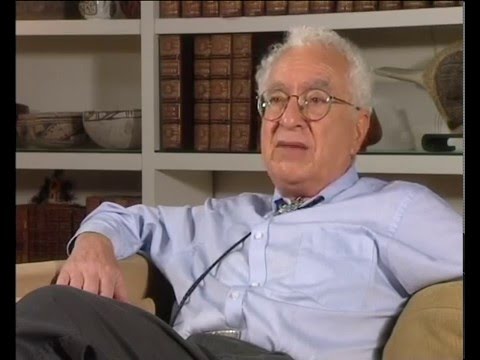
Okay, so picture this: you’re at a party, and someone mentions quantum physics. You know, the one with all those wild ideas about particles being in two places at once? Everyone suddenly looks like deer in headlights, or they start mumbling about how confusing it is.
But here’s the thing—Julian Schwinger could totally be your savior in these moments. Seriously! This guy wasn’t just any physicist; he was a rock star of his time. He helped unlock some of the biggest mysteries in quantum mechanics.
He had this way of making the complex stuff feel a bit more human, you know? His work didn’t just change science; it made learning about the universe kinda fun! So let’s chat about his legacy—how he shaped our understanding of quantum physics and opened doors for others to follow suit. It’s a story worth hearing!
Julian Schwinger: Pioneering Theoretical Physicist and Nobel Laureate in Quantum Electrodynamics
Julian Schwinger was a really influential figure in the world of physics, especially when it comes to quantum electrodynamics (QED). You know, that part of physics that dives into how light and matter interact? It’s pretty mind-blowing stuff. Schwinger wasn’t just a big name; he actually won the Nobel Prize in 1965 for his groundbreaking contributions to QED. It’s fascinating how much of what we understand today about particles and forces traces back to his work.
What did Schwinger do? Well, he developed a unique approach to QED using mathematical techniques that were pretty original for their time. His style was meticulous and detail-oriented, which set him apart from other physicists. Picture someone piecing together a huge puzzle, only to discover new images and patterns you didn’t know existed!
One of his key ideas was the concept of “renormalization.” This is like cleaning up your room after making a big mess—taking infinities in calculations and turning them into manageable numbers. Without this step, physicists would have been left with nonsensical results! It revolutionized how scientists approached quantum field theories.
Schwinger also gave us the “Schwinger Equation,” which describes how particles emit and absorb photons—the basic units of light. This work helped lay down the foundation for understanding processes like electron-positron pair production, where energy can turn into matter. Can you imagine? Energy just poofing into particles!
But there’s more than just equations! His passion for physics didn’t stop at research; he was also committed to education and outreach. He believed it’s super important to communicate science clearly and effectively with everyone—not just fellow physicists. In fact, he wrote several books aimed at students that explain complex concepts in more digestible ways.
For instance, take “Quantum Mechanics — Symbolism of Atomic Measurement.” Here he’s not only sharing knowledge but trying to make the mysterious world of quantum mechanics feel accessible to anyone willing to dive in! Imagine being able to explain the weird behavior of atoms or electrons in words your grandma could understand—that’s quite a feat!
On top of all that, Schwinger’s legacy lives on through programs that encourage young scientists. He supported initiatives that promote STEM education because he knew that inspiring future generations is so crucial for continued scientific progress.
In wrapping this up, Julian Schwinger’s contributions resonate through modern physics like ripples in water after you toss a stone. His theories shaped our understanding, his teaching inspired many minds, and his commitment to outreach made complex ideas approachable for everyone—like having a friendly chat about physics over coffee rather than getting lost in heavy textbooks.
So yeah, when you hear his name mentioned among greats like Richard Feynman or Steven Weinberg, it’s clear why he holds such an esteemed place in the world of science. Schwinger’s legacy? It’s one where curiosity meets clarity—an enduring inspiration for those who dare to question and explore our universe!
Unveiling the True Pioneer of Quantum Physics: A Deep Dive into the Origins of Modern Science
Sure thing! Let’s dig into the world of quantum physics and chat about Julian Schwinger, a guy who really left his mark on the field.
So, what’s quantum physics all about? Well, it’s kind of like the magical underworld of atoms and particles. Picture this: instead of behaving like solid objects you can see, things at this scale act totally differently. Particles can exist in multiple states at once and have weird connections over distances that seem impossible. It’s a mind-boggler!
Now, Julian Schwinger comes into play in the mid-20th century. He wasn’t just any physicist; he was one of the big names who shaped how we understand these quirky behaviors. Along with Richard Feynman and Sin-Itiro Tomonaga, he was awarded the Nobel Prize in 1965 for his groundbreaking work on quantum electrodynamics (QED). Think of QED as the theory that explained how light and matter interact. It’s like giving these two elements a whole new set of dance moves.
Here’s a fun fact about Schwinger: he developed something called the S-matrix theory. It sounds complicated, but basically, this theory helps physicists predict how particles will behave during collisions. Imagine trying to forecast which way your friends would scatter if they all ran into each other in a game of dodgeball—pretty tricky, right? That’s what Schwinger did but for particles!
The legacy doesn’t stop there. Schwinger was also passionate about outreach. After all, what good is genius without sharing it? He believed science should be accessible to everyone—not just those cloistered away in labs or universities. He often encouraged students and the public to ask questions and engage with science practically.
Here are some key points that stand out about Schwinger’s influence:
And let me tell you an emotional anecdote here: One day during a lecture at UCLA, while explaining QED to a packed room full of eager students, he paused to look around at all those young faces lit up with curiosity. You could feel this electric energy like an unspoken promise—his knowledge might spark new generations to explore further.
At the end of it all, Julian Schwinger’s legacy isn’t just wrapped up in equations or formulas; it’s also his passion for communicating complex ideas with clarity and enthusiasm that makes him stand out. So next time you hear someone mention quantum physics or even geek out over sci-fi movies with particles zipping around, remember there are legends like Schwinger behind those concepts creating pathways for us to understand our universe better!
Exploring the Intersection of Quantum Physics and Theology: A Scientific Perspective on the Divine
Exploring the Intersection of Quantum Physics and Theology
When we dive into quantum physics, it feels a bit like stepping into an alternate reality. It’s a strange world where particles can exist in multiple states at once or seem to communicate instantly across vast distances. Now, when you throw theology into that mix, things get even more intriguing.
So, what’s the deal? Quantum physics deals with the tiniest building blocks of our universe—like atoms and subatomic particles. These are the pieces that make up everything around us. Meanwhile, theology is often about understanding the nature of divinity and the universe’s ultimate meaning. You might think these two fields don’t have much in common; however, they both grapple with fundamental questions about existence.
One fun way to look at this is through the eyes of Julian Schwinger, a major player in shaping quantum theory. He was not just crunching numbers but also reaching out to people about science’s beauty and mystery. He once said that there’s a profound connection between our understanding of nature and our metaphysical inquiries—the big questions that keep us up at night.
In quantum mechanics, we encounter phenomena like entanglement. This is where two particles can become linked so that one particle’s state instantly influences another’s, no matter how far apart they are. Think about it: some might see this as a metaphor for divine connection—a reminder that everything in our universe could be interrelated.
You could also consider the famous double-slit experiment. When light passes through two slits, it creates an interference pattern like waves would—until someone observes it. Then? It behaves like particles! This bizarre occurrence raises questions: Does observation affect reality? Some theologians argue this points to a consciousness behind existence.
But let’s not get too carried away here—science needs its rigor! While many suggest these parallels hint at something divine or mystical happening behind the scenes, it’s crucial to remember there are limits to what science can tell us about spiritual matters.
And speaking of limits, Schwinger emphasized that scientific inquiry doesn’t replace faith; it complements it! Physics helps us understand how the universe operates within its own rules while theology explores why those rules exist in the first place.
In exploring these intersections between quantum physics and theology:
For many folks grappling with ideas around divinity and existence, quantum physics offers fascinating food for thought. While some may want hard facts or clear messages from science about spirituality, others find comfort in questioning and pondering possibilities instead.
So next time you’re lost in thought about life’s bigger questions—or even just trying to wrap your head around quantum mechanics—remember: you’re not alone. There’s a whole world out there filled with ideas waiting for you to explore them!
Julian Schwinger was one of those names you hear a lot in physics, but it’s not until you dig a little deeper that you realize just how much he impacted the field. He had this incredible knack for making complex ideas in quantum physics feel, well, a bit more accessible. It’s like he was taking these huge, daunting concepts and chiseling them down to size, allowing more people to grasp them.
I remember reading about his contributions and feeling completely blown away. Like, you know when you’re staring at a complicated puzzle and suddenly someone shows you how to look at it differently? That’s what Schwinger did for many physicists and students. He wasn’t just about equations—he believed that teaching people about physics was important too. His outreach efforts show us that knowledge isn’t just for the elite; it should be shared.
What’s really touching is the way he approached science as an art. He once said that “the beauty of nature is best revealed in her workings.” It makes you think about how scientific discovery isn’t just about numbers or formulas; it’s also about wonder and curiosity. So, for him, sharing these ideas with others was almost like inviting them into this beautiful dance of discovery.
Schwinger’s legacy isn’t just in his theories—though his work on quantum electrodynamics won him a Nobel Prize and changed the game—it’s also in how he inspired generations of scientists to think differently. His passion for explaining physics reminds us that science communication matters. You can have groundbreaking ideas, but if you can’t share them with others effectively, what’s the point?
In reflecting on Schwinger’s journey, it hits home how important it is to keep that spirit alive—not just pushing boundaries in research but also ensuring we make space for others at the table. Science should be diverse and inclusive; it needs all of us bringing our unique perspectives into the mix.
So yeah, Julian Schwinger left us a wealth of knowledge—but perhaps even more importantly, he left behind a reminder: science is meant to be shared. And that’s something we could all take to heart as we navigate our own journeys in understanding this vast universe.