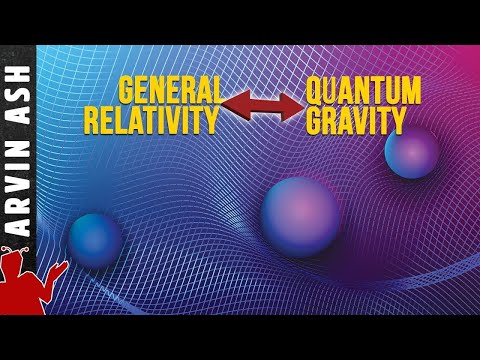
So, picture this: you’re at a party, right? Everyone’s chatting about the latest gadgets and shows, and then someone casually mentions quantum physics. Suddenly, the room goes silent. Like, seriously? What’s with that?
Let me tell you, it’s not just a bunch of nerdy equations and wild theories. It’s literally about how everything works—the tiny particles that make up everything around us. Now sprinkle in gravity, the force that keeps us glued to Earth. These two topics are kind of like oil and water: they just don’t mix well.
But here’s the kicker—we’re still trying to figure out how they fit together into one big picture. It’s kind of like watching your favorite puzzle pieces not wanting to snap together. Frustrating, huh?
So let’s take a little stroll through this mind-bending world where tiny particles dance around and gravity pulls everything down. Buckle up, because this is gonna get wild!
Exploring Joe Dispenza’s Insights on Quantum Physics and Its Scientific Implications
So, let’s talk about Joe Dispenza for a second. He’s a bit of a controversial figure, you know? He mixes science with personal development and spirituality, often referencing quantum physics in his teachings. Now, quantum physics is already a mind-bending field, so throwing gravity into the mix? That’s like adding hot sauce to an already spicy dish!
First off, quantum physics studies the tiniest building blocks of our universe—think atoms and subatomic particles. It’s all about how these particles behave when no one’s looking and how they can be in multiple states at once, or even influence each other across vast distances. It’s pretty trippy stuff!
Gravity, on the other hand, is something we feel every day. It keeps our feet on the ground and keeps the planets in orbit around the sun. However, integrating gravity with quantum physics is a challenge that scientists are still working through. That’s where things get funky.
Now Dispenza suggests that our thoughts could somehow affect this quantum realm—he basically argues that consciousness might play a role in shaping reality through the principles of quantum mechanics. This idea draws on concepts like entanglement, where two particles can become linked in such a way that the state of one instantly influences the state of another no matter how far apart they are.
- The Observer Effect: This is when simply observing an experiment changes its outcome! It’s like if you’re watching your cake bake, it doesn’t rise as well because it knows you’re there.
- Superposition: Particles existing in multiple states at once until we measure them—like Schrödinger’s cat being both alive and dead until we peek inside the box.
- The Uncertainty Principle: You can’t know both the position and momentum of a particle accurately at the same time; it’s all about probabilities!
You see, what happens is that most scientists think Dispenza takes some liberties with what these quantum principles actually mean. They argue that while it’s cool to connect human thoughts to quantum mechanics on some level, there isn’t solid evidence showing that our consciousness interacts with physical reality at such a fundamental level.
A little anecdote here: Picture your buddy who claims he can pick up his skateboard just by thinking hard enough about it—sweet idea but not exactly grounded in real-world physics! That’s kind of how some folks view Dispenza’s take on science.
This fusion of ideas between quantum physics and gravity creates an intriguing dialogue but teeters on speculation without more rigorous scientific backing. Many physicists are still trying to reconcile general relativity (our best explanation for gravity) with quantum mechanics—and doing that requires tons of experimentation and thought!
You follow me? At its core, while Joe Dispenza’s insights are thought-provoking and encourage people to consider new ways of thinking about life and consciousness, they tap into deeper mysteries without providing concrete scientific validation as you’d typically expect from mainstream academia.
You might find yourself wondering whether there truly is a bridge between this psychology-meets-physics outlook he champions and established science. The truth remains fuzzy like something observed through a warped lens—but isn’t exploring these ideas just part of what makes science itself so exciting?
Stephen Hawking’s Insights on Quantum Physics: Understanding the Universe Through His Perspective
So, let’s talk about Stephen Hawking and his thoughts on quantum physics. You know, this British physicist really made waves with his ideas. He didn’t just study the stars; he dove deep into understanding the universe at its most fundamental level. It’s like he had a secret map to the cosmos.
Quantum Physics is all about the tiny stuff—like atoms and particles that are way smaller than our everyday experience. These things behave in ways that can seem totally bizarre. For example, particles can exist in multiple states at once, which is called superposition. Just picture flipping a coin: while it spins, it can be both heads and tails until you catch it. Cool, huh?
Now, tie this into gravity—the force that keeps us grounded (literally!). Gravity governs how celestial bodies move and interact with each other but doesn’t mesh so nicely with quantum mechanics. This disconnect is what gets physicists scratching their heads.
Hawking was super interested in bridging these gaps. His work on black holes is particularly fascinating. He proposed that black holes aren’t just cosmic vacuums sucking everything in; they actually emit radiation—now known as Hawking radiation! Imagine a black hole losing energy and fading away over time—that’s mind-blowing!
He pointed out that if you consider both quantum physics and gravity together, we can start to grasp how black holes might help us understand the early universe. Think of it like piecing together a complex puzzle where every piece gives insights into the overall picture.
Another huge idea from Hawking was related to the information paradox. When something falls into a black hole, does all its information get lost forever? Hawking argued against this loss of information principle by suggesting that information could be preserved somehow when particles escape as radiation.
What’s even wilder? He thought this could reveal more about how our universe began with the Big Bang! If we understand quantum mechanics better in relation to gravity and black holes, we might unlock secrets about those first moments of creation.
But look, here’s where it gets real—it’s not just theoretical stuff up in space; this has implications for how we see reality itself! Realizing how interconnected everything is helps us ponder big questions about existence and what lies beyond our perception.
In summary, Hawking brought fresh ideas to understanding quantum physics alongside gravity through his groundbreaking theories on black holes and their implications for the universe’s formation. It’s like he opened doors to new realms of thought where science meets philosophy—and who knows what else lies beyond those doors?
Unraveling the Biggest Mystery in Quantum Physics: Exploring Science’s Greatest Enigma
Quantum physics and gravity are like that classic buddy duo who just can’t seem to get along. One is all about the tiniest bits of matter – think atoms, electrons, and particles that are way too small to see with your eyes. The other, gravity, is the force that holds the universe together; it’s what keeps us grounded here on Earth while also making sure galaxies dance around each other in space. But here’s the kicker: these two don’t really play nice together.
First, let’s talk about quantum physics. It’s this mind-bending field where particles can be in two places at once, or even behave like waves! Picture this: you’ve tossed a coin into the air. In the quantum world, it would be spinning and showing both heads and tails at the same time until you catch it. Crazy, right? With things so uncertain, scientists have had a tough time reconciling this wildness with gravity.
Now onto gravity—it’s pretty much agreed upon that gravity follows Einstein’s theory of relativity. This theory works wonders for big things like planets and stars but struggles when applied to the tiniest particles we find in quantum physics. So basically:
- Quantum mechanics: Deals with tiny particles behaving weirdly.
- Gravity: Describes how large masses interact through space-time.
One major question is whether there can ever be a unified theory that brings these two worlds together—something called a “theory of everything.” Imagine being able to understand how something as tiny as an electron fits into our understanding of vast galaxies! That would be monumental.
A fascinating area searching for answers is string theory, which proposes that instead of tiny points, particles are actually tiny vibrations of strings. Kind of like plucking a guitar string where each vibration gives rise to different particles. It sounds poetic but remains tricky to prove.
But let’s not forget about influence; things get even more complicated when trying to explain black holes—those mysterious regions in space where gravity is so intense nothing can escape from them—not even light! You’d think maybe they wouldn’t mix with quantum stuff at all. Strange thought: what if information that falls into a black hole actually gets lost forever? That violates one of our basic rules in physics!
So what are scientists doing about it? There are experiments happening all over the globe aiming to shed light on this challenge between quantum physics and gravity—trying new ways to test theories through observations or even creating conditions similar to black holes on Earth!
In summary:
- The challenge lies in uniting quantum mechanics with gravity.
- The search for answers involves wild ideas like string theory.
- Black holes raise questions about information retention and loss.
It’s an ongoing journey filled with brain-bending concepts—but isn’t that what makes science so exciting? Every twist and turn just deepens the mystery while also drawing us closer to understanding how our universe functions down to its very core!
You know, when we talk about quantum physics and gravity, it feels a bit like trying to stitch together a beautiful tapestry using two completely different threads. On one hand, you’ve got quantum physics, which dances around the subatomic world—everything is in superpositions and entangled states, totally wild. Then there’s gravity, that ever-present force that keeps our feet planted on Earth and governs everything from falling apples to swirling galaxies. It’s like they’re living in their own little worlds.
I remember the first time I tried to wrap my head around this whole thing. I was sitting in my high school physics class, staring out the window while my teacher rattled on about Newton and Einstein. Suddenly, I thought about how weird it is that something as simple as dropping a pen could be explained by one set of rules (gravity), and yet the minutiae of nature’s smallest particles followed another rulebook entirely (quantum mechanics). It kinda blew my mind!
So here’s the thing: scientists have been scratching their heads for ages trying to unify these two realms. It sounds straightforward—just blend them together into one coherent theory—but trust me, it’s anything but simple. Quantum mechanics works like a magic trick; it operates at scales so tiny that they seem divorced from our everyday experiences. And then there’s gravity! It’s all about mass and space-time curves—a grand concept that feels solid and real.
When you think about black holes or the Big Bang, you can’t ignore how black holes challenge what we know about both concepts. They’re a point where gravity becomes so intense that normal laws seem to break down. Matter gets crushed into an infinitesimally small point where quantum effects should play a huge role but can’t seem to be reconciled with our understanding of gravity.
And if you’ve ever dabbled in string theory or loop quantum gravity—wow—that’s when things really get kooky! We’re talking ideas where dimensions beyond our usual sense come into play or where space-time itself might be made up of tiny bits! Seriously mind-boggling stuff.
At times it feels more philosophical than scientific, doesn’t it? This quest for answers leads us down rabbit holes of questions like “What really is reality?” or “Are we just living in some cosmic illusion?” There’s an elegant beauty to these mysteries though. Like a cosmic dance waiting for someone (or something) to figure out the perfect choreography.
So yeah, while bridging these two great mysteries might feel daunting right now, it’s also incredibly exciting! Every new discovery nudges us closer to understanding this intricate universe—and I mean who knows what we’ll find next? Just thinking about how much more there is left to uncover lights a spark in me. Maybe one day we’ll unravel this tapestry completely—until then, let’s keep mulling over these mysteries together!