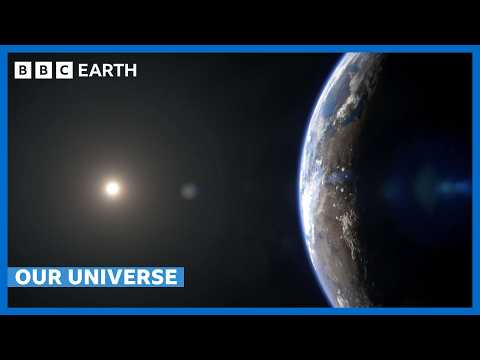
You know that moment when you’re lying on the grass, staring up at the stars, and you wonder what’s out there? I mean, we’ve all been there, right? It’s like our universe is one big mystery, just waiting to be unraveled.
And then there’s NASA. These folks are like the ultimate detectives of space. They’ve sent robots, satellites, and even some brave humans into the great beyond. Seriously! Just imagine being able to peek at Saturn’s rings or check out Mars like it’s your backyard.
Exploring our solar system is not just about cool photos or snazzy technology. It’s about finding answers to questions that have puzzled us for ages. So come along! Let’s journey through space science together and get a taste of what NASA has been cooking up in their cosmic kitchen.
Exploring the Solar System: A Comprehensive Guide to Its Planets and Their Scientific Significance
Exploring the Solar System is like taking a field trip through a cosmic neighborhood. Each planet is unique, and they all have something cool to teach us about our own planet Earth and the universe. So, let’s take a closer look at what makes each planet tick, shall we?
Mercury is the closest planet to the Sun. It’s super hot on one side and really cold on the other. This extreme temperature difference happens because it has almost no atmosphere to hold in heat. Scientists think studying Mercury can give us clues about how rocky planets form.
Then we have Venus, which is often called Earth’s twin since they’re similar in size, but don’t let that fool you! Venus has a thick atmosphere filled with carbon dioxide and clouds of sulfuric acid. The pressure there would crush you like a soda can! Learning about Venus helps us understand greenhouse gases and climate change.
Next up is Earth, our home sweet home! It’s special because it has liquid water and supports life. But don’t take that for granted; scientists are always researching how to protect our environment because changes here can affect everything.
Now, Mars is super interesting too. It’s got the tallest volcano in the solar system—Olympus Mons—and signs that it might’ve had water once upon a time. Exploring Mars could help us figure out if life ever existed there or if humans could one day live there too!
Jupiter, on the other hand, is a giant gas ball with an iconic Great Red Spot, which is actually a massive storm! It’s so big you could fit two or three Earths inside it! Studying Jupiter gives insight into how gas giants work and their role in shaping solar systems.
Then there’s Saturn, famous for its stunning rings made of ice and rock particles. But did you know Saturn has its own moon called Titan? Titan has lakes of methane! Yeah, you heard that right! Observing Saturn helps scientists learn about planetary systems’ formation processes.
Moving onwards to Uranus. This planet rotates on its side, kind of like it fell over while spinning around the Sun! That unusual tilt affects its seasons drastically compared to other planets. Understanding Uranus helps piece together how giant planets behave.
Last but not least, we’ve got Neptune, known for its beautiful blue color due to methane in its atmosphere. It’s also home to some wild weather patterns with winds reaching up to 1,200 miles per hour! Studying Neptune can reveal truths about atmospheric phenomena that might occur on exoplanets (planets outside our solar system).
In case you’re wondering about those little guys floating around out there—asteroids and comets—they’re pretty rad too! They hold ancient materials from when our solar system was forming millions of years ago.
So there you have it: each planet plays an important role in helping us learn more about our place in space. Exploring these worlds isn’t just an adventure; it’s a chance to answer big questions about life beyond Earth and understand where we came from. It’s all connected—like one big cosmic family reunion!
Exploring the Universe: A 3D Perspective on NASA’s Solar System Discoveries
Exploring the universe is like opening a giant cosmic mystery box, right? NASA has been at the forefront of this adventure, giving us a glimpse into our solar system and beyond. You might be amazed at just how much we’ve learned from our robotic explorers.
Let’s talk about how NASA uses **3D technology** to help us understand the solar system. Imagine looking at a picture of Mars. Now, what if you could actually see it in three dimensions? 3D modeling allows scientists to create realistic landscapes and terrains of planets. It’s kind of like being on a virtual field trip without ever leaving Earth! With tools like lasers and satellites, they can capture data and construct accurate representations. This helps you appreciate the complexity of places like Olympus Mons, which is, by the way, three times taller than Mount Everest!
And then there’s the **data from spacecraft**. Think about the Voyager probes, launched back in the 1970s. These little guys are still sending us information from interstellar space! Their 3D mapping data has shown us incredible things about planets like Jupiter and Saturn—like those mesmerizing rings that look straight out of a sci-fi movie!
Another cool example is with the **Mars rovers**, like Perseverance and Curiosity. When these robots beam back images, scientists use them not just for fun facts but to reconstruct entire Martian environments in 3D space. It’s super exciting to think about walking on Mars when you see those detailed models, isn’t it?
Now let’s not forget about **exoplanets**—those fascinating worlds we’ve found orbiting stars outside our solar system. Using intricate techniques like transit method or radial velocity measurements, NASA creates models that help visualize their potential atmospheres and surfaces.
But why does any of this matter? Well, getting a better perspective helps us understand not only our place in the universe but also things that could affect life on Earth—like asteroids or potential resources elsewhere in space.
Oh! And here’s something I find particularly riveting: NASA’s **Solar System Exploration Research Virtual Institute (SSERVI)** works on integrating all this data into educational resources. Imagine classrooms where kids can explore 3D models of celestial bodies right from their desks—how cool is that?!
So basically, NASA’s use of 3D perspectives not only assists scientists in making groundbreaking discoveries but also makes learning about space so much more accessible for everyone interested in what lies beyond our planet.
In short:
- 3D modeling brings planets like Mars to life.
- Voyager probes keep sending valuable information decades later.
- Mars rovers create detailed environmental maps.
- Exoplanet research expands our understanding of other worlds.
- Educational initiatives make space exploration more engaging for everyone.
NASA’s journey through space science is less about finding answers and more about igniting curiosity—it opens doors to endless questions we never even thought to ask!
Exploring the Solar System: A Comprehensive Guide to the Planets in Order
Exploring the Solar System is like going on an epic road trip, but instead of cruising down a highway, you’re zipping through the vastness of space. So let’s take a fun, winding path through our cosmic neighborhood and check out the planets in order from the sun. Buckle up!
1. Mercury
First up is Mercury, our closest planet to the sun. Think of it as the tiny speedster of the group! It’s only about 38% the size of Earth and has no atmosphere to keep it cozy. This means it experiences some serious temperature swings—from blistering heat to freezing cold. You wouldn’t want to forget your jacket here, that’s for sure!
2. Venus
Next is Venus, which is often called Earth’s twin because they’re somewhat similar in size and structure. But don’t be fooled! Venus has a thick atmosphere packed with carbon dioxide, making it a sweltering hot mess—seriously, it’s like a giant sauna at about 900°F (475°C). Imagine running into that! The surface pressure there is also much higher than on Earth, kinda like being deep underwater.
3. Earth
We all know about our home sweet home—Earth! It’s special because it’s just right for life as we know it. With its perfect mix of water and air, we’ve got everything we need: food, shelter, and good vibes all around! Plus, Earth has one moon that brings us beautiful night skies and those iconic tides.
4. Mars
Say hello to Mars next! It’s been capturing human imagination for ages with thoughts of little green aliens and amazing rovers exploring its red surface. Mars has soft reddish soil rich in iron oxide or rust—that’s what gives it that distinct color! It also got some crazy tall volcanoes like Olympus Mons which towers over any mountain on Earth.
5. Jupiter
Moving along to Jupiter—the heavyweight champion of the solar system! This planet is so massive that you could fit all other planets inside it several times over. Its atmosphere is famous for swirling storms including the Great Red Spot—a storm that’s been raging for hundreds of years! And get this: Jupiter has a whopping 79 moons!
6. Saturn
Saturn makes its entrance with those stunning rings made mostly of ice particles mixed with rocky debris—pretty gorgeous if you ask me! While you might think Saturn’s rings are one solid piece, they’re actually made up of countless tiny bits flying around at different speeds—it’s quite a spectacle.
7. Uranus
Now let’s talk about Uranus—it’s unique because it spins on its side compared to other planets; imagine rolling over while walking! Its blue color comes from methane gas in its atmosphere. And how many moons does this icy giant have? About 27!
8. Neptune
Finally, we reach Neptune—the furthest planet from the sun in our solar system (and yes, it’s still considered one!). It’s windy too—you’d experience some wild storms here with winds reaching up to (1,500 mph; 2,400 km/h). Neptune also sports its own deep blue hue thanks to methane in its atmosphere.
So there you have it—a quick spin through our solar system’s planets in order from Mercury all the way to Neptune! Each one has something cool going on—like unique atmospheres or crazy weather patterns—and they all play their part in this grand cosmic dance around our sun.
Pondering about these celestial wonders really makes you realize how incredible our universe truly is, doesn’t it?
You know, sometimes I get lost in thought about how far we’ve come in understanding our solar system. Like, remember sitting under a clear night sky, staring at the stars, and dreaming about what could be out there? That’s what NASA’s solar system exploration feels like to me—kind of like a giant adventure into the unknown.
It all started with this wild idea to send machines and humans beyond our planet. And honestly? Some of those moments are just mind-blowing! Just think about it: from the first time we landed on the Moon with Apollo 11 to sending rovers crawling around Mars. Every mission is like turning a page in a cosmic storybook. Each new discovery, whether it’s liquid water on Mars or the breathtaking beauty of Saturn’s rings, just makes me feel so small yet so connected to everything.
I remember watching the images from Voyager as it zipped past Neptune and then kept going into interstellar space. I mean, can you imagine that—sending something out there where no human has ever been? It’s like a postcard from the edge of our backyard! But it’s not just about what we find; it’s also about how much we learn about ourselves. The more we discover about planets and moons, the more we realize how unique Earth is. It makes you appreciate home a bit more, don’t you think?
And then there are missions like Juno orbiting Jupiter, bringing back stunning insights into its mysterious atmosphere. The way science unfolds is sometimes poetic! Scientists pour hours into research and planning for these missions—thinking they’re making tiny steps when they’re really making leaps for humanity.
But hey, it isn’t all smooth sailing! We’ve had setbacks too… Challenger and Columbia remind us that space isn’t just an open highway; it can be dangerous. Those moments ground us and show how crucial safety is in this thrilling quest.
It’s crazy to think about where we’ll go next or what we’ll discover out there. Will we find life on Europa? Or maybe even hear from distant exoplanets someday? Each question leads to another adventure waiting to happen.
So yeah, NASA’s exploration isn’t just science; it’s an inspiring story of curiosity that sparks imaginations everywhere—from kids in classrooms dreaming of being astronauts to scientists crafting their next big project at mission control. It reminds us that while we’re here pondering life on Earth, there’s an entire universe waiting for us out there full of mysteries yet untold!