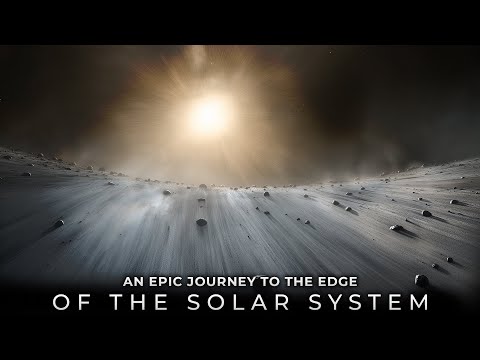
You know, the other day I was staring at the night sky and, wow, it really hit me. All those twinkling stars? Each one is like a little postcard from the universe. And then there’s our solar system!
So many planets whizzing around, each with their own things going on. Remember when Pluto was a planet? Yeah, good times! But seriously, NASA has been on this epic quest to explore all that space stuff. They’ve sent out probes and rovers like they’re throwing their own intergalactic party.
How cool is it that we can send machines to other planets? Or even land on Mars and take selfies? It’s like a cosmic road trip where the sights are totally mind-blowing!
Anyway, buckle up! We’re about to zoom through NASA’s incredible adventures across our solar system and beyond. Are you ready for this wild ride?
Exploring the Cosmos: What Lies Beyond Our Solar System According to NASA
Exploring the cosmos is like embarking on a grand adventure—just think about all the mysteries waiting out there! When you look up at the night sky, you’re seeing not only stars but also a universe full of wonders beyond our solar system.
NASA has been on this quest for knowledge for decades. They’ve been sending out probes and telescopes to gather information, and it’s all super fascinating. So, what exactly lies beyond our solar system? Let’s break it down!
Exoplanets are probably one of the coolest things NASA has discovered. These are planets that orbit stars outside our solar system. Scientists have found thousands of them—some in what’s called the “habitable zone,” where conditions might be right for life as we know it. Imagine a world similar to Earth, just hanging out around a distant star!
Then there’s interstellar space, which is basically everything that exists between stars. It sounds empty, but it’s not just nothingness! There are cosmic dust particles, gas clouds, and even cosmic rays zipping around. NASA’s Voyager spacecraft are currently traveling through this region, giving us valuable insights into what lies between the stars.
Another exciting frontier is the Milky Way galaxy. Our solar system is just a tiny speck in this massive spiral galaxy. With billions of stars and potentially billions of planets, there’s so much to explore! NASA has been mapping our galaxy using data from missions like Gaia, which helps pinpoint locations and features within the Milky Way.
And let’s not forget about dark matter and dark energy. Okay, these terms sound kinda sci-fi-ish but bear with me! Dark matter makes up most of the universe’s mass yet doesn’t emit light or energy we can detect directly—that’s why it’s called “dark.” Meanwhile, dark energy is suspected to be responsible for the universe’s expansion. It’s like trying to solve a puzzle with pieces missing; pretty mind-boggling!
Speaking of puzzles, have you heard about black holes? These mysterious regions warp space and time with their immense gravity. They can form when massive stars collapse under their own weight. We can’t see them directly since they trap light, but we know they exist thanks to studies done by various telescopes and missions like Event Horizon Telescope.
There’s also ongoing research looking into potential signs of life on other celestial bodies. The moons of Jupiter and Saturn—Europa and Enceladus—are both intriguing targets because they may have subsurface oceans beneath their icy crusts.
To wrap this up nicely: exploring what lies beyond our solar system isn’t just about finding new worlds; it helps us understand more about ourselves and where we fit in this vast universe. Every discovery brings new questions—and that sense of curiosity keeps driving scientists forward into the great unknown!
Exploring the Frontiers of Space: Have We Truly Exceeded Our Solar System?
So, here’s the deal: when we talk about space exploration, we’re stepping into some seriously vast territory. You know, like infinite! Over the years, NASA and other space agencies have been on a wild ride, sending probes and missions to unravel the mysteries of our solar system. But have we really gone beyond it?
First off, let’s get a grip on what our solar system is. Basically, it’s all those celestial bodies hanging around the Sun—including planets like Earth, gas giants like Jupiter, and even dwarf planets like Pluto. Now, NASA has sent several cool missions out there to check things out.
- **Voyager 1 and 2**: Launched in 1977, these twin spacecraft are the rockstars of deep space exploration. They’ve traveled farther than any human-made objects ever! Voyager 1 crossed into interstellar space in 2012. That’s right—it’s officially outside our solar system!
- **New Horizons**: This mission zoomed by Pluto in 2015 and gave us amazing pictures of that icy world. It didn’t stop there; it’s now cruising through the Kuiper Belt—an area filled with icy bodies beyond Neptune.
- **Parker Solar Probe**: Okay, this one is super cool—it’s actually taking a close-up look at the Sun’s atmosphere! It’s designed to get closer than anything ever has before.
So yeah, thanks to these missions and others, we’ve learned loads about our cosmic neighborhood. But “beyond” can be tricky to define.
When you hear terms like “interstellar,” it usually refers to regions between stars—basically outside our solar system. Voyager 1 is currently zipping through this uncharted territory where the influence of other stars begins to kick in! The thing is, even though it’s technically not in our solar system anymore, it’ll take tens of thousands of years for it to reach another star.
And you might be thinking: “That sounds exciting!” Well, absolutely! But here’s where emotions come in: I remember when New Horizons flew by Pluto; I was glued to my screen watching those first images come in. There was that moment when scientists realized just how complex and beautiful Pluto really is—it wasn’t just a small rock anymore!
There are challenges ahead for future explorations too because space is no joke! The distances involved are mind-boggling. Just think about this: if you drove your car at highway speed (like 60 mph), it would take over six million years just to reach the nearest star—Proxima Centauri!
So while we’ve sent probes past our solar boundaries with incredible achievements under our belts—like Voyager’s iconic “Pale Blue Dot” photo showing Earth from way out there—we’re still very much at the baby steps stage when considering interstellar travel or what lies beyond.
In summary? We’ve **exceeded** our solar system with spacecraft like Voyager 1 marching into interstellar space while also learning tons about its edges through missions like New Horizons—but exploring beyond still feels more like dreaming than doing at this point! The universe has so many secrets left waiting for us—and boy oh boy do I hope we figure them out someday!
Exploring the Sun: Its Role in Astrophysics and Solar Dynamics
Exploring our Sun is like tuning into the heartbeat of our solar system. It’s not just a giant ball of fire—oh no! There’s way more going on. The Sun plays a critical role in **astrophysics** and **solar dynamics**, which are super cool areas of study that help us understand everything from solar flares to the orbits of planets.
First off, let’s chat about what the Sun is made of. It’s mostly hydrogen and helium. But it’s the processes happening inside that really get astrophysicists excited. In the core, hydrogen atoms fuse together to form helium, releasing a ton of energy in the process. This fusion reaction is what powers the Sun and gives it its glorious shine.
But why does this matter? Well, think about it: all that energy flows outwards and fills our solar system with light and heat. Without it, Earth would be a frozen chunk of rock floating in space! So basically, our existence here depends on the Sun doing its thing.
Then there’s solar dynamics, which is all about understanding how this massive star behaves over time. The Sun isn’t static; it has an 11-year cycle where its activity rises and falls—this includes sunspots, solar flares, and coronal mass ejections. You know those days when you get an amazing sunset? That might be because of some solar activity affecting Earth’s atmosphere.
Also, did you hear about those *solar flares*? They’re like huge explosions on the surface of the Sun that can send energy hurtling into space at insane speeds. Sometimes they even disrupt communications on Earth or create beautiful auroras up north—so pretty!
And then there are **coronal holes**—those dark patches we see in images taken by telescopes like NASA’s Solar Dynamics Observatory (SDO). These areas let plasma escape into space and can lead to increased solar wind hitting Earth. And this is important for understanding space weather!
Speaking of which, scientists are constantly monitoring these changes because they can affect satellites and even power grids down here on Earth! Imagine if your phone went haywire because of something happening 93 million miles away—that’s some serious cosmic influence.
Oh! And have you ever thought about how studying our Sun helps us learn about other stars? It does! Since our Sun is a relatively close star, observing it gives astronomers clues about how other stars might behave throughout their lifetimes.
In short:
- The Sun is mostly hydrogen and helium.
- Nuclear fusion in its core creates energy that supports life on Earth.
- The 11-year cycle affects solar activity like sunspots and flares.
- Solar flares can disrupt technology on Earth.
- Coronal holes emit plasma into space affecting space weather.
So yeah, studying our Sun isn’t just for science nerds. It’s vital for understanding not just ourselves but also how everything works out there in the universe! When you look up at that bright ball in the sky next time, remember: it’s complex, dynamic, and incredibly important—not just for life here but for our pursuit to understand what lies beyond.
You know, NASA has this incredible knack for sparking our imaginations. When you think about it, their journey through our solar system and even beyond is like an epic saga filled with adventure and discovery. I mean, how many folks can say they’ve been to the moon or sent a probe zooming past Saturn? It’s kind of mind-blowing.
I remember as a kid, I had this poster of the solar system on my wall. Each planet seemed so far away, almost like they belonged to some fantasy world. Fast forward a couple of decades, and NASA’s missions have made those distant dots in the sky feel so much more tangible. Voyager 1 and 2 launched in 1977 were like these brave little explorers that dared to venture into the unknown. It’s fascinating how they’re still sending back data after all these years—well over 40 years! They’ve taught us about Jupiter’s storms and Saturn’s rings, which is seriously cool stuff.
And then there’s Mars! The fascination with our rusty neighbor never seems to fade. Between rovers like Curiosity and Perseverance, we’re practically getting postcards from another planet. It’s almost as if NASA is saying, “Hey! Look at what we found!” I often find myself daydreaming about what it’s like on Mars—dusty winds blowing across red rocks, or maybe some tiny microbial life hanging out somewhere beneath the surface.
But it’s not just about planets; it goes way beyond that! Think of all those incredible missions aimed at studying comets and asteroids. Like when OSIRIS-REx snagged a piece of asteroid Bennu and brought it back to Earth—now that’s some sci-fi-level stuff! Imagine being part of something that helps us understand how our planet formed or even how life began.
Yet, despite all these achievements, there are still challenges ahead. We’re pushing deeper into space with ambitions for crewed missions to Mars by the 2030s and plans for returning humans to the Moon through Artemis—the excitement is palpable! But still, there are risks involved; space isn’t exactly forgiving.
You see? All these discoveries remind us that we’re part of something much bigger than ourselves. Each mission tells us not just about space but also about who we are as humans—our curiosity driving us forward into the great unknown. Seriously, every time you look up at night now, you can’t help but wonder what else is out there waiting for us to find it!