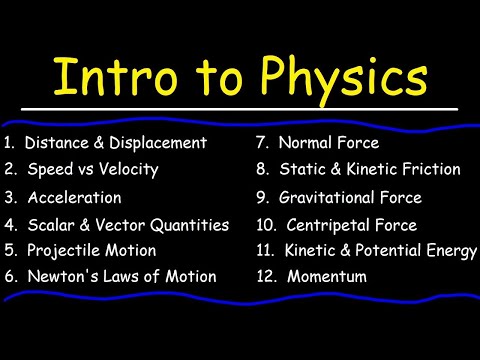
You know when you’re just chilling with friends, and someone casually mentions black holes? Then everybody leans in, because that sounds super cool, right? I mean, who wouldn’t want to know what happens if you fall into one? Spoiler: it’s a wild ride.
Physics is kinda like that. It’s this amazing adventure filled with mind-bending ideas and really strange stuff. You might think it’s all about equations and graphs, but honestly, it’s so much more—it’s about understanding how everything around us works.
Remember the first time you threw a rock in water? That splash! The ripples spreading out were like magic. That’s physics at play.
It’s everywhere: the stars above, the way you ride your bike, or even how your phone works. Sounds complex? Sure! But once we break it down, it starts to click.
So grab a comfy seat and let’s explore this fascinating world together! There are no tests here—just some fun discoveries waiting for us.
Essential Concepts of Physics: A Comprehensive Guide to Fundamental Principles in Science
Physics is one of those things that, when you dig into it a bit, can change how you see the world. I mean, think about the last time you watched a roller coaster zooming by. Those ups and downs? There’s some serious physics at play there! So let’s break it down together and look at some essential concepts that help us understand the universe around us.
1. Motion and Forces
You can’t talk about physics without getting into motion. When something moves, it’s because of forces acting on it. A classic example is Newton’s laws of motion. Like, if you’re sitting in a car and it suddenly stops, your body wants to keep moving forward—thanks inertia!
2. Energy
Think of energy as what makes things happen. It comes in different forms: kinetic (the energy of moving things) and potential (stored energy). Ever climbed a hill on your bike? At the top, you’re full of potential energy. As you zoom down, that potential turns into kinetic energy—whoosh!
3. Waves
Waves are all around us—think sound waves or light waves! They transfer energy without moving matter from one place to another. Ever noticed how sound travels? It’s vibrations in the air that we hear, kinda like ripples in a pond.
4. Thermodynamics
This deals with heat and temperature! Imagine baking cookies: when you heat up your oven, the heat energy gets transferred to your cookie dough, making them rise and taste delicious! The laws of thermodynamics explain how heat moves and changes forms.
5. Electricity and Magnetism
These two are buddies in physics—can’t have one without the other! Electricity is all about charged particles interacting with each other while magnetism involves magnetic fields influencing movement around them. Remember static electricity? That’s just a tiny spark of what these forces can do!
6. Relativity
Here’s where things get mind-bending! Einstein changed everything with his theory of relativity which says that time can actually stretch or shrink depending on how fast you’re traveling compared to something else—like if you’re zooming through space near light speed (which is totally fictional for us Earthlings right now)!
Each of these concepts opens up incredible doors to understanding not just physics but everything from engineering to astronomy to even daily life stuff like cooking or driving.
So next time you’re out there just living your life—watching clouds move or throwing a ball—remember there’s a whole world of physics making sense of all that action behind the scenes! Physics isn’t just for nerds; it’s really an adventure waiting for you to explore more deeply!
Exploring the Fundamentals of Physics: Key Concepts and Principles in Science
So, physics, huh? It’s one of those subjects that can feel super intimidating at first. You might think it’s all about complicated formulas and high-tech experiments, but really, it’s more like a toolkit for understanding how the world around you works. Seriously. So, let’s break it down a bit!
What is Physics?
At its core, physics is the study of matter and energy and how they interact. It covers everything from tiny particles zooming around to massive galaxies swirling in the universe. Imagine you’re watching a soccer game; physics helps explain how the ball moves when kicked or how players react to each other.
Key Concepts
There are some big ideas that pop up over and over in physics:
- Motion: This relates to how objects move. Think of a roller coaster—what goes up must come down! Understanding motion involves concepts like speed, velocity (which includes direction), and acceleration.
- Forces: Forces are just pushes or pulls on objects. Like when you push a friend on a swing—you’re applying force! There are different kinds of forces too, like gravity (which keeps us grounded) or friction (which can slow things down).
- Energy: Energy is what makes things happen. It can’t be created or destroyed; it just changes forms—like when you turn on a light bulb; electrical energy becomes light energy.
- Matter: Matter is everything with mass that takes up space. That means your phone, water, even the air! Matter comes in different states: solid (ice), liquid (water), gas (steam). The way these states change also ties into energy concepts.
The Laws of Physics
Now let’s talk about some laws that make physics tick:
- The Law of Gravity: This law explains why things fall towards Earth. It’s not just about apples falling from trees! It’s also what keeps the moon orbiting our planet.
- The Laws of Thermodynamics: These laws deal with energy transfer and heat. For example, ever notice how ice melts in your drink? That’s heat moving from your beverage to the ice!
- The Law of Conservation of Mass: This one tells us that mass can’t just disappear during chemical reactions—it’s all about balancing equations.
Anecdote Time!
Okay, so picture this: I remember being in high school trying to get my head around some of these concepts. One day during class, we did this experiment where we dropped different objects from the same height to see which hit the ground first. It sounded super boring at first but actually turned into an epic moment when we realized they all hit at the same time! My mind was blown because I learned that without air resistance—like in space—they’d fall at the same rate regardless of their weight.
The Impact
So why does any of this matter? Well, understanding physics helps us make sense of everything—from why airplanes fly to how GPS works! Plus, it feeds into engineering and other fields that literally shape our daily lives.
So there you go! That was a whirlwind tour through some fundamental concepts in physics—simple yet profound stuff that connects so many dots in life as we know it. Keep curious out there!
Exploring the 7 Fundamental Theories of Physics: A Comprehensive Guide to Modern Science
Sure! Let’s break down some fundamental concepts in physics that can help you grasp the essentials of modern science. Think of these theories as the building blocks, shaping our understanding of the universe. Here we go:
1. Newton’s Laws of Motion
This set of three laws explains how objects move. The first law states that an object at rest stays at rest unless acted upon by a force. Picture a soccer ball sitting still; it’s not going anywhere until someone kicks it. The second law relates force, mass, and acceleration: the more massive an object is, the more force you need to move it. And the third law? That one’s all about action and reaction — when you jump off a small boat, it pushes backward as you leap forward!
2. Thermodynamics
This theory looks at heat and energy transfer. The first law says energy cannot be created or destroyed, only transformed — like how turning on your heater uses electrical energy to produce warmth in your room. Then there’s the second law, which introduces entropy — basically, things tend to get messier over time (imagine your bedroom before and after cleaning!). Lastly, the third law states that absolute zero is unreachable, meaning there’s always some energy present.
3. Electromagnetism
This one combines electricity and magnetism into one framework. Consider how rubbing a balloon on your hair can create static electricity; it’s all about electric charges! James Clerk Maxwell unified these concepts with four equations explaining how electric and magnetic fields interact. For example, when you turn on your radio, electromagnetism helps transmit those radio waves through the air.
4. Relativity
Albert Einstein’s theory reshaped our understanding of space and time. His special relativity shows that time can slow down or speed up based on relative motion — imagine twin siblings: one zooming around in a spaceship while the other stays on Earth ages differently! General relativity takes it further by explaining gravity as warping space-time; think of placing a heavy ball on a stretched rubber sheet!
5. Quantum Mechanics
Ah yes, quantum mechanics! This deals with particles at incredibly small scales like atoms and photons (the light particles). One wild aspect is that particles can exist in multiple states until observed — known as wavefunction collapse! It’s kinda like opening a surprise gift; you don’t know what’s inside until you take a peek.
6. Quantum Field Theory
Building off quantum mechanics, this theory suggests everything is made up of fields rather than particles flying around randomly. Picture ripples across water representing different fields interacting with each other — when they meet up at certain points, they create visible particles like electrons or photons.
7. The Standard Model of Particle Physics
This theoretical framework categorizes all known elementary particles and their interactions via fundamental forces (excluding gravity for now). You’ve got quarks making up protons and neutrons—those little guys are essential to forming atomic nuclei—and then there are leptons like electrons zipping around those nuclei.
So here’s the deal: these seven theories form an intricate web connecting our understanding of everything from tiny atoms to vast galaxies! They hold immense power in explaining natural phenomena we observe every day—whether it’s throwing a ball or flicking on a light switch—showing just how marvelous physics can be!
Physics can seem like this giant, complicated maze, right? I mean, when you first start hearing about things like force, energy, and motion, it can feel a bit overwhelming. But here’s the deal: once you grasp the fundamental concepts, it’s like you’re holding a map to navigate that maze.
Let me share a quick story. I still remember the first time I watched a plane take off. It was at an airport with my family. Just watching this huge metal bird soar into the sky left me in awe. I kept thinking about how something so heavy could fly at all. And that curiosity fueled my interest in physics—like, what forces are at play here? It turns out those concepts we learn in physics have real-world applications!
So, let’s talk about some of these basics. First up is force. Simply put, force is just a push or pull on something. Imagine trying to shove your friend on a swing—your push is the force making them move back and forth. Sounds simple enough! Yet this tiny idea leads to some pretty giant equations later on.
Then there’s energy. Energy is what makes things happen; it’s like the invisible fuel for everything around us! Whether it’s moving your bike up a hill or lighting up your room when you flip the switch, energy is always in action—even if we can’t see it directly.
And let’s not forget motion! You’re moving right now as you read this—you might be swaying side to side or tapping your foot! Motion is basically how things change their position over time. From cars zooming down the highway to planets orbiting stars, motion is everywhere!
You see? Each of these concepts connects with everyday life in ways we often overlook until we stop and think about it for a second—or two!
Diving into physics isn’t just for rocket scientists or physicists, either; it’s for anyone who’s curious about how stuff works in our universe. Once you break down those big ideas into bite-sized pieces and relate them to real-world experiences—like that airplane taking off—you’ll find that physics becomes less daunting and way more relatable.
So next time you encounter physical principles while watching sports or even cooking (what happens when heat transforms ingredients?), remember those foundational ideas: force, energy, and motion are just waiting to be explored further by you!