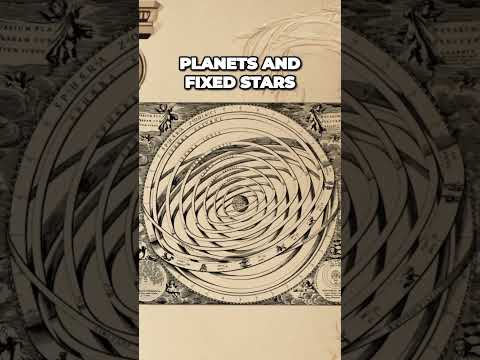
Alright, picture this: you’re living in ancient Greece, and someone tells you the Earth is the center of the universe. You’d probably laugh, right? But that’s exactly what a bunch of smart folks thought back then.
Welcome to Ptolemaic cosmology! It’s like the original map of the universe, where everything revolved around our little planet. Seriously, it was a big deal for ancient science.
These ideas shaped how people viewed space for centuries. And while they might seem whacky now—like thinking the sun’s a giant flashlight—those theories laid down some serious groundwork for what came next.
So grab a seat and let’s chat about how this quirky model influenced not just astronomy but all kinds of ancient science!
Ptolemy’s Lasting Impact on Science: Exploring His Contributions to Astronomy and Geography
Ptolemy was a big name in ancient science, especially in astronomy and geography. His ideas shaped how people viewed the universe for many centuries. Let’s break down his contributions a bit.
Ptolemaic Cosmology: Ptolemy’s most famous work is the Almagest, where he presented a model of the universe that put Earth right at the center. This view is called geocentrism. You might think it’s a bit odd, but back then, it made sense to people. They could see the sun, moon, and stars moving across the sky and thought, “Hey, everything must be revolving around us!”
Epicycles: To explain how planets moved in their weird loops, Ptolemy introduced the concept of epicycles. You know how when you’re on a roundabout and sometimes go back a little? Planets do something similar! They have small circular orbits (epicycles) while orbiting around Earth. It’s like mixing up your path just to get where you’re going.
Astronomical Predictions: Thanks to his complex calculations and models, Ptolemy could predict things like lunar eclipses and planetary positions with surprising accuracy for his time. For people who loved stargazing or needed to track time based on celestial bodies, this was groundbreaking!
Influence on Later Thinkers: Ptolemy’s ideas didn’t just vanish after he passed away; they were seriously influential! His geocentric model dominated scientific thought for over 1,400 years! That’s impressive longevity for an idea, right? It wasn’t until Copernicus introduced heliocentrism that folks really began to rethink the structure of our solar system.
Geography Contributions: Now moving onto geography – Ptolemy also wrote Geographia, which helped map out parts of the known world. He had this cool way of using coordinates to pinpoint locations you’d find on Earth. You know how GPS works today? Well, he laid some groundwork for that!
- Maps: He created maps that were quite accurate for their time but not perfect—after all, they didn’t have satellites back then! People used them as references for centuries.
- Spherical Earth Concept: He pushed forward the idea that Earth was spherical which contributed significantly to navigation as explorers set out on global adventures.
- Lattitude and Longitude: His system influenced how we think about dividing geographical spaces even now.
In short, Ptolemy was one of those figures who left an indelible mark on science. His work didn’t just sit on shelves; it shaped beliefs and practices across generations. So next time you look up at the stars or pull out your map app while driving somewhere new, remember that old philosopher from Alexandria who made it all a little easier for us to understand!
The Enduring Influence of the Ptolemaic Model in the Development of Scientific Thought
It’s pretty wild to think how the ideas of one dude, Claudius Ptolemy, have stuck around for so long, right? He lived in the 2nd century and came up with this model of the universe that placed Earth right at the center. That’s called the Ptolemaic Model. This thing shaped a lot of scientific thought even way after his time.
So, first off, let’s break down what this model was all about. Ptolemy thought everything revolved around Earth in perfectly circular orbits. He figured that the planets and the stars moved in what he called “epicycles” – like little circles within the big ones. You might be thinking, why does that even matter? Well, it helped explain some weird things about planetary motion that didn’t quite add up with previous models.
Now, fast forward a bit to when people started challenging his ideas! When Copernicus came along in the 16th century with his heliocentric model—putting the Sun at the center instead—it shook things up. But here’s where it gets interesting. The Ptolemaic Model didn’t just disappear overnight; it actually held on as a go-to way of thinking for quite a while.
- Stability: For ages, folks trusted Ptolemy because his model predicted celestial events like eclipses fairly well. Even if they didn’t know everything about how or why it worked.
- Integration: The Ptolemaic system was widely accepted by religious institutions. They saw it fitting into their worldview—placing humans at the center of God’s creation.
- The Renaissance: During this period, scholars dug back into ancient texts, including Ptolemy’s work. It sparked debates and research based on his premises—kicking off modern astronomy!
But here’s where things get personal! I remember my high school science teacher passionately explaining how our understanding of the cosmos evolved over time. She once spread her arms wide and said we were like “tiny specks on a spinning rock,” and I thought, “Whoa!” It made me appreciate how much our perspective has changed—from thinking we were at the center to realizing we’re just part of something way bigger.
Even after Copernicus and later thinkers like Galileo challenged Ptolemy’s ideas, they still had an influence! For instance, when Kepler calculated those elliptical orbits instead of perfect circles based on observations from Tycho Brahe (who kinda straddled both worlds), it was like peeling away layers of an onion—slowly revealing deeper truths about cosmic mechanics.
The takeaway? The Ptolemaic Model, while flawed by modern standards, was crucial in paving paths for future scientists. It didn’t just serve as a stepping stone; it created frameworks for questioning and adaptation in scientific thought over centuries.
So next time you look up at the night sky filled with stars and planets whirling around (and realize we’re just part of this enormous universe), take a moment to appreciate how that journey began—from ancient Earth-centered beliefs to our current understanding—that all started with Ptolemy’s vision!
The Historical Significance of Ptolemy: His Impact on Science and Astronomy
Ptolemy was a Greek-Egyptian scholar whose work laid the foundations for astronomy and science as we know them today. Growing up in a world where the heavens were a source of wonder, he devoted himself to understanding the cosmos. Living between 100 and 170 AD in Alexandria, his contributions are still felt, like a whisper from the past guiding us forward.
His most famous work is the Almagest, a comprehensive treatise that described the geocentric model of the universe. This idea placed Earth at the center with all celestial bodies revolving around it. You might think, “Oh, that’s just silly,” but back then, it made total sense to people. They observed the sky and figured that if you looked up and saw stars moving, it seemed right to put Earth in charge.
So what’s geocentrism exactly? Well, it’s kind of like when you watch a movie with your friends—you’re focused on what’s happening on screen (Earth) while everything else is just background action (the stars). Ptolemy used intricate mathematical equations to explain how planets moved in strange loops called epicycles. It was like trying to unravel a ball of yarn with no end in sight!
His theories held strong for over 1,400 years! Think about that: from ancient times until Galileo came along in the early 17th century and flipped everything upside down with his heliocentric view—where the sun takes center stage instead. But before that shift happened, Ptolemy influenced how people perceived space.
- Models of Astronomy: His geocentric model affected not just astronomy but also navigation and calendars.
- Influence on Later Scholars: Many astronomers leaned on Ptolemy’s work as their starting point. Scholars like Copernicus studied it before proposing their alternatives.
- Cultural Significance: Ptolemaic thoughts seeped into medieval philosophy; they shaped views about humanity’s place in the universe.
Imagine you’re at a party full of ideas, and everyone is chatting about life up there among the stars. Ptolemy tossed out some groundbreaking theories sparking discussions that lasted generations! His work shaped not only scientific communities but also cultural narratives.
Even today, though we know he’s not entirely correct (thank you very much, modern astronomy!), his influence persists. Whether you’re gazing at the night sky or using your phone’s GPS to find your way home, some remnants of his ideas still play into our daily lives.
To sum it all up: Ptolemy wasn’t just an astronomer; he was like this foundational figure who paved paths for future thinkers. While we’re constantly updating our understanding of outer space and making new discoveries, one really can’t forget that guy sitting there in ancient Alexandria—mapping out what he thought was reality back then! Isn’t it kind of cool how history folds into present-day science?
Ptolemaic cosmology? Oh man, that’s a biggie! Picture this: back in ancient times, people stared at the stars and, like, tried to make sense of everything. They saw the sun moving across the sky, and it made sense to think that Earth was at the center of it all—like a cozy little home for humanity. So, along comes Claudius Ptolemy in the 2nd century AD. He crafted this whole system where Earth was firmly planted in the middle of the universe. The sun, moon, and stars? They simply zipped around us.
Now, you might be wondering why anyone thought that was a good idea for so long. Well, back then there weren’t any fancy telescopes or high-tech gadgets—just folks with their eyes on the night sky seeking answers. Ptolemy’s model actually kind of worked for predicting planetary positions—at least for a while! It had these cool epicycles (little circles) going on top of big circles that helped explain why planets sometimes seemed to move backward. Astounding stuff!
I remember staring at the stars on a camping trip once. You know that feeling when you see those faraway lights twinkling? It makes you really think about your place in all this. But can you imagine if I thought I was smack dab in the middle of everything? It’s kind of mind-boggling how deep-rooted those beliefs can be.
So here’s where it gets interesting: Ptolemaic cosmology didn’t just chill out hanging around in textbooks; it shaped ancient science and philosophy for centuries! Even thinkers like Aristotle got swept up in it—all trying to make sense of what they saw above them.
But then came Copernicus in the 16th century with his heliocentric model—Earth revolves around the sun—and bam! Talk about shaking things up! But don’t underestimate Ptolemy’s influence. His ideas laid down some serious groundwork for astronomy and how we think about movement and space.
Ultimately, it’s pretty wild to reflect on how our understanding has evolved over time—from thinking we were at the center of everything to unraveling gravity and black holes today. Each generation builds upon what came before, right? And who knows what future scientists will uncover next? It’s all part of this endless quest to understand our little speck in this vast universe we inhabit together!