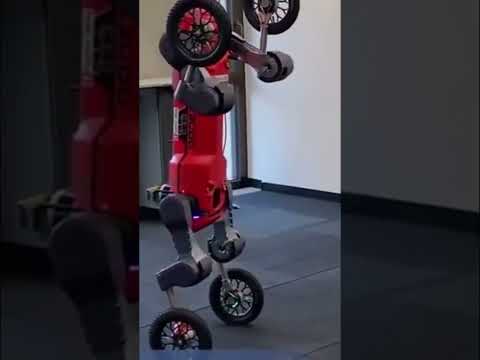
So, picture this: you’re in a lab, and suddenly, a little robot zips past you carrying a cup of coffee. No lie! If you think that kind of stuff is straight outta a sci-fi flick, think again. It’s all about Python robotics nowadays.
You might be wondering what’s the big deal with Python? Well, let me tell you: it’s like the secret sauce for making robots smarter and more versatile. Seriously! Researchers are using it to whip up amazing innovations that can change the game in science.
From exploring distant planets to studying tiny cells in your body, these robots are getting super clever. And all thanks to Python! So grab your favorite drink and let’s chat about how these advancements are shaking things up in the world of science. You’ll want to stick around for this ride!
Exploring the Latest Advancements in Robotics: Implications for Science and Society
Robotics is evolving fast, and it’s kind of amazing to watch how these advancements are reshaping our world. You know, just a couple of decades ago, robots were mostly seen in factories, assembling cars or doing repetitive tasks. Now, they’re entering all areas of life—healthcare, environmental monitoring, even your kitchen!
But let’s not forget Python. Yep, that popular programming language is like the magic wand for many robotic innovations. Seriously, it makes coding for robots way easier and more accessible. If you’ve dabbled in coding at all, you’ve probably heard about Python’s user-friendly nature.
One of the coolest things going on right now is how robots are getting smarter thanks to AI (artificial intelligence). So picture this: Robotic systems can learn from their surroundings and adapt their behaviors. For example, in surgeries, robotic assistants enhance precision and can reduce recovery times for patients.
Now imagine a scenario where you have robots equipped with Python-based algorithms that help in disaster response situations. They can navigate through rubble and find survivors while collecting data about structural integrity or even environmental hazards like gas leaks—sounds heroic right?
Here are some key implications of these advancements:
- Healthcare Innovations: Robots assist with surgeries and rehabilitation.
- Environmental Monitoring: Drones equipped with sensors gather crucial data about climate change effects.
- Sustainable Solutions: Robots are being developed to clean up oceans or plant trees efficiently.
- Human-Robot Collaboration: Co-bots work alongside humans in various sectors to enhance productivity.
So yeah, it’s not just about being cool gadgets; it’s about real change that benefits society! Think of a robot helping someone who can’t reach high shelves—it’s not just a fun thought; it’s a reality that’s happening now.
However, with great power comes great responsibility—or at least that’s what Uncle Ben taught Spider-Man! The ethical considerations around robotics are massive. As we integrate more robots into daily life, questions arise regarding job displacement and privacy issues. Who wants a robot snooping around their home?
Anyway, the future looks bright! Robotics powered by Python opens up potential we haven’t even tapped into yet. The blending of software and hardware could lead us toward groundbreaking discoveries in science that we can only dream about for now.
And if you’re ever feeling skeptical or worried about what this means for the future—don’t sweat it too much! Just remember to keep asking questions as we move forward together into this new era where humans and robots can partner up for progress!
Transformative Impact of Python on Medicine, Space Exploration, and Climate Research in Modern Science
You might be surprised by how much Python is changing the game in fields like medicine, space exploration, and climate research. It’s like this super versatile tool that scientists have totally embraced. Let’s break it down, shall we?
First up, in medicine, Python has really transformed how we handle data. Hospitals and researchers generate tons of patient information every day. With Python’s easy-to-read syntax, researchers can analyze medical records and clinical trial data without getting tangled up. It’s kind of like how a good book keeps you hooked—Python keeps the data flowing smoothly.
Take, for example, its role in developing machine learning algorithms for diagnosing diseases. Remember the excitement when AI models could spot cancerous cells in scans? Yeah, that’s Python at work! These models learn from patterns in data and help doctors make faster decisions, which is a total game-changer.
Now, let’s shift gears to space exploration. Here, Python’s flexibility shines like a shooting star! NASA uses it for all sorts of tasks—from analyzing satellite imagery to controlling spacecraft systems. Imagine programs written in Python helping plan routes for Mars rovers! Isn’t that mind-blowing?
You can also think about the simulations they run before launching missions. These simulations predict how equipment will behave under different conditions. It’s all about ensuring safety and success when exploring the great beyond.
Climate research? Oh man, that’s where things get serious too. Scientists need to analyze vast amounts of climate data to understand warming trends and natural disasters better. With Python’s libraries such as Pandas or NumPy, crunching numbers becomes simpler than pie.
- Pandas lets researchers organize and manipulate datasets with ease.
- NumPy speeds up calculations for environmental models.
- Matplotlib helps visualize this complex data into relatable graphs or charts.
You must have seen those wild temperature maps or weather predictions on your phone; chances are they’ve used tools built on Python!
I remember reading about a small team using Python scripts to track deforestation rates globally. They pulled satellite images together with weather data to see changes over time—it was incredible! They shared their findings online, helping raise awareness for climate action worldwide.
The bottom line? Python is not just a programming language; it’s a bridge connecting complex science with practical solutions. Each of these fields—medicine, space exploration, and climate research—isn’t just seeing improvements; they’re witnessing revolutionary shifts thanks to this coding marvel!
If you think about it, having such an adaptable language at our fingertips allows scientists to innovate continually. So yeah, just imagine where we could go from here! The future looks bright with Python leading the charge in scientific innovation.
Exploring the Latest Trends in Python for Scientific Research and Data Analysis
Python has become this powerful tool for scientists and researchers who are into data analysis and robotics. Seriously, it’s like the Swiss Army knife of programming languages. The way things are moving, Python is getting even better at helping us solve complex problems in science and research.
One of the big trends you might notice is this whole push toward automation in scientific research through robotics. Researchers are using Python to make robots that can collect data more efficiently. Picture a robot arm doing precise measurements while a research team can focus on interpreting the results instead of getting lost in repetitive tasks. Sounds cool, right?
Another exciting development is the rise of machine learning libraries like TensorFlow and PyTorch that work seamlessly with Python. These tools help researchers analyze data faster by finding patterns that we humans might miss. For instance, imagine a group studying climate change using vast amounts of data from satellites. With machine learning, they could predict future trends based on past behaviors—way quicker than traditional methods.
Then there’s this growing trend in using Jupyter Notebooks. They’re super convenient for documenting research processes because you can write code, visualize it, and explain your findings all in one place! Picture yourself working on a complex dataset about ocean acidity levels while jotting down notes alongside graphs and equations—it’s all there! That means other researchers can follow your thought process easily.
Also worth mentioning is how popular Python packages like NumPy and Pandas have become among scientists. They allow for easier manipulation of big datasets without needing to write thousands of lines of code. You can perform calculations faster than ever before! Like if you’re tracking bird migrations over hundreds of years—with these tools, cleaning up your data becomes almost effortless.
In robotics specifically, there’s this awesome library called ROS (Robot Operating System). It integrates nicely with Python and allows researchers to build complex robotic systems for various experiments—like autonomy in drones or even underwater exploration robots! You know those fun videos where you see robots navigating mazes? Yeah, Python helps make that happen.
And lastly, don’t forget about community support! The Python community is vibrant; people share their experiences and tools frequently online. So if you hit a snag with your project or just want feedback on something wild you’re trying out, there’s always someone ready to help out.
To sum it up: Python is not just a coding language anymore; it’s practically the backbone of modern scientific innovation across various fields including robotics! Whether automating tedious tasks or analyzing heaps of data quickly, its versatility keeps making waves within the scientific community. The future looks bright with all these exciting trends evolving around it!
You know, it’s kind of amazing how Python has made its way into the world of robotics. There was this time when robotics seemed all super complex and intimidating, like something out of a sci-fi movie. But now, thanks to advancements in Python, we’re seeing some pretty cool stuff happening in scientific innovation.
I remember a few years back when I attended this mini-robotics competition at my local community center. Kids were building little robots that danced and raced around, and it amazed me how they were using Python to program them. Like, what? These kids barely knew how to tie their shoes! But with just a bit of guidance, they could make these machines move, react, and even tackle challenges on their own. It really hit home how accessible coding has become.
The thing is, Python isn’t just user-friendly; it’s also super powerful. It handles a bunch of tasks really well—data analysis, machine learning, you name it—all vital for pushing the boundaries in science. Imagine you’re studying wildlife conservation. With Python-driven robots equipped with sensors, researchers can gather data in hard-to-reach areas without disturbing the environment too much. It’s like sending tiny assistants into the wild!
But we’re not just talking about cute little critters here; think about space exploration! NASA and other organizations are increasingly leaning on Python for programming autonomous robots that can explore distant planets or moons. The flexibility of Python allows scientists to tweak algorithms on-the-fly as they gather data from these incredible places.
And let’s not forget about collaborative robotics—where humans and robots work side by side. You see this a lot in labs nowadays! These robots can help perform experiments or handle repetitive tasks while researchers focus on the more creative aspects of their work.
So yeah, the advancements in Python robotics are changing the landscape for scientific innovation entirely. It feels like we’re standing at the edge of something big—where technology meets creativity in ways we never thought possible before. And honestly? That makes me excited for what’s to come!