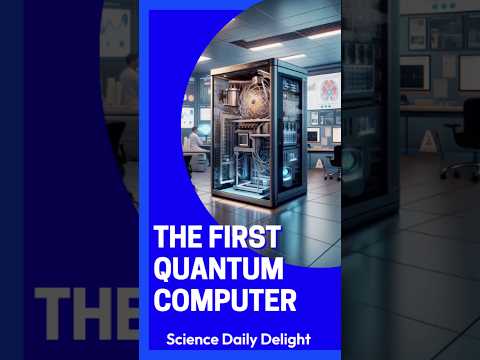
So, picture this: you’re at a family gathering, right? And your eccentric uncle starts talking about how computers could someday solve problems way beyond our imagination. You nod along, half-listening while secretly contemplating dessert. But here’s the kicker—he’s onto something big!
Quantum computing isn’t just a sci-fi flick anymore; it’s creeping into healthcare, and things are about to get super interesting. Imagine a world where diseases get diagnosed in seconds or treatments are personalized to fit your exact DNA. Sounds like magic, huh?
But it’s not magic; it’s science! So, grab that dessert and let’s dig deeper into this mind-bending tech that could change everything about how we care for ourselves and each other.
Quantum Computing: Transforming Healthcare Innovations and Advancements in Science
Quantum computing is kind of a big deal, especially when it comes to revolutionizing healthcare and scientific advancements. So what’s the buzz about? Let’s break it down.
First off, quantum computers are super different from the regular ones we use every day. They use something called **qubits** instead of bits. While a regular computer can handle bits that are either 0 or 1, qubits can be both at the same time. This weirdness comes from quantum physics—the rules that govern tiny particles. Pretty mind-blowing, right? This ability allows quantum computers to process complex problems way faster than traditional computers.
Now, you might wonder why this matters for healthcare. Well, one of the biggest challenges today is analyzing and interpreting massive amounts of data—think patient records, genetic information, research studies, you name it. Quantum computing can help with that!
Imagine you’re trying to find a needle in a giant haystack full of data. A normal computer would take ages to sift through it all. But with quantum computing’s parallel processing power, it can essentially look at multiple needles at once! This means quicker insights and better decision-making for doctors and researchers.
Another exciting aspect is drug discovery. Traditional methods can take years—sometimes decades—to identify new drugs. But with quantum simulations, scientists could model molecular interactions much more efficiently. Instead of testing thousands of compounds in a lab one by one, they could simulate interactions on a quantum level and zero in on promising candidates much faster.
Also worth mentioning is personalized medicine. With better data analysis thanks to quantum computers, doctors can tailor treatments specifically for individuals based on their genetic makeup and other factors! Imagine being treated not just for symptoms but for your unique biological profile—it’s like science fiction becoming reality!
But here’s where things get personal for me: I remember hearing my grandmother talk about her health issues and how frustrated she was with trial-and-error treatments. She wanted something that worked *for her*, not just another generic solution! The thought that future generations might benefit from tailored treatments really hits home; it makes these advancements feel so meaningful.
Let’s not forget about medical imaging too! Quantum tech could enhance imaging techniques like MRI scans by improving clarity or reducing scan times—making them less uncomfortable and more efficient.
In summary:
- Quantum computing uses qubits which allow for faster data processing.
- It can revolutionize data analysis in healthcare.
- Drug discovery processes could become significantly faster.
- Personalized medicine becomes a real possibility with improved data interpretation.
- Imaging techniques may see enhancements leading to better diagnostics.
You see? The possibilities with quantum computing in healthcare are just incredible! It brings hope not only for more effective treatments but also maybe even saving lives sooner rather than later. That’s something worth getting excited about!
Revolutionizing Healthcare: The Impact of Quantum Computing on Medical Science
So, let’s chat about quantum computing and how it’s shaking things up in healthcare. It sounds all sci-fi, right? But hang on, this stuff is real and super intriguing!
First off, what’s quantum computing? Well, traditional computers use bits as the smallest unit of data, like 0s and 1s. Quantum computers use something called qubits, which can be both at the same time thanks to a funky principle called superposition. It’s like flipping a coin that lands on both heads and tails until you look at it. This crazy ability lets quantum computers process vast amounts of data way faster than your regular computers.
Now let’s consider how this impacts medical science specifically.
Drug discovery is a huge area where quantum computing shines. Imagine trying to find the perfect key for a lock among thousands of options—super tough, right? Quantum computers can simulate molecular interactions in ways classical ones just can’t manage. For example, they can predict how different molecules will behave together in our bodies much more accurately. This means quicker development times for new drugs that we desperately need.
Another major point is personalized medicine. Tailoring treatments to individual patients has always been the dream but often felt out of reach. With quantum computing’s ability to analyze complex datasets from genes to environmental factors all at once, doctors could create personalized treatment plans that are way more effective than one-size-fits-all solutions.
Ah, and then there’s medical imaging. Techniques like MRI could become significantly improved with quantum algorithms that analyze imaging data faster and more precisely than any current methods can manage. Picture doctors getting real-time imagery with super clear details—they’d be making decisions faster than ever before.
But wait! There are challenges too. Integrating quantum computers into existing healthcare systems is no walk in the park. The tech needs to be reliable and user-friendly so hospitals can actually use it without needing an entire team of physicists on deck!
In essence, while we’re still scratching the surface with quantum technology in medicine, the potential is pretty thrilling! You can almost feel the excitement buzzing around labs as researchers begin to tap into these possibilities.
So yeah, keep your eyes peeled! This isn’t just some futuristic dream—it feels like we’re standing on the brink of something really special in healthcare innovation thanks to this cutting-edge tech!
Advancements in Quantum Computing: Transforming Healthcare Through Innovative Solutions
You know, when we think about quantum computing, it’s easy to picture futuristic sci-fi movies with computers that look like they’re straight from Mars. But hold on – this tech is legit changing the game, especially in healthcare. Seriously, let’s break down how quantum computing is sneaking into our hospitals and labs!
First off, traditional computers use bits as their basic unit of information. These bits can be either a 0 or a 1. In contrast, quantum computers use qubits. These guys are rad because they can be both 0 and 1 at the same time thanks to a phenomenon known as superposition. Imagine flipping a coin – while it’s in the air, it’s both heads and tails! This allows quantum computers to process a massive amount of information simultaneously.
So why does this matter for healthcare? Well, one major breakthrough comes from how we can analyze genomic data. Our genes consist of long strings of letters representing nucleotides. Analyzing all those combinations can take forever for traditional computers. But with quantum computing, researchers could quickly identify genetic markers linked to specific diseases or even tailor personalized medicine based on an individual’s unique genetic makeup.
Another cool thing is the way these machines handle drug discovery. Developing new medications usually means testing thousands of compounds until you find one that works. It’s like looking for a needle in a haystack! Quantum algorithms could model molecular interactions so accurately that scientists might pinpoint effective drugs faster than ever before.
Let’s not forget about diagnostic imaging either! You know how MRIs and CT scans help doctors see inside our bodies? Quantum computing has the potential to enhance these imaging techniques by improving image resolution and reducing scan times. Imagine getting clearer images much quicker – that could speed up diagnoses significantly.
But here’s something crucial: quantum computing isn’t here yet on a grand scale. It still has its challenges; we’re dealing with issues like error rates and scalability. It takes a lot of resources just to keep those qubits stable! Plus, there are folks working hard to develop algorithms specifically designed for healthcare applications.
Still, researchers around the globe remain optimistic about its future in medicine. They believe that as quantum technology progresses, it might lead us toward breakthroughs we haven’t even dreamed of yet.
In summary:
- Qubits offer faster data processing capabilities.
- Big potential for analyzing genomic data.
- Revolutionizing drug discovery.
- Improving diagnostic imagery.
- The tech is still developing but shows great promise!
So there you have it! Quantum computing is on the brink of transforming healthcare in ways we’re just starting to understand. The road ahead may still have bumps but buckle up; this journey could lead us to some seriously mind-blowing breakthroughs!
Imagine being in a hospital room, waiting for results from a complicated test. You’re anxious, right? Now picture a computer that can analyze all that data faster than you can blink. That’s where quantum computing comes in! It’s like having a superhero on your team, ready to tackle the most complex healthcare challenges.
So, what’s the deal with quantum computing anyway? At its core, it uses the weirdness of quantum mechanics—think super tiny particles behaving in unexpected ways—to process information at lightning speed. This means it can handle massive datasets way better than classical computers. It’s almost like comparing a bicycle to a Formula 1 race car.
In healthcare, this could totally change the game. For instance, researchers could model how diseases progress or how patients might react to certain drugs much quicker and more accurately. Can you imagine developing vaccines or personalized treatments in record time? It feels like something out of a sci-fi movie, but it’s super real!
I remember talking to a friend who works in genetics. He described how analyzing DNA sequences for rare diseases could take ages with traditional methods. But with quantum computing on the rise, he was practically buzzing with excitement about how quickly they could identify solutions and tailor treatments for patients. It’s fascinating to think that someone’s life might be saved because of this technology.
Of course, it’s not just about speed; it’s also about precision. Quantum computers have the potential to uncover patterns that we might miss using other types of technologies. Think about it: advanced algorithms could help predict outbreaks or even find optimal treatment plans tailored specifically for an individual patient based on their unique genetic profile.
But hey, we’re still figuring this out! The technology is evolving, and there are challenges—like making sure quantum systems are stable enough for everyday use and ensuring patient data is kept safe and secure. There’s so much promise ahead of us; we just need to tread carefully.
In a nutshell, the intersection of quantum computing and healthcare is groundbreaking—a real leap into the future! Who knows? Maybe someday soon we’ll look back at this time and see it as the beginning of something truly revolutionary in medicine. It makes you think about all those possibilities waiting around the corner!