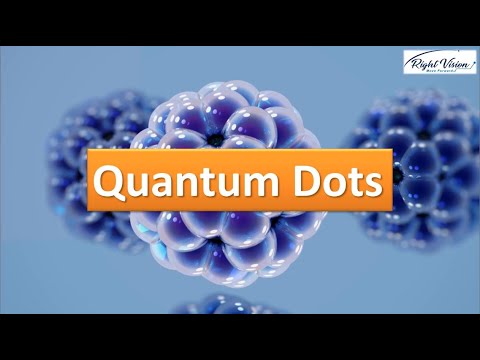
Have you ever played with glow-in-the-dark toys? You know, those cool little things that light up when the lights go off? Well, imagine if we took that concept and shrunk it down to the tiniest specks ever known. Enter quantum dots.
These little guys are like the rock stars of nanotechnology. Seriously. They’re tiny semiconductor particles, just a few nanometers wide, and they’ve got some seriously impressive tricks up their sleeves.
So, what’s the big deal? Quantum dots can change colors based on their size, which is super wild when you think about it! That means they’re not just pretty; they actually have real applications in everything from medical imaging to solar cells.
But let me tell you—understanding these tiny wonders isn’t always straightforward. It’s like trying to explain why your cat stares at you like it knows your secrets—it seems simple but gets deeper the more you look into it!
Exploring Quantum Dots in Nanotechnology: Advances and Applications in Modern Science
Quantum dots are tiny semiconductor particles that are so small, they actually fall into the nanotechnology category. Just to give you a perspective, these dots can be just a few nanometers across. That means you could fit about a million of them in the width of a human hair! Isn’t that mind-blowing?
Now, what makes quantum dots really interesting is the way they interact with light. They have this cool property called quantum confinement. This is when electrons in the dots can only exist at certain energy levels based on their size. So, if you change the size of a quantum dot, you change what color of light it absorbs or emits. If it’s smaller, it might emit blue light; if it’s larger, you might get red light. Pretty neat stuff!
Because of these unique properties, quantum dots have found their way into various applications in modern science and technology. Here are some areas where they shine (pun intended):
- Medical Imaging: They’re used as markers in medical imaging and diagnostics. Imagine tiny dots lighting up cancer cells under special imaging techniques!
- Displays: You’ve probably heard about quantum dot displays (QLED TVs), which offer vibrant colors and better energy efficiency compared to traditional screens.
- Solar Cells: In solar energy technology, they’re helping improve efficiency by harvesting more sunlight than conventional materials.
- LEDs: They also play a role in making brighter and more efficient LEDs for lighting.
Here’s an example: Imagine being involved in the lab where scientists are using these tiny particles to track cancer cells. They attach themselves to specific markers that are only found on tumor cells and then use them to light up those cells during testing. It’s like turning on a flashlight to find hidden treasure! That’s how powerful these little guys can be.
But not everything about quantum dots is sunshine and rainbows; there are challenges too! Some materials used in quantum dots can be toxic. So researchers are now working on developing safer alternatives. They want to make sure we can use these amazing technologies without harming people or the environment.
So anyway, while we’re just scratching the surface of what quantum dots can do, it’s clear they’re opening doors to exciting new possibilities in science and technology. Who knows what other breakthroughs we’ll see thanks to these tiny wonders?
Exploring Quantum Dots Applications: Innovations in Science and Technology
Quantum dots are these incredibly tiny particles, like little specks of magic in the world of nanotechnology. I mean, we’re talking about substances that are only a few nanometers wide, which is like a billionth of a meter! They’ve got some seriously cool optical and electronic properties, making them super useful in various fields. Let’s break it down.
First up, quantum dots emit light when you shine a light on them or run electricity through them. It’s not just any light; it can be very specific colors depending on the size of the quantum dot. So, smaller dots emit blue light while larger ones give off red. This property makes quantum dots amazing for things like displays and lighting. Think about those vibrant colors in modern TVs and smartphones. You know those brilliant images that practically jump off the screen? Yeah, that’s thanks to quantum dots.
Now shift gears with me for a sec to medical imaging. Quantum dots are being used as tiny markers to help doctors visualize cells and tissues better than regular dyes can. Imagine being able to see cancer cells in real-time during surgery! That’s what happens when quantum dots tag along; they provide sharp contrast against healthy cells, making it easier for surgeons to do their magic.
Another exciting area is solar energy. Quantum dots can be incorporated into solar panels to increase their efficiency. They can absorb sunlight over a wider range of wavelengths compared to traditional materials. Just think about it: by using these little guys, we could harness more energy from the sun and power our devices a bit greener!
And we can’t forget about sensors. They’re great for detecting chemicals or even changes in temperature. Imagine having sensors that quickly pick up pollutants in water or air quality changes in your environment! It’s pretty wild how much potential there is here.
But here’s where it gets even more intriguing: they have applications in quantum computing. These little particles could help create qubits—the building blocks of future computers that could process information way faster than anything we have today. Picture your already speedy computer times ten! It’s all still developing, but this could really change the game.
Of course, there’s always more to consider—like safety concerns surrounding their use. Some types of quantum dots might contain toxic elements which could pose risks if not handled properly or released into the environment.
In summary, while quantum dots may be small, their impact spans across various fields like displays technology, medical imaging, renewable energy sources and even computing! You see what I’m saying? There’s so much potential wrapped up in these teeny-tiny wonders; they might just hold keys to innovation we haven’t yet imagined!
Advancements in Quantum Dots: A Comprehensive Review of Recent Research and Applications in Nanotechnology
Quantum dots, huh? They’re these teeny-tiny particles, super small—like, really tiny—usually just a few nanometers across. Imagine if you could fit a bunch of them on the tip of a human hair; you’d be able to squeeze millions! What’s wild is that these little guys have amazing properties thanks to quantum mechanics. You see, their size affects how they absorb and emit light, making them incredibly useful in various tech applications.
One of the coolest things about quantum dots is their bright colors. Depending on their size, they can emit colors ranging from deep red to bright blue. This happens because when you hit them with light or electricity, they get excited and then release that energy as light when they calm down again. It’s like a mini fireworks show in a tiny space!
Recent research has taken quantum dots to new heights:
But there are challenges too! For starters, stability is a biggie. Many quantum dots can degrade quickly when exposed to air or moisture. Scientists are working hard to develop coatings that protect them while maintaining their fantastic properties.
Another thing researchers are looking into is toxicity. Some materials used in traditional quantum dot production could be harmful. There’s a lot of effort going into finding safer alternatives that still perform well.
So basically, advancements in quantum dot technology are super exciting but also create some hurdles for scientists to jump over! The blend of this cutting-edge science with real-world applications shows just how vibrant the field of nanotechnology really is.
You know what? It’s kind of like watching an artist evolve over time—their techniques improve, and before you know it, you’re amazed at what they can create! Quantum dots have still got so much potential ahead of them; it’ll be interesting to see where this journey takes us next!
Quantum dots, huh? Those tiny little specks that can’t even be seen without some super advanced equipment. I remember the first time I heard about them; it felt like stepping into a sci-fi novel. These little guys are basically semiconductor particles measuring just a few nanometers in size. That’s like a billionth of a meter! Can you even wrap your head around that?
What’s so cool about quantum dots is how they get their name from quantum mechanics, which sounds highly complex but mostly deals with the behavior of particles at this minuscule scale. Imagine you have a box of crayons, and depending on how you mix them up or how much energy you give them, the colors they shine can change drastically. That’s kind of what happens with quantum dots and light; their size determines what color they emit. It’s like magic, except it’s all just good ol’ science.
So why do these tiny specks matter in modern nanotechnology? Well, they’re making waves in areas like medicine and electronics! For example, researchers are using quantum dots in imaging techniques for diagnosing diseases. When doctors need to see what’s going on inside our bodies, these dots can light up specific cells. Picture it like having a flashlight that only shines on sick spots while everything else stays dark—you’d really want that kind of precision when you’re looking for trouble.
And then there are solar cells! Quantum dots could revolutionize how we collect solar energy by making it more efficient. Instead of just capturing sunlight as is, they can convert it into electricity with way better efficiency than traditional methods. Imagine your roof absorbing sunlight and turning it into juice for your home without breaking a sweat; pretty neat idea, right?
I once chatted with a friend who was working on developing new tech using quantum dots—fascinating stuff! He described how his team was trying to create displays that would show brighter colors while consuming less power. I could see his eyes light up when he talked about all the potential applications: phones that last longer without charging or TVs with colors so vivid you’d feel like you were practically there! It was contagious.
Still, despite their incredible promise, there are challenges to tackle too. The way these quantum dots interact with their environment isn’t entirely understood yet; there are safety considerations as well since we’re getting into materials science and health here.
But hey—this is science we’re talking about! Every discovery comes with its hurdles. The excitement lies in figuring out those kinks while pushing boundaries further than we ever thought possible.
In short, quantum dots might be small but they’re packing a punch in modern technology—making everything from medicine to renewable energy more efficient and effective. As we keep exploring this fascinating field of nanotechnology, who knows what other incredible surprises await us down the line?