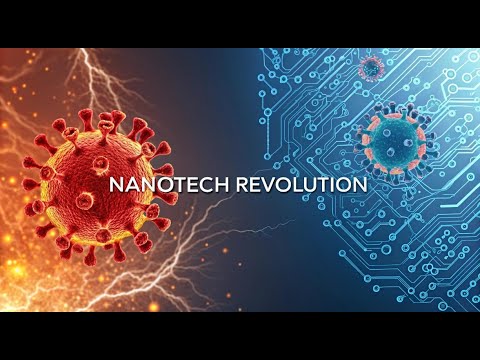
Alright, so picture this: you’re sitting in your favorite café, sipping coffee, and someone at the next table is talking about how tiny things—like super-duper tiny—are gonna change everything. Like, what? Seriously?
That’s quantum mechanics for you. It sounds all fancy and scientific, but it’s actually like the secret sauce behind nanotechnology. And guess what? It’s shaping our future in ways that might just blow your mind.
Imagine being able to create materials that are lighter than air but stronger than steel. Or medicines that target only the bad stuff in your body without messing with anything else. Quantum mechanics is making all that possible!
So yeah, if you think bending the rules of physics sounds a bit like superhero stuff, you’re not alone. Let’s dig into how this mind-bending science is putting us on the path to some seriously cool tech!
Exploring the Intersection of Nanotechnology and Quantum Mechanics in Modern Science
Exploring the intersection of nanotechnology and quantum mechanics is like opening a door to a world that seems almost magical. You know, when you get into it, you realize it’s all about tiny things doing big stuff. Let’s break it down a bit.
Nanotechnology deals with manipulating matter on an incredibly small scale—think of things that are just one to a hundred nanometers wide. That’s like trying to see something smaller than a speck of dust. And quantum mechanics? Well, that’s the science behind how things behave at these minuscule sizes. Weirdly enough, particles can exist in multiple states at once or be in two places at the same time! Sounds funky, right?
Now, here’s where it gets really cool. When we play around with materials at the nanoscale, their properties can change because they start obeying the laws of quantum mechanics instead of the classical laws we’re used to. Like, for instance, gold nanoparticles are not just shiny bits; when they’re tiny enough, they can appear red or purple instead of gold! Seriously strange but super useful.
So why should you care about this intersection? Well:
It feels almost poetic; as we uncover more about these tiny worlds, we’re shaping the future without even realizing it most times. The biggest challenge? Making sure we’re responsible with what we’re creating because these advancements carry weighty implications.
Really brings back memories for me—when I first learned about quantum physics in college; I remember feeling overwhelmed yet excited by how much was still out there waiting to be discovered! It sparked my curiosity and pushed me deeper into science.
In sum, exploring nanotechnology through the lens of quantum mechanics isn’t just an academic exercise; it’s shaping our future in ways we can’t fully grasp yet. With endless possibilities ahead, who knows what marvels await us just around the corner?
Exploring the Quantum Effect in Nanotechnology: Implications for Modern Science
So, quantum mechanics, huh? It sounds all heavy and complicated, but at its core, it’s really just a way to understand the teeny-tiny building blocks of our universe. And these little dudes play a huge role in nanotechnology. We’re talking about stuff on an atomic and molecular level—basically smaller than anything you can imagine!
When you step down to this scale, things get weird. Like, really weird. You know how in the macroscopic world, things follow clear rules? But in the quantum world, particles can exist in multiple states at once? Seriously! This quirky behavior is what we call quantum effects.
Now, let’s connect the dots here: when you’re working with materials at nanometer scales—like those used in nanotechnology—the quantum effects become super important. For instance, materials can exhibit properties that are completely different from their bulk counterparts. You might have a metal that conducts electricity like a champ at a larger size but acts like an insulator when it’s shrunk down to the nanoscale. How wild is that?
- Quantum Tunneling: This phenomenon allows particles to sneak through barriers instead of having to go over them. It’s kind of like magic! In electronics, this leads to faster and smaller components.
- Superposition: Imagine being able to be in two places at once—that’s superposition for particles! It has implications for creating incredibly powerful quantum computers.
- Entanglement: Two particles can become linked so that changing one instantly affects the other, no matter how far apart they are. This could revolutionize secure communication systems.
So yeah, as you’re working with substances just a few atoms wide, you’re entering a realm where these quantum effects dictate how materials behave and interact. This lets scientists design new kinds of materials with tailored properties for everything from medications to electronics.
Let’s take an example—quantum dots! These tiny semiconductor particles are only a few nanometers across and shine brightly when exposed to light. They’re being used in displays and even medical imaging because they can be engineered on such precise levels thanks to their quantum properties.
But it’s not all sunshine and rainbows; there are challenges too! Quantum effects can sometimes lead us into chaotic territory where predicting behavior becomes tricky—like trying to guess where your cat will jump next (good luck with that!). Researchers are still figuring out how to harness these phenomena effectively without losing control over them.
And it doesn’t stop here; as we push further into this nano-world with advancements in technology and experiments leading us deeper into quantum mechanics’ rabbit hole… well who knows what else we’ll discover? The future is looking pretty cool—and maybe even a bit freaky—with all the possibilities lying ahead!
So there you go! Quantum mechanics isn’t just some obscure theory for science geeks; it’s shaping the future of nanotechnology and modern science in ways we’re only beginning to understand. Isn’t that something?
Exploring Quantum Computing’s Impact on the Future of 6G Technology and Scientific Innovation
Sure thing! Let’s talk about quantum computing and how it’s shaking things up for 6G tech and beyond, especially in nanotechnology. You know, when you think of quantum mechanics, it can sound all sci-fi and out there. But at its core, it deals with really tiny things—the kind of stuff that makes your smartphone work.
Quantum Computing Basics
So, like, quantum computers are these super powerful machines that use the principles of quantum mechanics to process information way faster than traditional computers. They can handle tons of data simultaneously because they rely on quantum bits or qubits. These qubits can be 0s and 1s at the same time (this thing called superposition), which is why they can outperform regular bits in certain tasks.
6G Technology: The Next Step
Now, with the future of telecommunications looking towards 6G technology, which we’re not quite there yet but it’s coming fast!—quantum computing might just be a game-changer. Just imagine being able to process massive amounts of data in real-time during your video calls or while streaming your favorite shows without any lag. Sounds cool, right? Basically, it could transform everything from remote surgery to instant uploads of gigantic files.
–
–
Nano Innovations
Then there’s nanotechnology—the study and application of stuff on a super small scale (we’re talking atoms and molecules here). Quantum computing could push the limits here too! Imagine we can simulate how new materials behave at a nanoscale level—like discovering new superconductors that work at room temperature. That’s pretty wild!
–
–
Scientific Innovation
On top of all this, the fusion between quantum computing and nanotechnology will likely lead to breakthroughs in fields like medicine—think personalized medicine based on an individual’s genetic makeup—just by crunching data way faster than we do today.
Remember a time when you were just trying to find info on Google about something important? Now imagine if you had a supercomputer working for you in seconds instead of minutes or even hours; that’s exactly what this combo could do!
So yeah, diving into how these advanced technologies interact isn’t just mind-bending; it’s shaping up our future. Quantum computing might give rise not only to lightning-fast internet through 6G but also drive innovation across various scientific fields.
It’s exciting! And who knows? Maybe someday you’ll have a pocket-sized device powered by these technologies that completely transforms how we live our daily lives. How amazing would that be?
So, let’s chat about quantum mechanics and nanotechnology. You know, the small stuff that’s pretty mind-blowing? It’s like, if you zoom in really, really close, things get bizarre in a way that totally messes with your head.
I remember the first time I came across a concept in quantum mechanics—like, particles being in two places at once. Seriously? I felt like I was reading some sci-fi novel! But that’s just it; this wacky world of tiny particles is shaping our future, especially when it comes to nanotech.
Nanotechnology is all about manipulating materials on a super-small scale—like atoms and molecules small. So, imagine trying to build stuff at that size using the principles of quantum mechanics. That’s where it gets exciting! Quantum effects can lead to new materials with some crazy properties: stronger than steel but super light or even materials that can heal themselves. Like something out of a superhero movie!
What happens is we’re starting to see how this all plays out in real life. Think about medicine for a sec; researchers are working on nanoparticles that can deliver drugs directly to cancer cells without harming healthy ones. It’s like having tiny little delivery guys who know exactly where to go! This could change everything about how we treat diseases.
And then there are those quantum computers everyone buzzes about. They could solve problems way faster than what we have now because they process information using those quirky quantum bits or qubits instead of regular bits you find in classical computers.
Seriously though, the implications here are massive; we’re talking revolutionizing everything from energy storage to electronics. But it’s not just high-tech applications; even your daily life could change with smarter products made from these nano-materials.
But here’s the kicker: as we venture deeper into this quantum realm, we’ve got to be cautious too. There are ethical questions here—how do we ensure these amazing technologies benefit everyone and don’t just lead to inequalities?
In any case, watching quantum mechanics and nanotechnology evolve together is like witnessing magic unfold right before our eyes! Who knows what else they’ll create together? It gets you thinking about what future generations will see as normal while we’re still wrapping our heads around it all today.