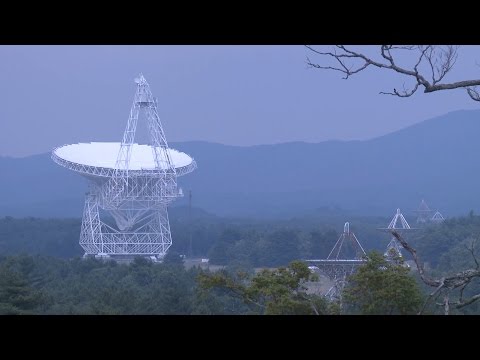
So, picture this: you’re snuggled up on your couch with a bowl of popcorn, scrolling through the channels. Suddenly, a documentary pops up about these giant metal dishes staring at the sky. I mean, who thought pointing a big ol’ satellite dish at space would help us understand the universe? Pretty wild, right?
Well, that’s exactly what radio telescopes do! Instead of capturing light like regular telescopes, they scoop up radio waves. It’s like eavesdropping on the cosmos! And let me tell you—what they find is straight-up mind-blowing.
Imagine listening to ancient signals from galaxies billions of light-years away while you’re just chilling with your favorite snack. It’s not everyday you get to feel like a cosmic detective! So strap in; we’re gonna explore how these amazing machines work and why they matter so much in our quest to know more about everything out there.
Exploring the Unique Features and Scientific Significance of Radio Telescopes
Radio telescopes are pretty amazing, huh? They help us peek into the universe in a way that optical telescopes just can’t. While optical telescopes capture light from stars and galaxies, radio telescopes listen to radio waves. This means they can pick up signals from objects that might be too cold or distant to see with light.
Construction and Design
The basic structure of a radio telescope is quite simple: it usually consists of a large dish, often made of metal mesh, that collects radio waves. Imagine a giant satellite dish or even a huge scoop of ice cream—only it’s capturing cosmic signals! The dish focuses these waves onto a smaller receiver located at its focal point. So, when you think about it, it’s like having your own cosmic ear listening for the whispers of the universe.
Why Radio Waves?
Radio waves are part of the electromagnetic spectrum just like visible light but have much longer wavelengths. These wavelengths allow scientists to detect things like cold gas clouds or even supermassive black holes, which are just too faint in visible light but shine brightly in radio frequencies. For instance, pulsars—those incredibly dense stars that spin rapidly—emit strong radio waves. Without radio telescopes, we would have missed out on discovering them!
Unique Features
There are some super cool features about radio telescopes:
- Interferometry: Multiple telescopes can work together to create an image with incredible detail.
- Sensitivity: Radio telescopes can detect faint signals that might be millions or even billions of light-years away.
- 24/7 Operation: Unlike optical telescopes that depend on clear skies at night, radio telescopes can operate around the clock!
Just imagine monitoring space as it happens—all day, every day! That’s how we’ve learned about cosmic phenomena like quasars and cosmic microwave background radiation.
The Scientific Significance
So why do we care about all this? Well, studying these signals lets scientists learn about the origins and evolution of galaxies and stars. It even helps us understand fundamental questions about how our universe works. For example, by observing the Cosmic Microwave Background (CMB) radiation with radio telescopes, researchers have gathered clues about the Big Bang and how our universe expanded over billions of years.
On a more personal note—once I went to visit an observatory with huge dishes scattered across the landscape. Standing there felt surreal; I couldn’t believe these massive structures were listening to messages from light-years away! It’s kind of mind-blowing to think what they can uncover.
In summary, radio telescopes play a crucial role in modern astrophysics. They open up a whole new world for us—a world where we aren’t limited by what we can see but rather by what we can hear from deep space. How cool is that?
5 Fascinating Facts About Radio Waves in Science: Unveiling Their Secrets and Impact
You know, radio waves are pretty amazing. They’re not just for your favorite tunes or those late-night talk shows. When it comes to science, especially in astronomy, they play a huge role. Let’s take a look at some really cool facts about radio waves and what they can do in the realm of science.
1. Radio Waves Travel Fast
First off, radio waves travel at the speed of light—about 299,792 kilometers per second. That’s super fast! When you send a radio signal to space, it zooms out there in no time. It can take years for us to receive signals back from distant galaxies, but those waves are moving so quickly that they reach us almost instantly once they are emitted.
2. Different Frequencies Matter
Radio waves come in different frequencies and wavelengths. Each type can tell us something unique about the objects producing them. For example, low-frequency waves can reveal information about cosmic dust and gas clouds while high-frequency waves might show us pulsars or black holes. It’s like tuning into different stations to hear various stories from the universe!
3. The Power of Radio Telescopes
This is where it gets pretty exciting: radio telescopes! These massive dishes collect faint radio signals that come from astronomical objects far away. The thing is, these signals are often weaker than what we hear on the radio here on Earth. But with radio telescopes working together—like in arrays—they amplify those signals significantly! It’s akin to having a group of friends who help to shout across a noisy room so you can hear the important stuff.
4. Penetrating Clouds and Dust
Another fascinating aspect is how effectively radio waves can penetrate through cosmic gas and dust that block visible light. While regular telescopes might struggle with seeing certain parts of space because they’re too cloudy, radio telescopes can still pick up those elusive signals. This means we get to learn more about regions of space that otherwise remain hidden.
5. They Help Us Understand the Universe
Finally, studying these waves has led us to discover some really mind-blowing phenomena like cosmic microwave background radiation—the afterglow from the Big Bang! This radiation fills our universe and offers clues about its origins and evolution over billions of years.
So there you have it—five neat facts about radio waves that really show how crucial they are in understanding our universe! Whether it’s unlocking secrets from distant galaxies or helping scientists piece together cosmic puzzles, these little invisible wave wonders are constantly making an impact on science as we know it today!
Unveiling the Universe: The Key Advantages of Radio Telescopes in Modern Astronomy
So, let’s talk about radio telescopes. They’re like the cool kids on the astronomy block, but instead of looking at visible light, they’re tuned into radio waves. I mean, can you imagine that? Just like how you might listen to your favorite tunes on the radio, these telescopes are capturing sounds from the cosmos. Pretty rad, right?
One of the biggest advantages of radio telescopes is their ability to observe celestial objects day or night. Unlike optical telescopes that need perfect weather and dark skies to function well, radio telescopes can keep working rain or shine. They basically don’t care about the conditions! This ability opens up a world of possibilities for scientists.
Another major plus is that radio wavelengths can penetrate dust and gas. Out in space, there’s a lot of stuff that can block light. Think about fog on a misty morning—it obscures everything! But radio waves can cut through that foggy mess like a hot knife through butter. This means astronomers can study parts of space hidden from optical telescopes.
- Detecting Pulsars: One exciting use is in finding pulsars—those spinning neutron stars that send out beams of radiation at regular intervals. Radio signals make them easier to spot than if we were using light!
- Mapping Galactic Structures: And let’s not forget mapping structures within galaxies! Radio telescopes help us understand how galaxies form and change over time by revealing regions filled with gas and dust.
- Studying Cosmic Microwave Background Radiation: They also help us study the cosmic microwave background radiation—essentially the afterglow from the Big Bang! This gives clues about the universe’s early moments.
If you ask me, one particularly touching story comes to mind about how radio telescopes helped unveil our universe’s secrets during pivotal moments in astronomy history. Back in 1974, scientists used them to decode signals sent towards a cluster called M13—an attempt at communicating with extraterrestrial life! That was such a bold move… just thinking about it gives me goosebumps!
And speaking of communication, radio astronomy has invented totally new technologies. The techniques developed for processing radio waves have led us to things like advanced imaging techniques and even medical imaging tools we use today—how cool is that? So every time we look at those distant stars communicating through these fascinating frequencies, we might be carrying a bit of their knowledge back home!
In short, radio telescopes are like our ears listening intently to what the universe has to say. With their unique strengths, they boost our understanding of everything from black holes to far-flung galaxies while reminding us how interconnected science is with our everyday lives—like that old song on repeat that just resonates with you!
You know, it’s pretty amazing how we, as humans, have figured out ways to peek into the depths of space. One of the coolest tools we’ve got for that is the radio telescope. Seriously, it sounds like something out of a sci-fi movie, but these big dishes are real and doing groundbreaking work!
So, like, you might be wondering how they actually work. Basically, instead of collecting light waves like regular telescopes do, radio telescopes pick up radio waves emitted by celestial objects. You know those long antennas you see in movies? They’re sort of similar but way more sophisticated. When these radio waves hit the dish (the big part), they get reflected to a receiver that converts those waves into data for scientists to study. It’s like translating alien signals into something we can understand.
Let me tell you a little story here. I remember watching a documentary about the very first radio telescope built by Karl Jansky in the 1930s. This guy was just trying to figure out some static he was hearing on his radio but ended up discovering cosmic radio signals instead! Can you imagine? He had no idea he was opening up this whole new field of astronomy. It’s wild how curiosity can lead to unexpected discoveries.
These radio waves can provide insights into things we can’t see with our eyes—like black holes or distant galaxies—and even help us understand cosmic events like supernovae or pulsars. I mean, talk about a window to the universe!
But here’s what gets me: even with all this advanced technology today—some massive arrays and big installations—the simple act of listening is still at the core of what these telescopes do. Each time scientists tune in, they’re basically eavesdropping on the cosmos! And while technology evolves and gets shinier, that sense of wonder and discovery remains timeless.
You know what? Radio telescopes remind us just how small we are in this vast universe while showing us how connected everything is through science. So next time you think about space exploration or what lies beyond our Earthly realm, remember those incredible dishes listening intently to the whispers of space—it’s both humbling and exhilarating!