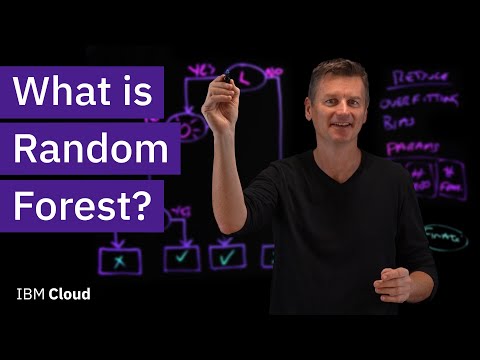
So, picture this: you’re at a party, and someone mentions “Random Forest.” You might think, wait, are we talking about trees or data? It’s kinda funny how machine learning throws around terms that sound like they belong in a nature documentary!
But stick with me, because Random Forests are seriously cool. They’re not about hugging trees; they’re more about gathering a bunch of decision trees together to make smart predictions. Imagine having a team of friends who all have different opinions on where to eat. The more of them you ask, the better your chance of finding a great spot!
That’s what Random Forests do—they take little decision trees and combine their votes to give you the best answer possible. Like pooling advice from all your friends instead of going with just one person’s idea.
Curious? You should be! This stuff is changing how we solve problems in everything from healthcare to finance. Let’s dive into how harnessing this technique can lead to some pretty effective machine learning solutions!
Optimizing Machine Learning Solutions: The Application of Random Forests in Scientific Research
Okay, let’s break this down a bit. When we talk about Random Forests, we’re diving into one of the coolest techniques in machine learning, especially for scientific research. Imagine you’re in a forest, right? Each tree is a decision-maker, and together they help you make better choices based on data.
So what’s the deal with Random Forests? Well, here’s how it works. Instead of relying on just one tree (which could be kind of biased or wrong), it creates a bunch of them. Each tree is trained on a random subset of the data and makes its own prediction. Then, like a democratic vote, the final decision comes from aggregating these predictions. It’s powerful stuff.
Why use Random Forests in science? Here are some key reasons:
- Robustness: They can handle missing values and outliers really well. This means you don’t have to clean your data as much as with other models.
- Interpretability: You can see which features are important in making predictions. This is super helpful when you want to understand what’s driving your results.
- Versatility: Random Forests can be used for both classification and regression tasks. Whether you’re predicting species presence or estimating numerical values, they’ve got your back.
Let me tell you about an awesome example! In ecology, researchers often need to predict animal habitat preferences based on various environmental factors—like temperature, vegetation type, or water availability. Using Random Forests allows them to analyze complex relationships between these factors and make predictions that can guide conservation efforts.
And yeah, one thing that makes these models shine is their ability to reduce overfitting. You know that moment when your model gets too tailored to the training data and fails miserably when faced with new data? Random Forests help prevent that by averaging over many trees.
Another fun aspect is feature importance! After training your model, you can check which variables (or features) were most influential in the decision-making process. That helps scientists figure out what really matters in their studies—maybe it’s certain types of soil for plant growth or specific climate conditions for animal behavior.
Of course, no model’s perfect! Sometimes they may require tuning—the process of adjusting parameters—to really hit their stride. It might take some time but figuring out how many trees to use or how deep those trees should grow can make all the difference.
In short—and don’t forget this part—Random Forests are an amazing tool for scientists looking to crunch numbers and make sense of complex datasets while also providing insights into what drives their results.
Exploring Random Forest Algorithms in Machine Learning: Applications and Advances in Scientific Research
Let’s chat about Random Forest algorithms in the realm of machine learning. It sounds technical, right? But stick with me; I’ll break it down in a way that makes sense.
So, what’s a Random Forest, anyway? Picture a big group of decision trees all working together. These decision trees are like mini-experts that make predictions based on data. Instead of relying on just one tree, which might get it wrong, you’ve got a whole forest voting on the best answer. This “crowd-sourcing” makes predictions more accurate and reliable.
One cool thing about Random Forests is their versatility. You can use them for both classification and regression. Classification is when you want to sort data into categories, like deciding if an email is spam or not. Regression is all about predicting numerical values, such as estimating house prices based on various features.
Now let’s dive into some examples of how these algorithms make waves in scientific research:
- Medical Diagnostics: Imagine using Random Forests to predict whether a patient has a certain disease. Researchers input symptoms and health metrics into the model, and it helps doctors make better decisions.
- Environmental Science: Scientists use these algorithms to analyze complex data sets related to climate change or species distribution. By sifting through tons of information, they can spot patterns that might have otherwise gone unnoticed.
- Agriculture: Farmers are turning to Random Forests for crop yield predictions. They input weather data and soil conditions to forecast how much produce they’ll get in each season.
But here’s where it gets really interesting! The power of Random Forests lies in their ability to handle missing data well. You know how real-life datasets aren’t always complete? That’s where these models shine because they don’t freak out over gaps—they just carry on.
Also, you might be wondering about feature importance. This is when the algorithm helps identify which variables matter most for making predictions. For example, if we’re predicting cancer risk, a Random Forest could show us that age and family history are significant factors while other factors might not be as crucial.
Another major advance has been in improving the speed and efficiency of training these models. With better computing resources and optimized algorithms, scientists can tackle larger datasets than ever before without waiting an eternity for results.
Now let me share something personal—when I first learned about machine learning concepts like this one, it blew my mind! The idea that you could train a computer to learn from examples rather than just following rigid rules felt revolutionary. It sparked my curiosity about how tech intersects with real-world problems.
In summary, Random Forests are powerful tools that help us navigate complex questions across various fields—from healthcare to environmental science—by leveraging the strength of multiple decision trees working together. Plus, they’re pretty good at dealing with messy data! So yeah, if you’re curious about diving deeper into machine learning applications or scientific research advancements, exploring this fascinating algorithm could be a great starting point!
Exploring ML Projects in Science: Harnessing Random Forest Algorithms for Enhanced Data Analysis
Machine learning is really shaking up the science world. It’s cool, right? One particularly interesting tool in this arena is something called Random Forest algorithms. Let me break it down for you!
So, a Random Forest algorithm is like a whole team of decision trees working together. Think of decision trees as flowcharts that help you make decisions based on answering questions. It’s like asking yourself a series of yes-or-no questions to reach a conclusion. Now, imagine if you had not just one tree but a whole forest of them! Each tree looks at different pieces of data and makes its own guess. Then, the forest combines all these guesses to give you the best possible answer. Pretty nifty!
What can Random Forests do?
You might be wondering about their actual uses in science and how they enhance data analysis. Here are some points to consider:
- Flexibility: They work well with both classification and regression tasks.
- Handling missing values: They can manage data with missing values rather well—no need to throw out those incomplete datasets!
- Feature importance: Random Forests can tell you which features (or variables) in your data are most important for making predictions.
- Overfitting resistance: They’re less likely to create overly complicated models that only work on training data.
Imagine you’re studying plant diseases using environmental data like rainfall, humidity, and temperature. A Random Forest could sift through tons of observations from different places and times, figuring out what factors are crucial for predicting when plants get sick.
Plus, the cool thing about using these algorithms in science is that they can handle complex datasets better than simpler models could—like juggling flaming torches while riding a unicycle!
Real-World Applications
Scientists are already using Random Forests in lots of areas:
- Epidemiology: Predicting disease outbreaks by analyzing patterns from various health indicators.
- Environmental Science: Assessing risks related to climate change by looking at historical weather patterns.
- Agriculture: Enhancing crop yields by evaluating varieties based on many environmental variables.
A fun story comes from researchers who tackled cancer diagnosis using Random Forests. They fed tons of patient data—like symptoms, test results, and treatment histories—into the model. In the end, it helped doctors identify high-risk patients more accurately than traditional methods.
The Bottom Line
In essence, harnessing (yes!) Random Forest algorithms gives scientists the power to analyze complex datasets effectively while gaining insights that might go unnoticed otherwise. This technology has transformed how we approach problems across various fields.
So next time you hear someone mention machine learning or random forests, just remember: it’s more than just numbers; it’s about making sense of our world in better ways!
So, you’ve probably heard of trees being used for all sorts of things, right? I mean, from timber to apples, trees are super versatile. But let’s talk about something a bit different today—random forests in machine learning. Alright, stick with me here.
Imagine being in a dense forest. You can’t see very far ahead because there are so many tall trees blocking your view. Now think of each tree as an individual decision-making model trying to figure stuff out based on patterns it sees in data. It’s kind of like when you go to a restaurant with friends and everyone has their own take on what to order. Some might go for the burger, others might want sushi—you get a variety of choices!
Random forests are like that dinner party with all those different opinions working together. They take multiple decision trees and combine their “votes” to make a final prediction or classification. This collaboration helps reduce overfitting, which is basically when a model gets too cozy with the training data and fails when it faces new info.
But let me tell you—a couple of years ago, I was trying to analyze some data for a project and I was lost in the weeds. I remember sitting there with my laptop open for hours trying to tweak linear models without any success—it was exhausting! Then someone suggested random forests as an alternative approach. It felt like someone turned on the lights! Suddenly, everything clicked into place, and my predictions became way more accurate. That moment was honestly such a relief!
What’s cool about random forests is that they’re not just good at making predictions; they’re also pretty handy at figuring out which features in your data are actually important—like peeling back the layers of an onion until you find the core that’s most essential.
So yeah, using random forests can change how we tackle problems in machine learning completely. You get this robust method that takes into account different perspectives and creates something way stronger than any single tree could provide on its own.
You might feel overwhelmed if you’re just starting out with machine learning, but don’t sweat it too much! Random forests are user-friendly enough that even beginners can see great results without diving too deep into the complexities right away. So maybe grab your forest gear—because this wild ride through data analysis is just getting started!