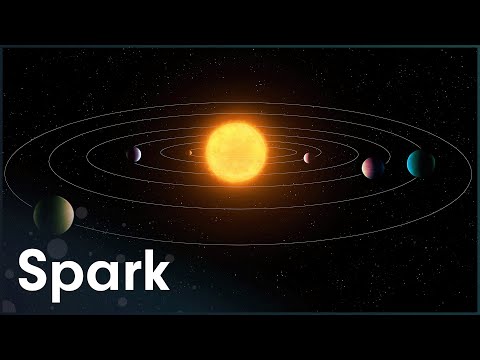
You know that moment when you trip over your own feet? It’s like the universe just decided to give you a little nudge. Seriously, gravity’s got a funny way of keeping us grounded, even when we’re not paying attention.
But gravity isn’t just some simple force pulling us down. Nope! It’s like a cosmic dance partner guiding the planets around the sun and making sure the moon doesn’t go wandering off into space.
Then there’s relativity, which sounds all fancy but really just means that time and space aren’t as straightforward as they seem—crazy, right? Imagine if I told you time could stretch and bend like taffy; I mean, who knew physics could be this wild?
So get ready to explore gravity and relativity! We’re about to take a little journey through forces that shape our universe in ways you probably haven’t thought about before. Buckle up!
Exploring Relativity: Unraveling the Universe’s Secrets Through Einstein’s Theory
So, let’s talk about relativity—the brainchild of Albert Einstein. You might have heard of it as one of those super-complicated ideas that only scientists get. But hang on, it’s totally possible to make sense of it!
The theory actually comes in two flavors: special relativity and general relativity. The first flavor was cooked up in 1905. It’s all about how time and space are related when you’re moving at really high speeds—like close to the speed of light. You know how when you’re racing your buddy on bikes, time feels different depending on who’s winning? Well, that’s sort of what special relativity is saying! Time isn’t a fixed thing; it stretches and compresses depending on how fast you’re going.
- Time Dilation: Imagine you’re zooming around at lightning speed while your friend is chillin’ back on Earth. Time for you would actually pass more slowly compared to your friend! This isn’t just sci-fi stuff—it’s been tested with super precise clocks flown around on planes!
- Simultaneity: Now, if two events happen at the same time from one perspective, they might not seem simultaneous from another moving perspective. Mind-boggling, right?
Then we dive into general relativity from 1915. This is where things get even more interesting because it tackles gravity itself! Einstein had this brilliant idea that gravity isn’t just a pull between big objects like Earth and us; it’s more about how mass bends the fabric of space and time—think of it as a trampoline with a heavy ball in the center bending it down.
- Warps in Space-Time: When something massive like our sun sits in space-time, it creates a dip or curve. So when planets move around the sun, they are just following this curved path rather than being “pulled.” Kind of like marbles rolling around that heavy ball!
- The Path Light Follows: Even light gets affected by this warping! When light passes near a massive object, its path bends—a phenomenon known as gravitational lensing. Astronomers use this effect to look deep into space!
You might be wondering how all this theory applies to our everyday lives, right? Well, satellites orbiting Earth rely on these principles for their timing systems to work properly. If we didn’t take into account both types of relativity while sending signals back and forth between Earth and GPS satellites? We’d be lost—literally! Without correcting for relativistic effects over time, our navigation systems would end up being off by several kilometers.
The emotional part? Just think about Einstein sitting there pondering these questions over a hundred years ago! He was curious about everything—from the tiniest particles to the immense cosmos—and here’s his theory still shaping our understanding today. Doesn’t that just give you goosebumps?
The universe is seriously filled with so many mysteries wrapped up within relativity. Each day scientists dig deeper into its secrets, helping us understand forces like gravity better than ever before.
If you sit back and ponder all that for a second—the very fabric of what we see around us shaped by concepts from over a century ago—it really makes you appreciate just how wild and incredible our universe truly is!
Understanding the Theory of Relativity and Gravity: Key Concepts in Modern Physics
Gravity and relativity are like the bread and butter of modern physics. They’re interconnected concepts, but they can feel pretty mind-boggling at first. So let me break it down for you in a way that’s hopefully a bit easier to digest.
First off, let’s talk about gravity. You know that feeling when you drop something? It just falls, right? Well, that’s gravity doing its thing. Basically, it’s a force that pulls objects toward each other. The bigger the object, the stronger its gravitational pull. That’s why planets can pull moons in orbit around them and why we don’t just float off into space when we jump.
Then we have Einstein’s Theory of Relativity. Now, this is where things get interesting! Einstein proposed two parts to his theory: Special Relativity and General Relativity.
- Special Relativity: This part focuses on objects moving at constant speeds, particularly really fast ones—like close to the speed of light. One of its key ideas is that time isn’t a fixed thing; it changes depending on how fast you’re moving.
- General Relativity: This takes things up a notch by looking at gravity itself. Einstein said gravity isn’t just a force; it’s more about how mass bends the fabric of space and time around it.
Imagine placing a heavy bowling ball on a trampoline. The ball creates a dip in the fabric—the trampoline sags around it. If you then roll a marble near that bowling ball, it’ll spiral inwards instead of going straight across. That’s kind of how planets and stars affect space-time!
So you might be asking: What does this mean for us? Well, our GPS satellites rely on Einstein’s theories to function properly—without them, they’d be off by miles! Crazy how something so seemingly abstract has practical applications in our everyday life!
And then there’s something called dilation. This means time passes differently depending on your speed or position in a gravitational field. For example, if one twin went off into space at super high speed while the other stayed on Earth, when they reunited, the space-traveling twin would actually be younger! Wild concept to wrap your head around!
At its core, gravity and relativity help us understand not just how objects move but also how they interact in ways we can’t always see or touch directly. It reshapes our view of the universe—from how planets orbit each other to how light bends around massive stars.
In essence, these concepts paint an intricate picture of our universe’s forces—showing us that what seems like simple attraction is actually tied up in complex relationships between mass and energy. The dance between gravity and relativity is ongoing and ever-evolving—just like our understanding of physics itself!
Exploring Einstein’s Theory of Gravity: Understanding the Formula Behind General Relativity
Alright, let’s talk about Einstein’s theory of gravity—his magnificent brainchild known as General Relativity. You probably know that gravity is the force that keeps us grounded. But Einstein took it a step further and gave us a totally new way to think about it.
So, here’s the deal: before Einstein, we thought gravity was like some invisible string pulling objects toward each other. But he flipped that idea on its head! Instead of thinking of gravity as a force, he said it’s more like a curve in space and time itself. Picture placing a heavy bowling ball on a stretched-out trampoline; the fabric dips, right? That’s kind of how massive objects like planets or stars warp space-time around them.
Now, let’s get into some nitty-gritty! The core of General Relativity can be summed up in one famous equation:
G = 8πGT
Here’s what this means, in simple terms:
- G: This represents the gravitational constant—a number that helps us calculate how strong gravity is.
- T: This stands for the energy and momentum content in space-time (basically everything that has mass or energy).
- When you multiply T by 8πG, you get G, which tells us how much curvature is created by mass.
This formula isn’t just math for math’s sake; it has serious implications! For instance, think about black holes—those mysterious voids where not even light escapes. According to General Relativity, when a massive star collapses at the end of its life cycle, it warps space-time so much that it creates one.
Have you ever seen those science fiction movies where spaceships zip through wormholes? Well, those are not just cool ideas—it comes straight from Einstein’s theories! His work suggests that if we could somehow create a shortcut through space-time (like folding paper), we might travel vast distances in no time.
But wait! There’s something really neat about his theory: it has been tested countless times. From GPS satellites needing adjustments because time moves differently up there (thanks to gravity being weaker) to light bending around massive objects—a phenomenon called gravitational lensing—Einstein nailed it more than a century ago!
In essence, General Relativity changes our view on gravity from just an invisible force to something far more complex and beautiful—a fabric of reality shaped by mass and energy. So next time you look up at the stars or even drop your keys, remember there’s so much more going on than meets the eye!
And there you have it—Einstein’s mind-bending view on gravity and how his genius continues to inspire scientists today! Isn’t science just amazing?
You know, when I was a kid, I used to toss my action figures off the roof just to see how they’d fall. It was kind of a mix of thrill and science experimentation — like, why do they drop straight down? It turns out that’s all thanks to gravity. But gravity isn’t just about making your toys take a nosedive; it’s way more complicated and fascinating than that.
So, let’s break it down. Gravity is this invisible force that pulls stuff towards each other. The more massive something is, the stronger its gravitational pull. Think about Earth: it’s huge! That’s why we don’t float into space when we jump around like lunatics in our backyards. But here’s where things get really interesting — you’ve got this guy named Albert Einstein who had some pretty wild ideas about gravity with his theory of relativity.
Einstein suggested that gravity isn’t just a force pulling objects together, but rather a curve in space-time itself caused by mass! Imagine placing a heavy ball on a trampoline. The trampoline dips, right? Now if you roll a marble near that dip, it spirals inwards toward the heavy ball due to the curve created by its weight. That’s kind of what happens with planets and stars; they warp space-time around them!
And this whole idea isn’t just mind-bending; it explains so much! Like how things move in space and even why time can tick differently depending on where you are in relation to a massive object (hello GPS satellites!). Honestly, every time I think about how our universe works — the stars twinkling light-years away and cosmic dances happening beyond what we see — I feel this mix of awe and humility.
So yeah, next time you’re glancing up at the night sky or watching an apple fall from a tree, remember there’s way more going on than meets the eye. Gravity and relativity together give us insights into not just our Earth but also our entire universe’s forces at play. And if someone tells you action figures aren’t scientific, well… just remind them they were onto something pretty big all along!