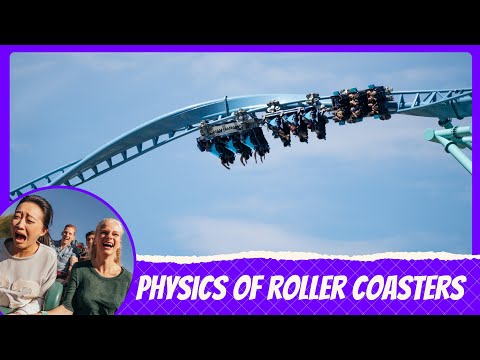
You know that feeling you get when you’re standing in line for a roller coaster? Your heart races, your palms get sweaty, and you’re pretty sure you’ll lose your lunch if this thing goes upside down. It’s wild!
But have you ever stopped to think about all the nerdy science behind those thrilling drops and insane loops? Yeah, I know it sounds kinda boring at first, but stick with me here.
Physics plays a huge role in making those rides safe and super fun! From the moment you’re clicked into your seat to that first big drop, there’s a ton happening behind the scenes—a crazy dance of speed, gravity, and forces.
So let’s take a ride through the physics that keeps our adrenaline pumping! Seriously, it’s not just about screams and thrills; it’s also about numbers and smart design. Pretty cool combo if you ask me!
Exploring the Physics Behind Roller Coasters: How Science Powers Thrilling Rides
Roller coasters are amazing, aren’t they? You strap in, the car climbs higher and higher, your heart races, and then—whoosh! Down you go! But what makes these thrilling rides possible? That’s where physics comes in. Let’s break it down a bit.
First off, the ride starts with **potential energy**. Imagine that slow climb at the beginning. As the coaster ascends, it’s gaining height and storing energy. Just like when you stretch a rubber band. The higher you go, the more potential energy builds up.
Then comes that epic drop! When the coaster plunges down, all that potential energy transforms into **kinetic energy**—the energy of motion. You feel that rush as gravity pulls you downwards. It’s like an invisible hand pushing you to go faster and faster.
But wait! There’s more to it than just going up and down. Roller coasters also use shapes like loops and corkscrews to keep things interesting and fun. These shapes involve a concept called **centripetal force**. Basically, when you’re going around a curve or loop, there’s a force pulling you toward the center of that curve so you don’t fly off into space (which would be super scary).
Think about your favorite roller coaster with those big loops. As you’re upside-down at the top of the loop, your body feels a bit weightless for just a moment—it’s wild! That sense of weightlessness happens because you’re in free fall for just a split second while going over the top.
And let’s not forget about **friction**! The wheels of the coaster interact with the tracks—sometimes it’s smooth sailing while other times it’s more grippy. Designers have to think about this carefully because too much friction can slow things down and ruin the fun!
Roller coasters also rely heavily on **G-forces**. These are forces that make your body feel heavier or lighter during twists and turns. For example, when you’re speeding through a turn, you might feel pressed against your seat—that’s high G-forces at work!
Lastly, safety is key here too; there are checks on everything from how steep those drops can be to how tight those loops should be so riders stay safe but still get to enjoy all that thrill.
So next time you hop on a roller coaster, remember all this cool physics making sure your ride is exhilarating but also safe! The blend of potential and kinetic energy along with G-forces really makes those ups and downs so thrilling—and totally worth it.
The Thrill of Roller Coasters: Exploring the Science Behind the Ultimate Adrenaline Rush
So, let’s chat about roller coasters! You know that feeling when you’re at the top of a hill and your stomach drops? That’s not just *thrilling*; it’s a mix of physics, engineering, and a little bit of human biology. Isn’t that cool?
Gravity plays a huge role in the entire roller coaster experience. When you’re at the peak, gravity is just waiting to give you that rush as you plummet down. The coaster’s design takes advantage of gravitational potential energy (like when you’re at the highest point) transforming it into kinetic energy (that fast-moving feeling). Like, seriously, it’s all about how those energies play together!
Now, think about it: what happens after that drop? You zoom through loops and sharp turns. This is where centripetal force kicks in. When you’re going around a curve, there’s this invisible force pulling you toward the center of the loop or turn. If you’ve ever ridden one with a loop-de-loop, you’ve felt yourself pushed back into your seat—it’s like being glued there! That sensation? Totally thanks to the laws of motion.
And let’s not forget about friction. It sounds boring but trust me; it matters a lot! Roller coasters are designed with materials that reduce friction as much as possible while still keeping safety in mind. Less friction means more speed and excitement. Yet some friction is necessary because without any, you’d never stop flying off the track after your ride—yikes!
- Acceleration: When you first launch or drop, your body feels an intense rush because it’s accelerating rapidly. Think of it like those moments when your friend suddenly pushes you on a swing.
- G-forces: As you whip around corners or drop suddenly, your body experiences different forces—those are called G-forces. You might feel heavier during drops and lighter during quick ascents! It’s all part of the thrill.
- Aerodynamics: The shape of roller coasters isn’t random either. Engineers design them to cut through air smoothly for less drag and more speed—like how airplanes are shaped for efficient flight.
- Safety features: All those twists and turns require serious safety measures; think restraints and braking systems to keep everything in check while still offering exhilarating rides.
Your brain is also in on the action! The adrenaline rush from these rides comes from how our bodies prepare for danger—even if we know we’re safe strapping into these crazy contraptions. Our heart races, pupils dilate—it’s like our very own chemical thrill ride!
I remember my first time on a big loop-de-loop coaster—I was terrified but exhilarated! In that moment suspended high above everything else with my stomach flipping around… I felt so alive! It was pure science wrapped up in screams and laughter.
The whole experience of roller coasters combines fun with intricate physics principles—who knew science could be such an adrenaline junkie? Next time you’re screaming down a track or soaring upside down, remember there’s some serious science making all those thrills possible!
Understanding the Science Behind Roller Coaster Thrill: A Guide to Calculating Excitement Levels
You know that rush you feel when you’re on a roller coaster? It’s like your heart is doing somersaults! Well, that thrill comes from some pretty cool science happening all around you. Let’s break it down a bit and see what makes those rides so exciting.
First off, it’s all about forces. When you’re soaring up and plummeting down, there are three main forces at play: gravity, acceleration, and centrifugal force. Gravity pulls you downwards; acceleration kicks in as the coaster speeds up; and centrifugal force tries to push you outward in those tight turns.
And speaking of speed, let’s talk about potential and kinetic energy. Imagine climbing up that big hill, heart racing, anticipation building. At the top, the coaster has max potential energy because it’s high off the ground. Then it zips down, converting that potential energy into kinetic energy—the energy of motion. The faster it goes, the more thrilling it gets!
Now think about those loops. When you’re upside-down at the top of a loop, your body feels an extra force pushing you into your seat—thanks to centripetal acceleration. It’s like being hugged by gravity! You might feel this tightness in your tummy; that’s your body’s reaction to the forces acting on you.
The design of roller coasters is also crucial. Engineers use computer simulations and physics calculations to ensure each twist and turn delivers just the right amount of excitement while keeping safety in mind. They want to find that sweet spot between adrenaline-pumping thrills and comfortable enjoyment.
Also, did you know that g-forces come into play? These are measured in multiples of Earth’s gravity. When a ride hits 4 g’s (four times normal gravity), it’s enough to make your stomach drop while keeping everything else intact! This is why some people love roller coasters—it’s like getting flung into another world for just a few moments!
Ultimately, each aspect of these rides—from height to speed to design—contributes to an overall experience that’s super fun yet safe. It’s all intertwined with physics concepts which make those wild screams come out!
So next time you’re screaming your head off on a roller coaster ride, remember there’s some serious science behind all that fun. How awesome is it that engineers blend creativity with physics to create these thrilling experiences? That’s what makes roller coasters not just rides but an exhilarating journey into the world of science!
Okay, so let’s talk about roller coasters. Seriously, isn’t it wild how you can go from zero to a million miles per hour (okay, not literally) in a matter of seconds? I still remember the first time I rode one. My heart felt like it was trying to escape my chest! And all those twists and turns sent my stomach on an unexpected vacation. But what’s really going on behind those thrilling rides? Enter physics, the unsung hero of roller coaster design.
So picture this: you’re at the top of a giant hill, the anticipation building. You know that feeling? That’s gravity at work! Gravity is this force that pulls everything down to Earth. When you’re up there, you have potential energy – kinda like a stretched rubber band waiting to snap back. Once you drop, that potential energy transforms into kinetic energy (aka movement). It’s like magic but, science!
But here’s where it gets super interesting. The designers don’t just throw in random loops and drops; they carefully calculate angles and speeds to make sure you feel that rush without turning into a human pancake. For instance, when you zoom through a loop-de-loop, your body actually experiences G-forces – which makes you feel heavier than usual for a quick second. Whoa, right?
Then there are those moments when you’re flipping upside down or hanging momentarily in mid-air—the forces acting on your body can be pretty intense! You might feel pushed down into your seat or like you’re about to float away (crazy!). Those sensations are all thanks to the careful interplay between speed and gravity—or centripetal force if we want to get technical.
But it isn’t just about thrills; safety is also key in making sure everyone has fun without any scares—other than the ones intended! Engineers use physics principles to figure out how many safety harnesses are needed, how quickly trains can stop, and that kind of stuff. Imagine if they didn’t consider all these factors; people would be flying off like popcorn!
So next time you’re screaming at the top of your lungs on a ride—whether it’s joy or fear—just remember there’s some serious scientific magic behind every twist and turn. And hey, maybe think about that crazy interplay of forces while holding onto your popcorn! Physics makes our lives exciting—and sometimes terrifying—all while keeping us safe enough to enjoy it again and again!