You know that moment when you accidentally spill your coffee all over a stack of important papers? Total disaster, right? Well, in research labs, even tiny mistakes can be game over.
Now, imagine a world where robots help do the heavy lifting. That’s where SCARA robots come in. They’re like the reliable friend who always lends a hand (or an arm), making sure everything runs smoothly.
These nifty machines are shaking things up in labs everywhere! From speeding up processes to reducing human error, they’re totally revolutionizing automation. The thing is, it’s not just about making life easier; it’s about pushing the boundaries of what we can discover!
So grab a cup of something cozy (and maybe keep it far away from those papers), because we’re diving into how SCARA robots are changing the game in research.
Scara Robots: Transforming Automation in Scientific Research Labs – A Comprehensive PDF Guide
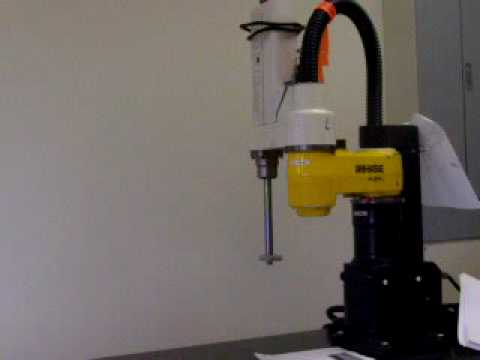
Scara robots, you might be wondering what those are. Well, let’s break it down! SCARA stands for Selective Compliance Assembly Robot Arm. These little wonders have been around since the late 1970s, and they’ve really changed the game in how automation works, especially in places like research labs.
First off, their design is super cool. Imagine an arm that can move up and down (like waving hello) but also reach out to the sides without much resistance. This flexibility makes them perfect for tasks that need a bit of precision but don’t require full freedom of movement, like assembling tiny parts or handling delicate samples.
One thing that sets scara robots apart is their speed. They can zip through repetitive tasks a lot faster than humans. Picture this: you’re working on an experiment that involves moving samples from one station to another. If you had a scara robot doing that, it could complete the job in a fraction of the time it would take you – while you sip your coffee or brainstorm your next big idea!
But it’s not just about speed; accuracy matters too! These robots can position themselves really precisely. In scientific research, where even the slightest error can throw off results, that’s crucial. For example, when pipetting small amounts of liquid for experiments, a scara robot ensures each drop is just right.
Their integration into labs has been quite transformative too. With scara robots handling boring and repetitive tasks, scientists are freed up to focus on more complex problems and innovative ideas. Instead of spending hours on mundane work, researchers can dive into analyzing data or designing new experiments.
But here’s something cool: they’re also user-friendly! Many scara robots come with software that makes programming them straightforward—even if you’re not a tech whiz. You just set up what you need them to do, and off they go!
Another great aspect is their adaptability. Research needs change all the time—new projects pop up; requirements shift—and guess what? Scara robots can usually be reprogrammed easily to tackle different tasks without needing extensive overhauls or modifications.
Now let’s talk about some real-world applications:
- Automating repetitive lab procedures like liquid handling.
- Assembly processes in testing labs where precision is key.
- Sample management for high-throughput screening in drug development.
With all this said, it’s pretty clear how scara robots have revolutionized automation in scientific research labs—not only making things faster but also improving reliability and freeing up valuable human resources.
So yeah, if you’re ever in a lab buzzing with activity and see one of these robotic arms at work, just remember: there’s some serious science happening there!
Transforming Research Labs: A Comprehensive Review of SCARA Robots in Automation
Alright, let’s chat about SCARA robots and how they’re shaking things up in research labs. Those little machines are pretty cool and have a bunch of tricks up their sleeves.
SCARA stands for Selective Compliance Assembly Robot Arm. Quite the mouthful, huh? But don’t let the name scare you off. Basically, these robots can move in a way that’s super flexible, which makes them great for lots of tasks in a lab setting.
First off, one of the big perks is speed. SCARA robots can handle tasks much faster than humans. Picture this: instead of waiting on someone to pipette samples or sort through reagents, a SCARA can zip through those jobs in a fraction of the time. It’s like having your own little robot assistant!
Then there’s precision. Research often needs exact measurements or placements—think about those delicate experiments where every drop counts. SCARA robots excel here too; they have this amazing ability to repeat actions accurately without getting tired or making mistakes. Can you imagine? No coffee breaks needed!
Now, let’s touch on versatility. These guys can do more than just one thing. Whether it’s assembling electronic parts or moving lab samples from one place to another, SCARA robots adapt easily to different tasks with just a bit of programming tweaking. That means less downtime for labs, which is always a win.
And speaking of programming: it’s gotten way easier over time! Most SCARA robots come with user-friendly software that lets researchers set them up quickly without needing to be tech whizzes. You know how sometimes setting up new tech feels like rocket science? Well, not with these guys!
Another interesting part is the cost-effectiveness. Sure, there’s an initial investment when getting a robot into your lab, but think about the long-term savings! With SCARAs working tirelessly around the clock (seriously), they can lead to lower labor costs and boost efficiency.
Also, don’t forget about team dynamics! Having a SCARA robot around frees up researchers from repetitive tasks so they can focus on more creative problems—like brainstorming that next big breakthrough without getting bogged down by mundane work.
So yeah, labs are evolving thanks to these nifty machines. But it’s not all sunshine and roses; some folks might worry about job displacement as automation increases. Kind of makes you think about how we balance tech with human roles in research.
In short, if you’re in the world of research and haven’t looked into SCARA robots yet—what are you waiting for? They’ve got speed, precision, versatility—you name it! And as technology keeps advancing, who knows what even cooler things are around the corner?
Transforming Laboratory Automation: The Impact of SCARA Robots in Scientific Research (2022)
So, you might be curious about SCARA robots and how they’re shaking up the scene in research labs. Well, let’s break it down a bit!
SCARA stands for Selective Compliance Assembly Robot Arm. These robots are built for specific tasks, mainly involving precise movements, like assembling parts or handling materials. Imagine them as super-efficient helpers in a lab setting—kind of like having a really skilled assistant who can work tirelessly and never gets tired!
One of the coolest things about SCARA robots is their speed and efficiency. Unlike traditional robotic arms that may struggle with repetitive tasks, SCARAs are designed to handle those with ease. They move quickly and get the job done without fuss. For example, in a lab where samples need to be processed rapidly, these robots can save hours of manual work.
Then there’s accuracy. You know how important it is when you’re dealing with experiments? Any tiny mistake can throw everything off. SCARA robots excel at this! Their design allows for precise control over movements. You might think of it like drawing; if your hand is steady, your lines will be perfect.
Another advantage? Simplicity in programming. These robots come with user-friendly interfaces that make them easier to program than some other types of robots. This means that even folks who aren’t engineering whizzes can set them up for various tasks quickly.
You might wonder about their versatility. Although they’re often associated with assembly lines or manufacturing processes, SCARA robots have found their way into scientific research too! They’re used for everything from preparing samples to conducting repetitive measurements—think about lab works where results require multiple runs; that’s tedious but necessary work!
Let’s not forget about cost-effectiveness! Investing in automation reduces labor costs. Sure, there’s an upfront price tag for buying these slick machines but think about savings in the long run! Fewer errors mean less waste and fewer redo’s on experiments too.
Okay, so let’s touch on collaboration with humans. Some might worry that automation takes jobs away from people, right? Well, it’s more balanced than that. These robots handle repetitive tasks so scientists can focus on creativity—like analyzing data or designing new experiments rather than doing the monotonous stuff over and over again.
Plus, they improve safety. In labs dealing with hazardous materials or sensitive chemicals, sending a robot instead of a human can prevent accidents you don’t want happening—like spills or exposure to harmful substances.
To wrap it up: SCARA robots are transforming laboratory automation by being rapid, accurate helpers that free up researchers’ time while enhancing safety and cutting down costs. If you’ve got any interest in scientific research—even if it’s just a passing thing—you’ve probably noticed how essential these little (or sometimes big) machines have become!
So yeah, keep an eye out for these innovations—they’re likely just going to keep getting smarter and more integrated into our everyday lab experiences!
Have you ever walked into a lab and been struck by the sheer buzz of activity? You know, beakers bubbling, machines whirring, and scientists hustling around? It’s a dynamic place where creativity meets precision. But there’s something sneaky going on behind the scenes that you’ve probably overlooked: SCARA robots. These little marvels are quietly revolutionizing how research labs operate.
So, SCARA stands for Selective Compliance Assembly Robot Arm. Sounds fancy, huh? But really, these robots are like the trusty sidekicks we all wish we had! Picture this: they can move quickly and accurately in a horizontal plane, which is perfect for assembling tiny components or picking up samples without messing anything up. I mean, have you ever tried to achieve that level of accuracy with your own hands? I wouldn’t bet on it!
Let me tell you about a time when I visited a biomedical lab. The researchers were working on developing new drug compounds. They were juggling numerous tasks—pipetting solutions, running tests, and collecting data. It was chaos! But then I saw this little SCARA robot whizzing through its tasks—doing the sampling faster than any human could and with zero fatigue. Seriously impressive! It allowed the scientists to focus on high-level thinking instead of getting bogged down by repetitive tasks.
There’s something magical about combining human ingenuity with robotic efficiency. Labs equipped with SCARAs can streamline their workflows significantly; imagine getting results quicker without sacrificing quality. It’s not just about saving time either; it’s about allowing researchers to innovate more because they aren’t spending hours on mundane tasks.
Sure, some folks get anxious about robots taking over jobs. But think about it this way: SCARA robots aren’t here to replace people; they’re here to free them up! Instead of dealing with tedious assembly lines or consistent pipetting errors, researchers can dive deeper into their work—from developing more complex experiments to engaging in groundbreaking discoveries.
And hey, as someone who has had my fair share of lab adventures (and misadventures), it’s refreshing to see technology step in and help out where human hands get tired or messy. As SCARA robots continue to evolve—getting smarter and more precise—they’ll definitely become even more integral parts of research labs.
So next time you hear someone mention automation in research labs, think beyond just machines doing work for us; consider how these robots are enhancing collaboration between humans and technology. Because at the end of the day, science is all about progression—and maybe a little bit of robot magic too!