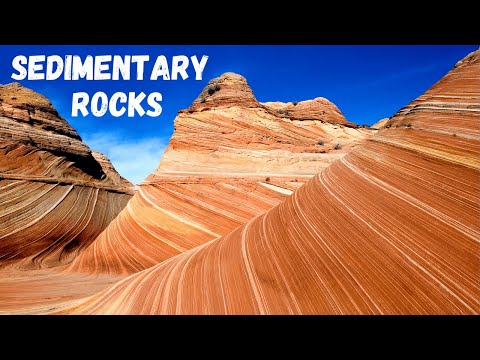
You ever walk along a beach and see those cool layers in the rocks? It’s like nature’s own art gallery. Sometimes I think, “Wow, each of those layers has its own story.” Like, how did they even get there?
Sedimentary rocks are kinda like the history books of our planet. They form through processes that take ages—like seriously, thousands to millions of years! It’s wild to think about how mud turned into rock while I’m just chilling with my coffee.
So, let’s chat about the different types of sedimentary rocks and how they come to life. Trust me, it’s way more interesting than it sounds! You might find yourself looking at those rock layers in a whole new light.
Exploring the Types of Sedimentary Rocks: Formation Processes in Geology
So, let’s talk about sedimentary rocks, shall we? They’re not just any rocks; they tell stories about the Earth’s history. You see, these guys form from bits and pieces of other materials—or sediments—that have come together over time. It’s like nature’s way of creating a history book, layer by layer.
First up, what are sedimentary rocks? Basically, they’re formed from particles that have settled out of water or air. These particles can be anything from tiny grains of sand to larger chunks of other rock. Over time, these sediments accumulate in layers and undergo a process called compaction and cementation—the fancy ways of saying they get pressed together and glued into solid rock.
Now, there are three main types of sedimentary rocks: clastic, chemical, and biochemical. Let’s break those down.
- Clastic Sedimentary Rocks: These are like a mixed bag! They form from the fragments of other rocks. Think about it: imagine all the stones you’ve seen at the beach—all those bits eventually get washed away and piled up somewhere else. An example? Sandstone! It’s made from sand grains cemented together.
- Chemical Sedimentary Rocks: These form when minerals precipitate out of water. So picture this: you’re at a lake that’s slowly drying up. As it does, minerals like calcite or gypsum settle out as the water evaporates. The result? Limestone or gypsum rock is left behind! Pretty neat, huh?
- Biochemical Sedimentary Rocks: Now this one’s cool; these rocks contain materials that came directly from living organisms. Think about coral reefs—they’re made mostly of calcium carbonate from coral polyps. When they die and accumulate on the ocean floor over ages, bam! You’ve got limestone again!
And here’s where it gets interesting: the formation process varies significantly based on environmental conditions. For instance, if you’re near a riverbank where sediments are constantly being deposited by flowing water—like during floods—you might find layers rich in clay and silt that turn into shale over time.
Now imagine visiting a desert—completely different vibe! Here you’d typically encounter sandstone dominated by wind-blown particles that create vast dunes over eons.
Another thing worth mentioning is how long this all takes! We’re talking thousands to millions of years for these rocks to form fully. It makes you think about how patient nature is!
And hey, remember that one school trip to the grand canyon? Those stunning layers in its walls—all sedimentary rocks telling tales across millions of years! Each stripe signifies different eras filled with unique environments and events.
So there you have it—a brief tour through sedimentary rocks and how they come to be! Next time you see one—or even wondered what your local cliffs are made out of—you’ll know exactly what kind of rock story they’re telling!
Understanding the 7 Key Steps in Sedimentary Rock Formation: A Scientific Exploration
So, let’s talk about how sedimentary rocks come into existence. They’re like nature’s history books, capturing stories from millions of years ago. Understanding the **7 key steps** in this rock formation can be pretty cool. So, grab a cup of coffee or tea and let’s dig in!
1. Weathering
First off, we need to break down some rocks! Weathering is all about natural forces like wind, water, and ice breaking apart existing rocks into smaller particles. Imagine smashing a cookie into crumbs; that’s basically what weathering does to rocks.
2. Erosion
After that comes erosion. This step is all about movement—think of it as Mother Nature’s cleanup crew! Water, wind, or ice transport those tiny bits of rock away from their original spot. So those cookie crumbs are being whisked away by the breeze or washed down a river.
3. Transport
Now those eroded particles need to travel somewhere new! During transport, they might flow downstream in rivers or get carried along by wind over vast distances. The longer they travel, the smoother and more rounded they become—just like how a rough pebble can turn into a smooth stone after rolling around in a river for ages.
4. Deposition
Eventually, all that movement leads to deposition—where the magic happens! Particles settle when they lose energy (like when a rushing river slows down). They pile up in layers at the bottom of lakes, rivers, or oceans. It’s almost like making a layered cake; each layer represents different time periods and environments.
5. Compaction
Once those sediments are all cozy together at the bottom, compaction kicks in next! Over time, layers build on top of each other due to weight and pressure from above them. Think of it as someone stacking more and more pillows on top until everything gets squished together.
6. Cementation
After compaction comes cementation—a process where minerals fill the spaces between sediment grains and act like glue! It’s kind of like applying frosting between cake layers; it holds everything together solidly so that our cake (or rock) doesn’t fall apart.
7. Lithification
Finally, we reach lithification—the grand finale! At this stage, loose sediments transform into solid stone through compaction and cementation combined over time. So now you have officially formed sedimentary rock!
Different types of sedimentary rocks can form depending on their origins:
- Sandstone: Formed mainly from sand-sized particles.
- Limestone: Usually made from marine organisms like shells.
- Siltstone: Created from silt-sized particles—smaller than sand but larger than clay.
- Conglomerate: Made up of larger rounded stones cemented together.
So there you have it—the journey from crumbly bits to solid rocks captures an epic tale written across ages! Each step is crucial for understanding how these fascinating formations come about and what secrets they hold about Earth’s past experiences.
Understanding Clastic Rocks: Formation, Classification, and Significance in Geology
Clastic rocks are like the storytellers of the Earth’s history. They’re formed from pieces of other rocks and sediments, and you can learn a lot about the environment they came from just by looking at them. So, let’s dig deeper into how these rocks form, their classifications, and why they matter in geology.
Formation
Clastic rocks form through a process called **lithification**. This is a fancy term for how sediments turn into solid rock over time. The journey begins with weathering, which breaks down larger rocks into smaller bits—think sand on the beach or gravel on the road. These tiny pieces are then transported by wind, water, or ice to different locations.
Once these sediments settle in a new spot, they can accumulate over thousands of years. Eventually, layers build up on top of each other. As weight increases from all that sediment piled on top, it exerts pressure on the lower layers—squeezing them tight. Additionally, minerals from water can act like glue in this process—cementing those particles together into solid rock.
This whole process is fascinating! Imagine taking a handful of sand and watching it gradually transform into sandstone over millions of years!
Classification
Now let’s talk about how clastic rocks get classified. They’re typically categorized based on their grain size:
- Claystone: Made up of tiny clay particles. You can’t see individual grains without a microscope.
- Siltstone: Slightly coarser than claystone; you might recognize it by its gritty texture.
- Sandstone: Composed primarily of sand-sized grains; it’s often light and easy to spot among rocks.
- Conglomerate: Features larger stones mixed in with smaller particles; it kinda looks like a rocky smoothie!
- Brekxia: Similar to conglomerate but made up of angular fragments rather than rounded ones; think sharp edges!
Each type tells a little story about how the rock was formed and what environment it came from. For example, sandstone often forms in deserts or beaches—that’s where those little grains have time to settle down and stick together peacefully!
Significance in Geology
So why should you care about clastic rocks? Honestly, they’re crucial for understanding Earth’s history. They hold records of past environments—like when there were ancient rivers or oceans around! By studying their composition and structure, geologists can reconstruct what our planet looked like millions of years ago.
Furthermore, clastic rocks play an important role in natural resources too! Many fossil fuels come from sedimentary rocks that formed alongside clastic materials. Plus, they can also contain valuable minerals we rely on every day.
In summary, clastic rocks are more than just piles of dirt; they’re crucial players in Earth’s geological narrative. From their formation through lithification to their classification based on grain size—and their significant roles in our understanding of Earth’s history—they’re definitely worth appreciating!
Alright, let’s chat about sedimentary rocks. You know, they’re those cool rocks you see layered all around us, often looking like nature’s canvas. It’s pretty wild when you think about it—each layer is like a chapter in Earth’s storybook, right?
So, there are several types of sedimentary rocks. You got clastic rocks, which are basically made from bits and pieces of other rocks. Think of it like making a mosaic; you take fragments from different places and stick ’em together. Then there are chemical sedimentary rocks that form from minerals that precipitate out of water—kind of like how salt forms if you let seawater evaporate in a shallow bowl. It’s fascinating to think this was once flowing through ancient oceans or lakes.
And hey, let’s not forget organic sedimentary rocks! These ones are formed from the remains of plants and animals. Imagine swamps filled with ancient plants—or even dinosaurs—getting buried over time and turning into coal or limestone. That’s pretty epic if you ask me!
About the formation process—it’s all about time and pressure. You have sediments piling up in layers over millions of years. They get compacted under their weight until they finally turn into rock. Honestly, every time I pick up a piece of sandstone or shale, I can’t help but wonder what stories it holds inside. It’s literally history pressed into stone.
Once as a kid, I went on a hike with my family and stumbled upon some beautiful layered rock formations near a riverbank. The colors were vibrant—like nature was showing off its paint palette! I remember thinking about how those layers must have formed over ages while we just stand there for an afternoon picnic. It really hit me how tiny we are compared to all those years.
Anyway, sedimentary rocks might seem simple at first glance, but when you dive deeper (pun intended), they tell tales of ancient environments and life forms that roamed the Earth long before us. So next time you’re outside or at the beach, take a moment to appreciate the layers beneath your feet! There’s so much history waiting to be discovered in those rocky layers!