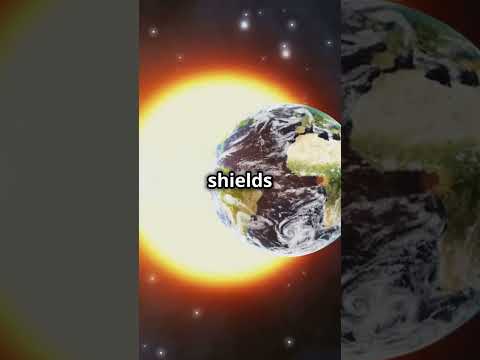
Okay, so picture this: you’re sitting outside on a sunny day, soaking up those rays. You might think you’re just getting a tan, but did you know that the sun is basically a gigantic ball of hydrogen and helium doing a wild dance? Crazy, right?
But seriously, solar astronomy is all about peeking into that fiery oven in the sky. It’s like trying to understand your quirky neighbor who always has strange things going on in their backyard. What’s really happening up there?
More than just warmth and light, the sun shows us some serious cosmic mysteries. There’s solar flares that can mess with our gadgets, sunspots that pop up like bad weather patterns, and a whole bunch of other cool phenomena that keep scientists scratching their heads.
So let’s chat about our closest star—its secrets and surprises. Because trust me, once you start looking up at the sun with a different perspective, you might just find yourself totally hooked!
Exploring the Composition of Stars: A Scientific Insight into Stellar Materials
So, you’re curious about what stars are made of? That’s a great topic! Let’s get right into it.
Stars, including our very own Sun, are like giant balls of gas and plasma. They’re pretty complicated when you think about it. Most stars are primarily composed of two elements: hydrogen and helium. About 75% of a star’s mass is hydrogen, while helium makes up around 24%. The tiny remainder consists of all the other elements in the universe, like oxygen, carbon, and iron.
But how do scientists figure all this out? You might be thinking it sounds tricky. Well, they use a method called spectrum analysis. When a star emits light, it also shoots out a unique set of colors—like a cosmic fingerprint! By looking at these colors with special tools called spectrometers, scientists can tell which elements are present in that star.
Now here’s where it gets really cool: as stars evolve over millions or even billions of years, their compositions change! In their early life stages, they fuse hydrogen into helium in their cores through nuclear fusion—a process that generates tons of energy and gives us light. As stars get older and run low on hydrogen fuel, they start burning heavier elements until they reach iron. The thing is—iron doesn’t release energy when fused; instead, it absorbs energy! This leads to some dramatic events.
Think about supernovae—those colossal explosions happen when massive stars collapse under their own gravity after using up their nuclear fuel. In that chaos, new elements are formed and scattered across space. It’s like the cosmos’ way of recycling material!
If we zoom in on our Sun for a moment—it’s fascinating to note that it’s somewhere in the middle of its life cycle. Right now, it’s fusing hydrogen into helium at its core and radiating energy outwards. The sheer amount of heat generated creates an environment where heavier elements can form as well.
To wrap things up here’s what stands out:
- Composition: Stars mainly have hydrogen (75%) and helium (24%).
- Spectrum Analysis: Scientists analyze starlight to determine elemental composition.
- Evolution: Stars change their composition over time through fusion processes.
- Supernovae: These explosions create new elements from massive star collapses!
Stars truly are incredible factories for building elements we find on Earth! So next time you gaze at the night sky or catch some rays from our Sun during a beautiful day at the beach, just remember there is so much more going on beyond those twinkling lights or warm sunlight—they’re practically cooking up the universe right before our eyes!
Unveiling Solar Secrets: Insights into Our Star and Its Mysteries through Solar Astronomy
So, let’s talk about solar astronomy. It’s all about studying our closest star, the Sun. Seriously, without the Sun, life wouldn’t even be a thing on Earth. It’s like the ultimate energy factory! But there’s so much more to it than just warmth and light.
What is Solar Astronomy? Basically, it’s a branch of astronomy focused on understanding the Sun’s properties and behaviors. Scientists use telescopes and various instruments to observe solar phenomena. You can think of it as peeking into a giant ball of nuclear fusion that’s 93 million miles away!
- The Sun’s Layers: The Sun has several layers—the core, radiative zone, convective zone, photosphere, chromosphere, and corona. Each layer has its own funky features. For instance, the core is super hot—around 15 million degrees Celsius! That heat creates energy through nuclear fusion.
- Solar Flares: These bursts of radiation can erupt from the surface and release massive amounts of energy in a matter of minutes. Imagine an explosion that releases as much energy as billions of hydrogen bombs going off at once! They can disrupt satellite communications here on Earth.
- Sunspots: Ever seen dark spots on the Sun? Those are sunspots! They’re cooler areas on the surface caused by magnetic activity. Despite being cooler than their surroundings (about 3,500 degrees versus 5,500 degrees Celsius), they are still super hot compared to anything we deal with daily!
You know what I find wild? The fact that studying this fiery orb has given us insights into space weather—like how solar winds impact our planet’s magnetosphere. I remember once standing outside during a particularly bright aurora borealis night; it was like staring into nature’s own light show! That beauty is directly linked to solar activity.
The Importance of Solar Observations: Monitoring the Sun helps us predict space weather events that could affect satellites or power grids. Think about how dependent we are on technology today; protecting that tech from solar storms is crucial.
- Solar Telescopes: Instruments designed specifically for observing solar phenomena come in handy here. They can filter out sunlight to help scientists study the details without getting blinded—literally!
- Space Missions: Projects like NASA’s Parker Solar Probe are designed to get up close and personal with the Sun by diving into its atmosphere. The data from these missions is expected to reshape our understanding in many ways.
An interesting detail? Scientists believe that understanding solar cycles may help us predict climate changes better too! The cycles involve fluctuations in sunspot numbers over roughly an 11-year period—from low activity to high activity phases.
You might be surprised to know that studying the Sun isn’t just for scientists locked away in labs or looking through telescopes all day long; it’s for everyone curious about our universe! You could easily start watching sunspots using specialized glasses or even explore relevant websites with live feeds from observatories.
The bottom line is that uncovering these solar secrets doesn’t just satisfy our curiosity—it has real-world implications for technology and understanding our planet better! Isn’t it amazing how something so far away can affect us right here at home?
Understanding Star Formation: A Simple Guide to the Science Behind How Stars Are Born
So, let’s talk about how stars are born, because, honestly, it’s pretty mind-blowing. You know those twinkling little lights we see in the night sky? Yeah, they all started out as gas and dust in space. Seriously! The process of star formation is like a cosmic recipe that takes millions of years to bake!
First off, you need to understand that the birth of a star usually happens in **nebulae**, which are giant clouds filled with hydrogen gas and dust. These nebulae can be super massive and cool. Think of them as the nursery of our universe where stars are made. When parts of these clouds get dense enough due to gravity—yup, gravity is like that friend who keeps pulling you back down—it triggers a reaction.
As this collapse occurs, the material starts to swirl around—like your laundry in the dryer—creating something called a protostar. During this phase, temperatures rise dramatically due to compression. It gets so hot that nuclear fusion begins right at its core—however, this doesn’t happen overnight!
Now here’s where things get really interesting: once the fusion kicks off successfully inside our protostar and balances out against the force trying to pull it inward (aka gravity), voila! You have yourself a newborn star! But wait; there’s more!
Over time—and I mean millions and millions of years—a star will evolve into different stages depending on its mass. The bigger stars burn through their fuel quicker compared to smaller ones. It’s like how someone who eats pizza every day might finish it faster than someone who only eats it occasionally!
Eventually, as they run out of hydrogen fuel, things start heating up again (no pun intended). For big stars, they swell into red giants before going supernova—basically an explosive grand finale—but for smaller ones like our sun? They just shed their outer layers gently.
And after all this drama? What remains can become either a white dwarf or sometimes even transform into neutron stars or black holes if they had enough mass initially.
So next time you look up at those twinkling lights in the night sky, remember: each one has its own unique story from swirling gases to fiery balls lighting up darkness! It’s literally poetic when you think about how much goes into creating something so beautiful!
You know, whenever you think about the sun, it’s easy to take it for granted. But, oh man, there’s so much more to it than just a big ball of light in the sky. I remember this one summer day when I was a kid—my friends and I were lying on the grass, staring up at the blue above. Everything felt warm and cozy until someone said, “What if that big orb up there is like… just a giant fireball?” That comment, silly as it sounds, actually sparked my curiosity about what our sun really is.
Solar astronomy is like this exciting treasure hunt where astronomers try to understand our favorite star. Seriously, we’re not just talking about its sunny disposition. The sun is a massive fusion reactor that produces energy by fusing hydrogen into helium. You might think you’re sitting under sunlight that feels warm and peaceful, but deep down there’s chaos! We’re talking millions of degrees in the core where all this happens.
And get this—this whole process creates solar wind! It’s not just some poetic term; it’s this stream of charged particles that flows out into space. When those particles hit Earth’s magnetic field? That’s when you get beautiful auroras dancing across the sky! It’s wild to think that something happening on our star can create such breathtaking displays here on Earth.
But here’s the thing: our sun isn’t going to be around forever. It has its own life cycle which will eventually lead to its transformation into a red giant and then… well, something far less glamorous. When I first learned about this inevitable fate of the sun, I felt a bit sad but also intrigued by how everything in nature has its rhythm.
Solar astronomy also sheds light on events like solar flares—huge eruptions that can actually mess with technology here on Earth! Imagine your phone suddenly going haywire because of some gas explosion on the surface of the sun—that’s no joke! Understanding these phenomena helps us prepare better for potential disruptions.
So yeah, solar astronomy isn’t just geeky science stuff; it connects us to something larger than ourselves. It makes you realize how intertwined we are with our cosmic neighborhood. The adventures scientists embark upon—and let me tell you they go beyond telescopes; they use satellites too—bring us insights that feel almost magical yet grounded in reality.
And while we’ve learned so much already about our sun’s mysteries—it still holds plenty more secrets waiting for curious minds to uncover. If you ever find yourself lying in grass again looking at the sky, maybe take a moment to consider all that’s happening up there. After all, who wouldn’t want to understand that giant fireball just a little bit better?