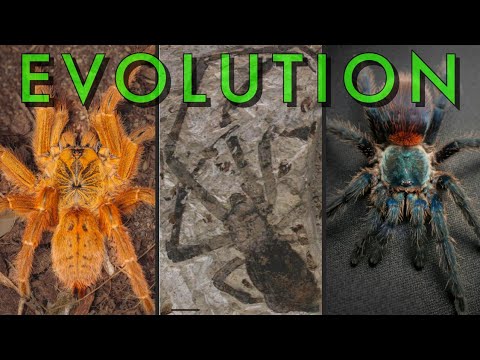
So, get this: tarantulas can live for over 30 years! Yeah, that’s longer than some dogs! I mean, can you imagine having a spider as a pet for three decades?
But here’s where it gets even cooler. These hairy critters have been around for millions of years, adapting and evolving in ways that would probably blow your mind. Seriously, their story is like something out of a sci-fi movie.
Picture them creeping around with dinosaurs or chilling under the same skies as our ancient ancestors. And yet, somehow, they still make people squeal in fear today!
Let’s take a little journey through time and see how these eight-legged marvels have changed and thrived. You’ll find out why they’re more than just creepy crawlies; they’re actually champions of the evolutionary game!
Unraveling the Evolutionary Origins of Tarantulas: A Scientific Perspective
Tarantulas, those big hairy spiders that either creep you out or fascinate you, have a pretty interesting backstory. Let’s take a little trip through time to see where they come from.
Evolutionary Roots
Tarantulas belong to the group of creatures known as arachnids. They share their family tree with scorpions, ticks, and mites. The thing is, their ancestors are believed to have roamed the Earth for over 300 million years! That’s way before dinosaurs even showed up. Imagine that!
So what led to the tarantula’s evolution? Scientists think it all started with early arachnids adapting to life on land, which was quite different from living in water. Over millions of years, these creatures started developing features that helped them survive better in their environments.
Survival Strategies
One of the coolest adaptations in tarantulas is their size. They can be pretty huge compared to other spiders! This size gives them an edge as predators—they can take down insects and even small mammals if they’re lucky enough. But let’s not forget about their awesome silk! Tarantulas use silk not just for webs but also for burrow construction and lining their homes.
Their evolved **fangs** are another highlight. They’re like built-in knives that help them tackle prey efficiently. Plus, they have a special way of defending themselves using urticating hairs; these little barbs can irritate predators—like a warning shot! You don’t want to mess with one of these creatures once they get defensive.
Where They Live
Now, let’s chat about where tarantulas hang out these days. You can find them in various habitats around the world—from tropical rainforests to deserts. Isn’t it wild how adaptable they’ve become? Their evolutionary journey means they’ve developed unique traits suited for different climates and environments.
For instance, the Brachypelma smithi, or Mexican red-kneed tarantula, thrives in dry environments while retaining moisture during hot seasons by burrowing deep underground. This adaptability is a serious testament to how evolution shapes life over centuries!
The Family Tree
As for family ties? Tarantulas belong to two main families: Theraphosidae (true tarantulas) and Mygalomorphae (which includes some other large spiders). Within these families, there are hundreds of species—each one with its quirks and traits shaped by their unique evolutionary paths.
Scientists often study DNA sequences from ancient fossils and modern species to understand how these creatures relate to each other now compared to millions of years ago. It’s like piecing together a giant spider puzzle!
Anecdote Time!
I remember going on a hike once and almost stepping right into a burrow made by one of these big guys—yikes! I mean, we were both startled; I think I jumped back three feet while this tarantula peeked out like “What’s your deal?” It was such a reminder of how fascinating—and intimidating—these ancient beings can be!
So, all this history behind tarantulas teaches us about survival and adaptation in nature’s grand scheme. Their journey through time is still underway; evolution never truly ends! Whether you find them scary or super cool, there’s no denying each fuzzy leg has its own story worth telling.
The Evolutionary Biology Behind the Gigantism of Tarantulas: Unraveling Nature’s Arachnid Giants
Sure! Let’s chat about the evolution behind those giant tarantulas that seem to creep everyone out. They’re like the big cousins of spiders, and there’s a lot to unpack about how they got so huge.
First off, let’s talk about **gigantism** in nature. You might’ve heard of it before in other animals like elephants or even some dino species. When it comes to tarantulas, scientists think their size comes from a mix of evolutionary pressures, environmental factors, and, well, their lifestyle. But what does that mean exactly?
1. Oxygen Levels: In the past, Earth’s atmosphere had much higher levels of oxygen than we do now. This extra oxygen helped creatures grow bigger because they were able to take in more oxygen through diffusion in their bodies—kind of like how your lungs work but scaled up! Tarantulas are part of a group called arachnids, which breathe through structures called book lungs. The larger they are, the more efficient these lungs can be.
2. Predation and Mating: Size can also be an advantage when it comes to survival and reproduction. Bigger tarantulas can take on larger prey and defend themselves better against predators. Plus, mates might prefer bigger partners since size can signal health and fitness—it’s kind of a “survival of the fittest” thing.
3. Habitat Differences: Different environments drive variations in size too. For instance, species found in rainforests may be larger than those living in arid desert areas where resources are scarcer. In dense forests, larger spiders can use more substantial webs to capture prey or simply dominate these tight spaces.
Now let me tell you something interesting! I once saw a giant tarantula while hiking with friends in Costa Rica—like this massive creature just chilling on a branch! I was totally freaked out at first but also amazed at how elegantly it moved despite its size.
4. Evolutionary History: Tarantulas have been around for millions of years; they evolved during the *Carboniferous Period*. Over time, certain traits became beneficial for survival and reproduction in specific environments leading to their current majestic sizes.
But hold up—there’s also something called **insular dwarfism** where species get smaller over time when isolated on islands due to limited resources or lack of predators! So while some tarantula species grew huge on mainland areas, others might go the opposite way.
In summary, if you’re ever underwhelmed by these hairy giants scuttling around your backyard—or whatever—remember that their size isn’t just freaky; it’s rooted deeply in evolutionary biology and adaptation tactics shaped across eons!
It’s pretty wild if you really think about it! Nature is full of surprises you know?
Uncovering the Past: The Significance of Tarantula Fossils in Paleoentomology
Tarantulas may seem like creepy crawlies hiding in dark corners, but they have a fascinating history that stretches back millions of years. When we talk about tarantula fossils, we’re not just peeking into the lives of spiders; we’re uncovering stories about evolution and environmental changes.
Fossils, in general, are like nature’s time capsules. They give us a glimpse into what once roamed the Earth. Tarantula fossils help paleontologists understand not just the spiders themselves but also their ecosystems. Imagine finding a tarantula fossil and realizing that it lived during a time when giant ferns dominated the landscape! That’s pretty mind-blowing, right?
So, let’s break down what makes these fossils so significant:
- Evolutionary Insights: Finding tarantula fossils allows scientists to track how these creatures evolved over time. By studying different species from various periods, researchers can see how they adapted to climate changes and predators.
- Ecological Indicators: Tarantulas play crucial roles in their habitats. Their presence or absence in certain fossil layers can indicate what the environment was like back then—warm and humid or dry? This is key for understanding past climates.
- Species Diversity: Fossils show us how many different tarantula species existed at various times. By examining these ancient species, we see that diversity can shift dramatically due to factors like extinction events or climate changes.
- Cultural Connection: In some cultures, tarantulas hold symbolic meanings. Studying their ancient forms can deepen our understanding of human relationships with these creatures throughout history.
Want an emotional twist? Imagine discovering a beautifully preserved tarantula fossil in amber, surrounded by other trapped insects from millions of years ago—like finding a piece of a jigsaw puzzle from an ancient world! That level of connection between past and present really makes you think about life’s continuity.
The real kicker is that although many might fear tarantulas now, understanding their evolution showcases resilience in nature. They’ve survived various extinction events while adapting to changing environments over millions of years. It’s remarkable!
Paleoentomology—the study of fossilized insects—continues to shine light on our planet’s history through these tiny but mighty creatures. So next time you see a tarantula (or maybe even find one lurking), remember there’s more to them than meets the eye—they’re living links to our distant past!
Tarantulas, right? Those big, hairy spiders that seem to pop up in nature documentaries and, let’s face it, our worst nightmares. But have you ever thought about where they come from? Their evolution is kinda wild when you think about it. These creatures are like the OG survivors of the spider world.
Imagine this: the first tarantulas appeared over 300 million years ago. That’s before dinosaurs! They came from a family of arachnids that had adapted to survive in different environments. It’s fascinating how they evolved to thrive in diverse habitats—from rainforests to deserts, kind of like those adventurous folks who go anywhere just for the thrill of it!
What’s really stunning is how they’ve developed some unique traits over the ages. Take their size, for instance. Tarantulas can grow pretty big—some even have leg spans that reach a foot! And all that hair? It’s not just for show; it’s a defense mechanism too. Those tiny hairs can be flicked off when threatened, making it really uncomfortable for anything trying to mess with them.
You know, I remember one time going camping and spotting a tarantula on a trail. My heart raced! I was terrified at first but then all I could think was how cool it was that such an ancient creature could be roaming around right there where I stood. It made me realize how connected we are to these remarkable beings—like living links to a past we can barely imagine.
The way tarantulas reproduce is another piece of their evolutionary puzzle—a bit dramatic even! The males usually die after mating because they become dinner for the females. Talk about nature being brutal! Yet this strategy helps ensure the survival of their offspring while also giving those males one last relatable shot at love.
So, as creepy as they might look or seem, tarantulas are like little champions in their own right. Each one carries a story of adaptation and survival against incredible odds throughout Earth’s history on its furry legs. When you look closely at them—or even just think about their journey—you start seeing more than just an eight-legged creature; you start recognizing an entire saga of life on our planet.