So, here’s a fun thought: Did you know that some scientists have never seen a real-life dinosaur? Crazy, right? They’re just working from clues left behind and their imaginations. This is where theoretical biology comes in—like the cool sidekick of the science world.
You might be wondering what that even means. Well, it’s all about using models and theories to understand life and its mysteries, without always needing to pick up a microscope. It’s like trying to solve a puzzle with some missing pieces but still piecing together something awesome.
Imagine how wild it is to think we can figure out the past or predict future changes in ecosystems without being right there on the front lines. Theoretical biologists are kind of like detectives. They dig deep into data and ideas, connecting dots that sometimes seem way too far apart. So yeah, let’s dive into why this field is not just important but totally fascinating!
Understanding Theoretical Biology: Exploring Its Role and Impact in the Scientific Community
Theoretical biology is one of those areas that doesn’t always get the spotlight it deserves. Basically, it’s a field that uses mathematical models and concepts to understand biological systems. It’s like when you’re trying to predict how a football game will go by analyzing past matches. You look at the players, strategies, and conditions to get a feel for what might happen. In theoretical biology, researchers do something similar but with living organisms.
Making Sense of Complex Systems
Life is messy and complicated. Think about ecosystems—there are tons of species interacting in ways we can’t always see or understand at first glance. Theoretical biology helps scientists pin down these interactions using **models**. For example, you might have heard of the Lotka-Volterra equations; these are used to describe predator-prey relationships. They help biologists predict how many wolves and rabbits there might be over time based on certain variables.
Guiding Experimental Research
The thing is, theoretical models aren’t just for fun or for sitting in a lab collecting dust—they guide actual experiments! Imagine trying to grow a plant species and not knowing if it likes more sun or shade. Theoretical frameworks can help figure out where to start experimenting! Researchers can test predictions made by these models and see if they hold up in real-life scenarios.
Advancing Other Fields
Now, let’s say you’re into genetics or neuroscience—well, theoretical biology has got your back too! It teams up with genetic research to explore how genes evolve over time through mathematical formulations. And when it comes to brain functions, theories about neural networks have led scientists to develop new ways of understanding learning processes.
The Importance of Simplicity
A cool aspect of theoretical biology is its ability to simplify complex ideas into understandable terms. Think about how hard it is to explain why zebras have stripes! A theoretical approach may suggest that stripes help confuse predators or regulate their body temperature—complicated problems boiled down into easier-to-digest bits. By doing this, it allows everyone from students to seasoned scientists grasp the essential points without drowning in details.
A Challenging Yet Rewarding Journey
However, working in this field isn’t easy; developing accurate models requires a deep understanding of both math and biology—not exactly what most people would consider as “chilling.” But when those theories come together with experimental data? That’s where the magic happens!
So next time someone mentions theoretical biology, remember it’s not just abstract science hanging out in the clouds—it’s shaping our understanding of life itself right here on Earth!
Exploring the Role of Theory in Scientific Advancement: Understanding Its Impact on Research and Innovation
The world of science is a crazy place, right? You’ve got all these experiments happening, discoveries popping up left and right, and theories floating around like balloons at a party. Theories play a super important role in this whole mix. They’re like the roadmap for scientists; guiding them on where to go next. But what does that really mean for research and innovation? Let’s break it down.
First off, a theory isn’t just some random idea. You can think of it as a well-supported explanation of something that’s been tested over and over again. For instance, in theoretical biology, scientists use theories to explain how living things work. It’s not just about the what; it’s also about the why.
- Guiding Research: Theories help researchers come up with new questions and experiments. Imagine you’re trying to figure out why plants lean towards light. A theory in phototropism might suggest they’re responding to light direction, which could lead you to test different types of plants under various light sources.
- Driving Innovation: When researchers understand the theory behind certain phenomena, they can innovate better solutions or technologies. For example, understanding disease mechanisms lets scientists develop targeted therapies instead of just throwing medication at symptoms.
- Connecting Dots: Theoretical biology connects various biological fields—like genetics and ecology—allowing for a more holistic view of life sciences. You see how one area can influence another? That’s where breakthroughs often happen!
Ever hear about Charles Darwin? His theory of evolution wasn’t just some casual thought he had while on vacation; it revolutionized biology! And there are countless ways his ideas continue to spark new research today—think genetics or biodiversity conservation!
The thing is, theories evolve too! They get refined as new evidence pops up. Remember when everyone thought atoms were indivisible? Well, once we got better tools (thanks to theoretical physics), we found out they have even tinier particles inside them! Isn’t that mind-blowing?
So basically, without theories, scientific advancement would be like wandering around in the dark with no flashlight. Researchers need those light bulbs shining down, showing them paths forward. The interaction between theory and experimentation creates a powerful engine for discovery.
If you think about it, every time scientists uncover something new using theoretical frameworks, they’re contributing not just to their specific field but also opening doors for other areas of science too! Yup—it’s all interconnected.
The relationship between theory and practice is crucial since innovation often sprouts from these interactions. Scientists might find themselves building on existing theories or even challenging them entirely—and that can lead to some pretty exciting stuff!
You know what? Science isn’t stagnant; it’s dynamic and ever-changing thanks to this dance between theory and experimentation. So next time you hear about some groundbreaking research or emerging tech, take a second to think about the theories behind it all—those unseen actors working their magic behind the scenes!
Exploring the Key Theories of Modern Biology: Insights into the Foundations of Life Sciences
You know, when we talk about biology, it’s so much more than just memorizing the names of plants and animals. It’s like trying to unlock the secrets of life itself. Theoretical biology is a crucial piece of that puzzle. It dives into the “why” and “how” behind living organisms, rather than just “what” they are.
Key theories in modern biology help us understand everything from tiny cells to massive ecosystems. For instance, evolutionary theory really shook things up back in the day when Darwin came along with his ideas about natural selection. He suggested that species adapt over time to survive in their environments. Think about it: a giraffe with a longer neck can reach leaves higher up in trees. That’s not just luck; it’s survival!
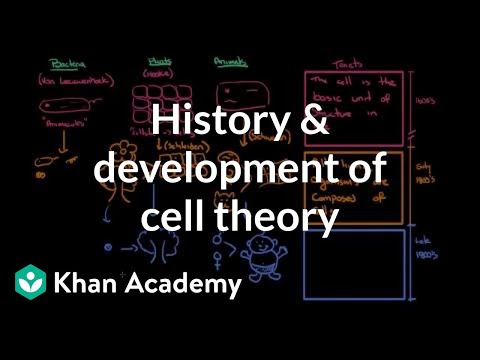
- Cell theory: This one’s a classic! It tells us that all living things are made up of cells and that cells are the basic unit of life. You’re made of them, I’m made of them; we all are! Imagine cells as tiny building blocks that come together to form everything—from your skin to your heart.
- Genetic theory: It’s all about DNA—yep, that super-coiled molecule that stores genetic info like an instruction manual for making you. The idea here is that traits get passed down through generations, thanks to this nifty little chemical code. Ever wonder why you have your mom’s eyes? Thank genetic theory!
- Homeostasis: This idea refers to how living organisms maintain stable internal conditions despite changes in the environment. Like, when you get hot and start sweating? Your body is working hard to keep everything balanced so you don’t overheat.
Theoretical biology also involves mathematical models to predict how complex systems behave—like how populations grow or decline based on resources available or how diseases spread through communities. These models can be super powerful because they help scientists make sense of chaotic data.
<pone time, i stumbled upon a piece of research showing how predators and prey interact in ecosystems, it was mind-blowing! they used mathematical formulas to predict population changes based on food availability. like watching thriller unfold paper—who would thrive who struggle? that’s the beauty theoretical biology—it brings numbers into nature's story!
You see, theoretical biology isn’t just for nerds in lab coats (no offense!). It’s seriously got real-world applications too—like in conservation efforts where understanding ecosystem dynamics can help save endangered species or restore habitats.
The thing is, as science evolves, so does biological theory. With advancements like genomics and biotechnology popping up left and right, our understanding of life gets more nuanced every day.
All these theories together create a rich tapestry that helps scientists navigate the vast ocean of life sciences. So next time you think about biology, remember it’s not just facts; it’s an ongoing exploration—a continuous quest for knowledge! Cool stuff! Right?
The other day, I was chatting with a friend who’s diving deep into biology, and we stumbled on this whole idea of theoretical biology. It’s kind of wild to think that behind every living thing we see is a ton of complex theories and models that help scientists make sense of it all.
So, like, theoretical biology isn’t just about lab coats and petri dishes; it’s about the big picture stuff. You know? It’s about understanding the rules and principles that govern life—like how species evolve or how ecosystems function. Imagine being a detective but for life itself! These theorists use math and computer simulations to predict what might happen under certain conditions, which can be super helpful in fields like conservation or medicine.
For instance, I recall reading about a group of researchers who modeled how a small change in temperature could impact an entire ecosystem. They predicted shifts in species populations that actually turned out to be spot on. Seeing those predictions validated makes you realize just how powerful these theoretical approaches can be.
But here’s the kicker: while experimentation is key, it often gets all the glory. Theoretical work sometimes feels like it’s in the shadows, but it lays down critical groundwork for experiments. Without those theories to guide us, experiments might feel like wandering around in the dark. You need that map!
Even though it’s easy to overlook how intertwined theory and practice are, they really do go hand in hand. So next time you’re marveling at some incredible biological phenomena—like how birds migrate thousands of miles or why flowers bloom—you might want to take a moment to appreciate the minds crafting those theories behind the scenes. Their work’s not just academic; it’s shaping our understanding of life itself! Isn’t that kinda beautiful?