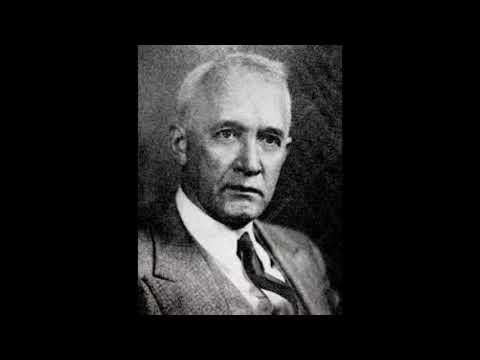
You know, there’s this amazing story about a guy named Vesto Slipher. He was just a regular dude, sitting around, minding his own business when he stumbled onto something huge. Like, cosmic huge!
Picture this: it’s the early 1900s, and everyone is all about those static stars in the sky. But Slipher? He had this wild idea that maybe those stars were on the move! Imagine thinking outside the box like that while everyone else is still stuck in their chairs.
Slipher kicked off a whole new chapter in astronomy. He helped us understand that the universe wasn’t some boring old painting but a bustling highway of galaxies zooming away from us! Who wouldn’t want to be part of that story?
So, let’s chat about Vesto Slipher and how he turned our understanding of space upside down. Grab your favorite snack; you’re gonna want to stick around for this one!
Vesto Slipher’s 1912 Discoveries: Pioneering the Field of Astronomy and the Doppler Effect
Vesto Slipher was an astronomy rockstar back in the early 20th century. In 1912, he made some seriously groundbreaking discoveries that changed how we understand the universe. Honestly, think about it: before him, we didn’t really have a solid idea of how galaxies were moving through space.
So, what did Slipher do? Well, he was one of the first to use a fancy instrument called a spectrograph. This tool basically helps split light into its different colors—kind of like how a prism works with sunlight. And when he looked at the light from galaxies, he noticed something unusual: the light was shifting toward the red end of the spectrum. This is where things get interesting!
The redshift phenomenon indicated that those galaxies were moving away from us. Imagine standing on a sidewalk and watching cars zoom past you. As they drive away, their sound gets lower because they’re moving away from you—that’s called the Doppler Effect. Light behaves similarly! When an object moves away from us, its light shifts to longer wavelengths—hence the redshift.
But this wasn’t just a cool science experiment; it had massive implications for our understanding of the universe. At that time, people thought our galaxy was all there was, but Slipher’s findings suggested that other galaxies existed and they were on the move!
Here’s where it gets even deeper: his work laid down some serious groundwork for later astronomers, like Edwin Hubble. Hubble took Slipher’s initial observations and went further to show that not only are those galaxies moving away—they’re moving away faster than their closer counterparts! This played a huge role in developing what we know today about an expanding universe.
Let’s break down some key points from Vesto Slipher’s contributions:
- First to measure redshift in light from galaxies.
- Used spectroscopy to analyze astronomical objects.
- Showed that many distant galaxies are receding from us.
- Paved the way for understanding cosmic expansion.
In essence, without Slipher’s innovative research back in 1912, who knows if we’d have come to realize how dynamic our universe really is! His passion and curiosity opened up new pathways in astronomy that still influence how we explore space today. So next time you gaze at those twinkling stars and far-off galaxies, think of Vesto Slipher and his quest for cosmic knowledge—because thanks to him, we’re still learning more about our ever-expanding universe!
Exploring Vesto Slipher’s Contributions to Astronomy and the Discovery of Cosmic Redshift
Vesto Slipher was an astronomer whose work changed the way we understand the universe. You might not have heard of him, but his discoveries set the stage for some seriously groundbreaking concepts in astronomy. So, let’s jump right into it!
First off, Slipher’s most significant contribution is his work on cosmic redshift. He was one of the first astronomers to observe how light shifts toward the red end of the spectrum from distant galaxies. This shift is basically a sign that those galaxies are moving away from us. Now, you might be thinking, “How does that even work?” Well, let’s break it down.
Light travels in waves. When an object moves away from you, like a car speeding past while honking its horn, the sound waves get stretched out, making it sound lower in pitch. This phenomenon is known as the Doppler effect. With light, something similar happens: when a galaxy moves away at high speeds, its light stretches into longer wavelengths—hence the shift to red.
- Slipher’s Observations: In 1912, he took spectra of galaxies and found that many showed this redshift. It was groundbreaking because it suggested that those galaxies were receding from Earth.
- The Implication: This wasn’t just a random observation—if galaxies are moving away, it hints at something larger: the universe itself is expanding!
You know what’s kind of mind-blowing? For Slipher’s time, this idea really shook up conventional thinking about space. Most folks believed in a static universe—a fixed backdrop where everything just sat still. But what he showed pointed towards a dynamic cosmos where things were actually moving and changing! It’s like realizing your whole life was happening on a giant cosmic treadmill.
An emotional part of Slipher’s story is about how his findings were initially brushed aside by many scientists at first. He faced skepticism because they weren’t ready to embrace these new ideas about an ever-expanding universe. But he kept pushing forward! His results eventually caught attention—the kind that leads to revolutions in understanding.
This discovery laid down critical groundwork for later thinkers like Edwin Hubble. Hubble expanded on Slipher’s research and formulated Hubble’s Law in 1929, which quantified this expansion: The farther away a galaxy is, the faster it’s flying away from us. Crazy stuff!
- Legacy: Slipher’s contributions went beyond just redshift; they helped usher in modern cosmology and our understanding of dark energy and cosmic evolution.
- A Lasting Influence: His findings opened up pathways for future explorations into how our universe began—and continues to evolve!
The next time you gaze up at the stars and ponder what lies beyond our little blue planet, remember Vesto Slipher—his curiosity and persistence were pivotal in helping us uncover some of those vast mysteries hidden out there!
Revealing the Cosmos: Vesto Slipher’s Observations and Their Impact on Our Understanding of Galactic Motion
You know, Vesto Slipher was kind of a big deal in astronomy, even if not everyone recognizes his name. Back in the early 20th century, he was peering into the sky with a telescope and making some groundbreaking discoveries that totally changed how we think about the universe. He was one of those behind-the-scenes heroes who pushed modern astronomy forward.
So, let’s get into what he actually did. Slipher is best known for his observations of light coming from galaxies. He noticed something pretty weird: many galaxies were shifting towards red on the light spectrum. Now, that might sound technical, but here’s the kicker—this redshift indicates that those galaxies are moving away from us! It’s like when a car zooms by and the sound drops in pitch; that’s called the Doppler effect.
Slipher’s work helped to establish two key ideas:
- Redshift and Galaxy Motion: His measurements showed that most galaxies are moving away from us, suggesting the universe itself is expanding.
- The Hubble Relation: Although Edwin Hubble later built on Slipher’s findings to formulate Hubble’s Law, it all started with Vesto’s early work. The further away a galaxy is, the faster it’s receding!
This wasn’t just a nerdy observation; it had serious implications for our understanding of cosmic evolution. It opened up questions about how galaxies form and change over time—the whole kit and caboodle! Before Slipher’s revelations, folks thought the universe was static—a place without change or motion. Can you believe that?
A little story for you: There’s this moment people talk about where Slipher presented his findings at meetings, and honestly? Not everyone paid attention to him back then. It’s fascinating how someone can be overshadowed while shaping such crucial knowledge about our universe! But then came along Hubble and made those ideas popular; suddenly they were all over the place!
All of this leads us to think critically about our cosmic neighborhood. If everything is moving away from us, it begs some big questions: What does this mean for our own Milky Way? And where are we headed in this grand cosmic dance?
In summary, Vesto Slipher didn’t just make observations; he set off a chain reaction of thoughts leading to what we now call modern cosmology. So next time you’re out staring at the stars (or even through a good old telescope), remember that there’s so much more going on than meets the eye—thanks to pioneers like Slipher!
You know, when we think about modern astronomy, it’s easy to picture the Hubble Space Telescope or even the latest Mars rover. But there’s a name that doesn’t always pop up in casual conversation: Vesto Slipher. This guy was like a secret superhero in the early 20th century of astronomy. His work kind of set the stage for everything we know about the universe today.
Let me tell you a little story. Imagine being a curious kid, peering through a telescope for the first time and feeling that rush when you realize there’s so much out there beyond our planet. That was pretty much Slipher’s life! He spent countless nights doing just that, but instead of just looking at stars and planets, he was figuring out how they move and where they’re headed.
Slipher was one of the first to capture what we call “redshift.” So, when he looked at distant galaxies and saw that their light was shifting toward red, he started to suspect something big: these galaxies were zooming away from us! It sounds simple now, but back then? It flipped everything upside down. You see, before him, scientists thought the universe was more or less static—like a big celestial painting hanging on a wall. But Slipher’s observations hinted at something dynamic and ever-expanding.
What’s really cool is how his work pushed other astronomers to think differently. I mean, look at Edwin Hubble! He built on Slipher’s findings and came up with Hubble’s Law, which states that galaxies are indeed moving away from us—and they’re moving faster if they’re further away. This laid down the foundation for what we now call the Big Bang theory.
Honestly though, it wasn’t all glitz and glam for Slipher. He faced skepticism from his peers who just couldn’t wrap their heads around those wild ideas about an expanding universe. Can you imagine putting your heart into something only to have folks say “Nah”? Yet he persevered because deep down he knew he was onto something important.
So yeah, next time you hear someone raving about black holes or exoplanets, maybe take a moment to think back to Vesto Slipher—this quiet pioneer who opened up our understanding of space with just some light waves and sheer curiosity. It’s kind of humbling how one person’s dedication can lead to such monumental shifts in how we see our place in the cosmos. Isn’t it neat?