So, picture this: you’re at a concert, totally vibing with the music. The way the sound waves bounce around? That’s a little like what we’re dealing with in vibrational and rotational spectroscopy. Kind of wild, huh?
Basically, these techniques are all about understanding how molecules move and interact. They help scientists figure out what stuff is made of, from the air we breathe to the farthest reaches of space.
I mean, can you imagine using light to tell what a chemical is just by how it dances? Yeah, that’s happening all the time. It’s like having a superpower for seeing into the molecular world!
Get ready to dive into some funky science where motion meets light in ways that are just… cool!
Understanding Vibrational Spectroscopy: Techniques, Applications, and Significance in Scientific Research
Alright, let’s break down this pretty cool topic: **vibrational spectroscopy**. Think of it as a way to “listen” to molecules. It’s like giving them a voice so we can understand what they’re all about. You know how when you tap your finger on a glass, it vibrates? Well, that’s kind of what we’re doing with molecules.
When we talk about vibrational spectroscopy, we’re mainly looking at how molecules vibrate when they absorb light. This absorption happens in the infrared or Raman regions of the electromagnetic spectrum. You might be wondering why this is important. Well, these vibrations are unique to different types of bonds in substances. So, by measuring these vibrations, scientists can figure out the structure and composition of a molecule.
Techniques Used
There are a couple of main techniques in vibrational spectroscopy:
Both these methods can give us tons of information about molecular vibrations and even help identify unknown substances.
Applications
Now let’s dig into where this stuff gets used:
Raises an interesting point—remember when I mentioned those unique fingerprints? That’s not just for fun; it makes identifying hazardous materials much easier!
Significance in Scientific Research
So why should you care about all this? Well, here’s where things get exciting:
Think back to that time your friend tried making cookies but couldn’t find vanilla extract? They could’ve used this technique on their pantry ingredients! Not really related but kinda funny if you think about identifying kitchen items through their chemical compositions!
In scientific research, especially for new materials or drugs but also more generally in chemistry and biology labs around the world, vibrational spectroscopy opens doors for analysis that would be difficult otherwise.
In summary: **vibrational spectroscopy** rocks because it gives us invaluable insights into molecular worlds that are otherwise invisible to us! Whether it’s figuring out what chemicals are present in your favorite snack or making sure there are no toxic substances leaking through our environment—this science definitely plays a pivotal role.
Exploring the Diverse Applications of Vibrational Spectroscopy in Scientific Research and Industry
Vibrational spectroscopy is one of those cool tools scientists use to dive deep into the world of molecules. You know, it’s like giving a molecule a little shake and seeing how it responds. When we talk about vibrational spectroscopy, we’re really diving into techniques that measure the vibrations of atoms within molecules. The way they jiggle around can tell us a whole lot about their structure and properties.
So, let’s break this down into why it matters across different fields:
1. Chemistry: In chemistry labs, vibrational spectroscopy helps in identifying unknown compounds. Imagine you’ve got a mysterious liquid, and you need to know what’s in it. A technique like Fourier-transform infrared (FTIR) spectroscopy can reveal its molecular fingerprint by measuring how the compound absorbs infrared light. This is super useful for everything from drug development to environmental analysis.
2. Materials Science: Here’s where vibrational spectroscopy shows off with materials characterization! Scientists use Raman spectroscopy to study how materials change when heated or under stress. It’s basically like whispering sweet nothings to a metal and seeing how it reacts! Understanding these changes can help improve everything from building materials to electronic devices.
3. Biology: In the biological realm, this technique plays a major role too. Imagine you’re studying proteins or DNA—vibrational spectroscopy helps us understand their structures and functions at a molecular level. For instance, using these methods can show us how proteins fold, which is key in diseases like Alzheimer’s.
4. Pharmaceuticals: In the drug industry, quality control is critical! Vibrational techniques allow scientists to ensure that every batch of medicine has the right ingredients and structures before hitting the shelves. It minimizes risks and promotes safety for patients.
5. Environmental Science: Ever wonder how scientists monitor pollution? Vibrational spectroscopy provides insights into chemical concentrations in air or water samples—helping track down pollutants effectively.
Now, consider this: during my time working in a lab as an intern once, I witnessed firsthand how FTIR helped identify an unknown substance that was causing problems in our experiments—it was pretty dramatic! One minute we were baffled by an unexpected result; the next minute? Clear as day thanks to those vibrant spectroscopic patterns revealed!
So basically, whether it’s understanding complex biological systems or developing new materials, vibrational spectroscopy serves as an invaluable ally—bringing clarity and knowledge into scientific research and industry alike! Its versatility really makes it shine across many disciplines while tackling real-world challenges day by day.
Understanding the Differences Between Rotational and Vibrational Raman Spectra in Molecular Science
Rotational and vibrational Raman spectra are fascinating aspects of molecular science. Seriously, they help us understand how molecules behave by analyzing their interactions with light. So, let’s break this down in a way that makes sense.
Raman Spectroscopy itself is based on what happens when light hits a molecule. Most of the light just bounces off without changing, but a tiny fraction gets scattered with a change in energy. This change gives us insights into the molecular structure and dynamics.
Now, when we talk about vibrational Raman spectra, we’re looking at how the atoms within a molecule move against each other. Imagine you have a rubber band; when you stretch it and let go, it vibrates back to its original shape. That’s kind of similar to what happens with molecules during vibration!
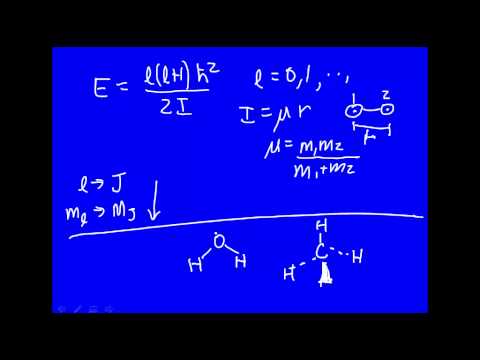
On the other hand, rotational Raman spectra focus on how the entire molecule spins around an axis. Think of it like watching a spinning top—when it spins faster or slower, we can infer something about its energy levels.
Here’s where it gets interesting:
- Energy Differences: In vibrational spectra, the energy changes are larger because they involve stretching or compressing bonds between atoms.
- Rotational Energy Levels: For rotational spectra, the energy differences are smaller and relate to how fast the molecule spins.
You can view vibrational transitions as being associated with modes like bending or stretching bonds in a molecule’s structure while rotational transitions relate to changes in orientation as it spins.
So imagine this: you’re trying to identify different types of gases in the air. Vibrational Raman spectroscopy might help you see if there’s carbon dioxide by looking at specific frequencies related to C=O bonds vibrating. Meanwhile, rotational Raman spectroscopy could help with measuring temperatures more accurately if you’re dealing with gas phases because you can see how fast those molecules are rotating.
And there’s more! The two types of spectra often show up together. When interpreting them side by side, you can get not just a pretty picture but also detailed info about molecular symmetry and geometry!
Oh! One thing worth noting is that vibrations can occur only at certain energies due to quantum mechanics (fancy science stuff), while rotations aren’t quite so picky when it comes to allowed transitions—they can happen more freely across different energy levels.
In summary, while both vibration and rotation involve movement within or around molecules, they differ significantly in terms of energy scale and what kind of movements they’re describing. This understanding opens up pathways for scientists in fields ranging from environmental monitoring to materials science! Isn’t that cool?
So, let’s chat a bit about vibrational and rotational spectroscopy. It sounds super fancy, right? But the truth is, it’s just another way science sorts through the surprisingly complex world of molecules. You know, those tiny building blocks that make up everything around us—plants, animals, even you!
At its core, vibrational spectroscopy looks at how molecules vibrate when they absorb light. Picture this: you’re holding a guitar string and plucking it. The way that string vibrates produces sound waves. Molecules do something similar with light! When they absorb photons, they start to jiggle and move in all sorts of ways. This vibration gives us clues about their structure and identity. It’s like a secret language they speak that helps scientists understand what they’re made of.
On the other hand, there’s rotational spectroscopy. This one can be thought of as a dance-off for molecules! Instead of just shaking in place like during a dance party (thanks to the vibrations), these molecules spin around too. When we shoot microwaves at them—the light waves of longer wavelengths—they start rotating. By examining how these rotations change with energy absorption, scientists can figure out even more about the molecular structure.
I remember attending a seminar where someone used this approach to analyze air quality in urban areas. They detected pollutants at tiny concentrations—way below what we’d usually notice—and talked about how this info could help improve our cities’ health standards. It really hit home for me when I thought about how these tiny vibrations and rotations could lead to cleaner air for kids playing outside or elderly folks taking leisurely strolls.
You see the beauty in that? These sophisticated techniques have real-world implications beyond just numbers on a page or peaks on a graph; it’s about life quality! Both types of spectroscopy can work hand-in-hand too; combining their data helps create an even clearer picture of what’s happening at a molecular level.
So yeah, while vibrational and rotational spectroscopy might sound complicated, they’re not just dusty lab techniques from textbooks. They’re powerful tools that help us unravel mysteries in everything from environmental science to pharmaceuticals—a little bit like detectives sniffing out clues in our miniature universe!