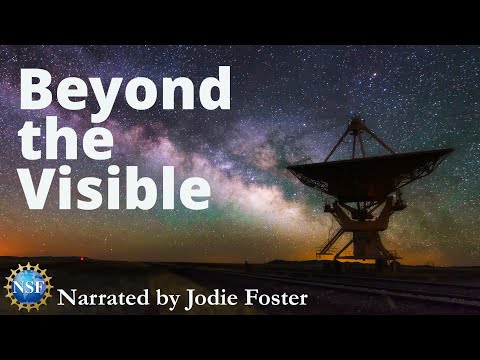
So, picture this: you’re chilling outside one night, maybe with a friend or two, looking up at the stars. Ever thought about what they’re really doing up there? Like, are they just hanging out, or is there some wild cosmic party happening?
Well, it turns out there’s a whole lot more happening beyond our little blue planet. And that’s where the Very Large radio telescope comes in. Yeah, it’s a mouthful! But this giant setup in New Mexico isn’t just some fancy tourist attraction—it’s a serious tool for uncovering the mysteries of the universe.
Imagine this massive array of antennas all working together like a super-sleuth team. They’re listening for signals from distant galaxies and stars we can barely comprehend. It’s amazing what these things can do! So buckle up, because we’re diving into how this incredible telescope is helping us understand what’s really out there in the cosmos.
Groundbreaking Discoveries of the VLA Telescope: Advancements in Astronomy and Cosmic Insights
The Very Large Array (VLA) is a really cool radio telescope located in New Mexico. It’s made up of 27 dish antennas that work together to observe the universe. These dishes are spread out across the desert, and can be arranged in various configurations to focus on different areas of space. You can think of it as a giant camera used for capturing cosmic images, but instead of visible light, it uses radio waves. This lets scientists peer into the universe’s deepest corners.
Discoveries made with the VLA have changed our understanding of many astronomical phenomena. For example, researchers have been able to study pulsars—those incredibly dense remnants of exploded stars that spin rapidly and emit beams of radiation. Pulsars are like cosmic lighthouses, and with the VLA’s help, we’ve learned more about their behavior and environment.
Then there’s black holes. We’ve all heard about them being these mysterious voids in space, but studying them isn’t easy. The VLA has helped us look at nearby galaxies where supermassive black holes are found at their centers. By observing how stars move around these black holes using radio waves, astronomers can infer their mass and properties without having to see them directly! Talk about a neat trick!
Another exciting aspect is how the VLA contributes to our understanding of cosmic events like supernovae—those explosive deaths of massive stars. When a star goes supernova, it creates shock waves that launch gas and dust into space. The VLA can detect the radio emissions from these blasts long after they occur, helping scientists piece together what happens during these cataclysmic events.
And we can’t forget about galaxies! The VLA has been vital in mapping out distant galaxies and understanding their formation and evolution over billions of years. By examining how gas moves within these galaxies or looking at interactions between them, researchers gain insights into how galaxies grow and merge, shaping our universe as we know it.
Sometimes it’s not just giant structures or stellar explosions that capture attention; it’s also the materials floating around in space that pique curiosity. The VLA has provided crucial information on interstellar molecules—the building blocks for new stars and perhaps even life! It’s wild to think that by peering through clouds of gas with radio waves, scientists can track down complexes with molecules critical for life as we know it.
You may wonder what all this means for you personally or your everyday life? Well, advances in astronomy often lead to technology improvements back on Earth too! For example, things like satellite communications and GPS systems rely on insights gained from telescopes like the VLA.
In wrapping this up—it’s pretty clear that the discoveries made by the VLA telescope aren’t just random bits of data collected in the middle of nowhere; they’re pivotal pieces affecting our grasp on everything cosmic—from black holes to tiny molecular compounds out there waiting to be discovered! So next time you look up at the night sky or hear someone talking about space stuff—you’ll remember there’s a vast universe being explored by amazing tools like the VLA!
Exploring the Cosmos: The Role of Radio Telescopes in Advancing Our Understanding of the Universe
Exploring the cosmos is a journey that has fascinated humanity for centuries. We’ve always looked up at the stars and wondered what’s out there. Well, one of the coolest tools we have to help us figure that out is radio telescopes.
These bad boys are like giant ears pointed at the sky, listening for signals from outer space. Unlike regular telescopes that use visible light, radio telescopes capture radio waves, which are part of the electromagnetic spectrum. You know how you can hear different sounds depending on their frequency? It’s similar but with light waves instead.
So, what’s the big deal with radio waves? They can travel through dust clouds and gas in space that block visible light. This means we can see and study objects that would otherwise be hidden from our view. Imagine peeking behind a curtain to see what’s happening in another room!
Let’s talk about one of the most famous ones: the Very Large Array (VLA) in New Mexico. This facility consists of 27 individual antennas that work together as one gigantic telescope. Each dish is like a piece of a puzzle, and when they combine their powers, they create stunning images of cosmic phenomena.
Here are some ways radio telescopes like the VLA have changed our understanding of the universe:
- Pulsars: These are spinning neutron stars that emit beams like lighthouse signals. The VLA has helped detect these elusive objects and measure their rotation rates.
- Galaxies: Radio telescopes often find hidden galaxies by detecting their gaseous components, allowing us to study galaxy formation and evolution better.
- The Cosmic Microwave Background: Radio observations contribute to our understanding of this remnant radiation from the Big Bang, giving insights into how the universe began.
- Astronomical Phenomena: Things like black holes or supernovae send out fascinating signals that radio telescopes can catch.
A neat story from using radio telescopes involves detecting distant galaxies colliding—a truly mind-blowing cosmic event! In one observation, astronomers noticed unusual emissions coming from two merging galaxies in a faraway cluster. By analyzing these signals with radio data, they could figure out not only how these galaxies were interacting but also how this process might affect star formation over time.
Anyway, it’s pretty crazy to think about all this stuff happening billions of light-years away, right? Radio telescopes allow us not just to listen in on these cosmic conversations but also to unlock mysteries long hidden behind clouds or in darkness.
So every time you see those huge antennas on a hill or read about some epic discovery linked back to them, remember—you’re looking at more than metal structures; you’re witnessing humanity’s quest for knowledge and understanding about our home in this vast universe!
Exploring the Main Purpose of the Very Large Array (VLA) in New Mexico: Insights into Radio Astronomy and Scientific Research
The Very Large Array, or VLA for short, is a truly incredible radio telescope located in New Mexico. Basically, it’s like a giant ear listening to the cosmos. But what exactly is its main purpose? Well, let’s unpack that.
First off, the VLA consists of 27 dish antennas that work together to collect radio waves from space. These antennas are spread out across miles of desert land. It’s kind of like a big puzzle spread over an area of about 13 miles! Because they can be moved around, scientists can change the configuration based on what they want to study.
One major goal of the VLA is to help us understand the formation and structure of galaxies, including our own Milky Way. You know how you sometimes wonder how things begin? Well, the VLA does just that for galaxies. It can detect radio emissions from them, which tells scientists about their composition and behavior.
Another critical function is studying pulsars and black holes. Pulsars are neutron stars that spin rapidly and emit beams of radio waves. They’re like cosmic lighthouses! The VLA helps researchers measure their spin rates and understand their environments better. Black holes? Same deal—using radio waves allows scientists to observe materials spiraling into them without having to see the black hole itself.
And let’s not forget about cosmic microwave background radiation. This faint glow left over from the Big Bang gives clues about how our universe evolved. The VLA’s sensitivity to specific frequencies allows it to contribute valuable data here too.
But here’s something personal: I remember being totally blown away when I first read about how scientists used the VLA data to confirm Einstein’s theory of general relativity. It was this moment when I thought, “Wow! We’re really using these tech wonders to get closer to understanding our universe!”
The VLA also plays a part in monitoring space weather by observing solar flares and other phenomena affecting Earth’s atmosphere. That means it’s not just looking at deep space; it also keeps an eye on our own planet!
So yeah, whether studying distant galaxies or local phenomena, the Very Large Array helps piece together some pretty profound questions about our universe’s past, present, and future. Isn’t it cool how something so massive can reveal so much?
In short:
- 27 dish antennas working together
- Understanding galaxy formation
- Studying pulsars and black holes
- Contributing data on the Big Bang
- Monitoring space weather
That’s why places like the VLA are more than just telescopes—they’re gateways into understanding everything from tiny particles to massive celestial bodies!
The Very Large Array, or VLA for short, is one of those scientific wonders that truly makes you go, “Wow!” I remember the first time I read about it. I was a kid, sitting in my school library, flipping through a science magazine and coming across this massive installation of radio antennas. They looked like giant satellite dishes lined up in a perfect row against the New Mexico desert sky. It sparked something in me. Like, how cool is it that we have these machines listening to the universe?
Alright, so let’s break it down. The VLA consists of 27 radio antennas working together like a team to capture signals from space. But here’s the kicker: they don’t just gather any old signal; they listen for radio waves emitted by celestial objects—think stars, galaxies, and even black holes! It’s like tuning into your favorite radio station but on an intergalactic scale.
Now you might wonder why radio waves are such a big deal. Well, visible light is just one part of the electromagnetic spectrum—like a tiny slice of a massive cosmic pizza! Radio waves are different; they can pass through dust clouds in space that block other forms of light. This means the VLA can peek into areas where traditional telescopes can’t quite reach. It’s kind of like having x-ray vision for the universe!
And guess what? With all their fancy technology and positioning—the antennas can be spread out over 22 miles! This flexibility helps create high-res images of far-off galaxies. Imagine getting clearer photos from your old-school camera by simply adjusting its position—pretty neat, right?
This isn’t just about pretty pictures or cool science jargon; it’s real knowledge advancement! The research done at VLA has helped us understand phenomena like pulsars (those spinning neutron stars), quasars (super-bright galaxies powered by supermassive black holes), and even mapping how galaxies form and evolve over billions of years.
I often think about how much we still don’t know about our universe and how tools like the VLA push those boundaries further out every day. There’s this thrilling feeling knowing there are mysteries waiting to be unraveled just beyond our reach—like pieces of a cosmic puzzle falling into place when scientists make new discoveries.
So yeah, next time you gaze at the stars—or scroll through some cool cosmic images online—remember there’s an orchestra out there being conducted by these enormous antennas in New Mexico. They’re not just collecting data; they’re opening our minds to possibilities we’ve yet to explore. Isn’t that what it’s all about? Discovering more than we thought possible?