You know that moment when you’re trying to open a jar, and it just won’t budge? You twist, turn, and make weird faces like it’s some sort of a battle.
Well, guess what? Your wrist muscles are the unsung heroes in that struggle. They’re like the backup dancers in a pop concert—totally essential but rarely in the spotlight.
Let’s talk about these little guys and how they keep everything in check. From typing on your phone to doing push-ups, your wrist muscles are working hard behind the scenes.
So, ever thought about what those muscles actually do for you? Spoiler alert: it’s pretty cool!
Exploring the Significance of Wrists in Human Anatomy: A Scientific Perspective
So, let’s chat about wrists! They might not seem like the stars of the human body, but seriously, they play a crucial role in our day-to-day movements. You probably don’t think about them much until you try to open a jar or type for hours. So, what makes these small joints so significant?
The wrist connects the hand to the forearm and is made up of **eight small bones** known as carpal bones. These bones form two rows and create a kind of flexible structure that allows for a wide range of movement. It’s like having a mini-symphony of bones working together! Flexibility is key here; it lets you wave hello, toss a ball, or even just hold your phone comfortably.
And then, there’s the **muscle action**. The muscles that control wrist movement are located in the forearm, but their tendons extend into the hand and wrist area. Think of these muscles as the engines that make everything happen. When you want to bend your wrist to pick up something, those little guys get fired up and pull on tendons that connect all around your wrist.
- Flexor muscles, which help with bending your wrist and fingers.
- Extensor muscles, which assist in straightening your wrist and fingers.
Picture this: one time I tried to impress my friends by doing some fancy hand gestures while talking—a classic move! But I ended up straining my wrist because I wasn’t used to those sudden motions. It’s amazing how easily we can push our bodies if we’re not mindful. This kind of injury highlights how important it is to look after our wrists.
Speaking of care, let’s talk about **wrist health**. If you don’t give them some love, you might end up with problems like carpal tunnel syndrome or tendonitis—ouch! These conditions can seriously limit your motion and cause pain. Keeping your wrists strong can help prevent injuries too!
You know what else matters? **Posture**! A lot of us spend hours typing or scrolling on devices without thinking twice about how we position our wrists. Bad posture can lead to undue stress on those tiny joints over time. Try keeping your wrists straight while typing; it’s super helpful!
A fun fact: astronauts even have specific exercises for their wrists when they’re floating around in space! Without gravity, their muscles weaken faster than usual—kind of wild if you ask me.
Your wrists may be small compared to other body parts like arms or legs, but don’t underestimate their importance! They’re essential for pretty much everything we do with our hands—writing, drawing, cooking—you name it! Treat them well and they’ll continue supporting all your adventures!
Exploring the Main Functions of the Wrist: A Scientific Perspective on Human Anatomy and Movement
The wrist is pretty amazing, you know? It seems so simple, but it’s actually a complex structure that plays a huge role in how we move our arms and hands. Let’s break down what makes your wrist tick – or twist, as the case may be.
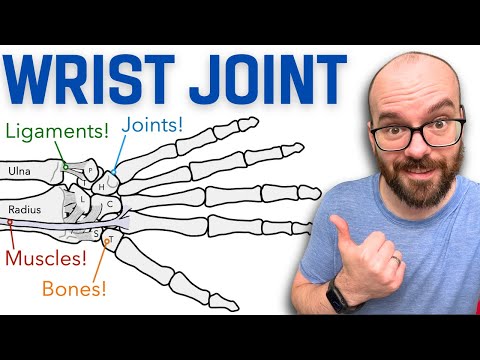
First off, the **wrist is made up of eight small bones** called carpal bones. These bones are arranged in two rows. The top row has four bones (the scaphoid, lunate, triquetrum, and pisiform), and the bottom row has another four (the trapezium, trapezoid, capitate, and hamate). They work together to create a flexible joint that allows for a wide range of motion.
Now let’s talk about movement. The main function of the wrist is to enable **flexion and extension**. This means bending forward or straightening out—like when you’re typing on your phone or lifting something. But there’s more! You also have **radial and ulnar deviation**. Basically, this lets you tilt your hand side to side. Isn’t that cool?
Another crucial aspect is the role of **muscles** around the wrist. There are flexor muscles on the underside of your forearm that help bend your wrist and fingers. Then there are extensor muscles on top that straighten them out again. It’s kinda like a teamwork situation: one group pulls while the other group pushes.
Over time though, our wrists can take quite the beating! Activities like typing for hours or using tools can lead to strain or injury. Ever felt that annoying ache after working on your computer? Yeah, it’s a pretty common thing called **repetitive strain injury**, often affecting those muscles or tendons near the wrist.
To keep things running smoothly in that wrist joint of yours, it’s super important to stay active! Simple exercises can help improve flexibility and strength which can combat stiffness so you don’t feel all creaky.
Here are some quick pointers on taking care of your wrists:
- Stretching: Regularly stretching can increase flexibility.
- Strengthening: Use light weights to build muscle around your wrists.
- Good posture: Keep an eye on how you sit at desks; bad posture can contribute to pain.
It might sound boring at first glance – talking about bones and muscles – but think about all those little things we do every day with our hands! From gripping a pencil to giving high fives, we rely heavily on our wrists without even thinking about it!
In short, understanding how this little joint works helps us appreciate even more just how intricate our bodies really are. So next time you check your watch or give someone a thumbs-up, remember: there’s a whole lot happening at that tiny spot called the wrist!
Implications of Weak Wrist Extensors: Understanding the Effects on Function and Performance in Musculoskeletal Health
Alright, let’s break this down. When we talk about weak wrist extensors, we’re diving into a topic that affects how your wrists work and, believe it or not, your overall health. The wrist muscles are super important for a bunch of daily activities, and when they’re weak, you can feel it.
Your wrist extensors are those muscles on the top part of your forearm. Their main job is to help you extend your hand back at the wrist. Think about it: every time you type on a keyboard or brush your hair, those muscles are working hard. So, if they aren’t doing their job well, it can really mess things up.
One immediate effect of weak wrist extensors is decreased grip strength. You know how sometimes you try to open a jar but just can’t seem to get a good grip? That might partly be because those muscles aren’t pulling their weight—literally! A weak grip can also lead to difficulties in performing simple tasks like carrying groceries or lifting boxes.
- Pain and Discomfort: If you’re overcompensating for weak wrist extensors by using other muscles more intensively, it often results in pain or discomfort in your forearm or even shoulder area. Imagine trying to carry a heavy backpack with only one strap; it’s bound to cause some strain!
- Reduced Range of Motion: Weakness in these muscles could also limit how far back you can extend your wrist. This limitation won’t just be annoying—it affects sports performance too! For athletes who rely on precise wrist movements, like tennis players or musicians, this could seriously impact their game.
- Increased Risk of Injury: Insufficient strength can lead to injuries too. If the stabilizing muscles around the joint aren’t strong enough, the risk for strains or sprains increases significantly. It’s like having a rickety fence; eventually, something’s gonna go wrong!
The thing is, having strong wrists isn’t just about being able to lift heavy stuff easily; it’s about overall function and musculoskeletal health. Week after week of underused muscles can create imbalances that ripple through your entire body.
You might be thinking: “So what do I do?” Well, incorporating exercises that target and strengthen these extensor muscles is key—simple stuff like extension curls with weights can make a huge difference over time! Also maintaining proper posture during activities makes sure that all those little muscles are firing correctly.
If you’ve ever felt fatigued after typing for hours or noticed any odd cramping in your hands—it might just be linked back to these extensors being weak and underappreciated.
So there you have it! Weak wrist extensors affect not only how we manage day-to-day tasks but also our athletic performance and overall health. Keeping those muscles strong helps create balance and stability throughout our entire body—a vital part of staying active!
You know, when you think about muscles in your body, the big ones usually get all the love. Like, who doesn’t appreciate a well-defined bicep? But seriously, let’s take a moment to chat about something that often gets overlooked: your wrist muscles. They may be small, but let me tell you, they do a lot of heavy lifting—no pun intended!
So, think about all the stuff you do with your hands. Typing away on your keyboard, scrolling through your phone, or even just sipping coffee; it’s like our wrists are this amazing hub of movement. The wrist isn’t just a simple joint; it’s a complex structure made up of bones and soft tissues that work together to give us that sweet range of motion. There are multiple muscles at play here—flexors and extensors mainly—that help us bend and straighten our wrists.
I remember this one time when I spent an entire weekend rearranging furniture in my apartment. I felt invincible at the moment, but by Sunday night? My wrists were screaming! It’s funny how we take these little joints for granted until they remind us who’s boss. That weekend made me realize how essential wrist health is—you really don’t want to end up with pain or stiffness that makes simple tasks feel monumental.
But here’s the kicker: having strong and flexible wrist muscles can actually make life easier in ways we don’t often consider. For athletes or people who knit or paint—basically anyone using their hands regularly—it’s crucial to keep those muscles healthy. Stretching helps maintain flexibility while some strength training can boost their resilience against injuries.
And speaking of injuries…we’ve probably all heard someone talking about carpal tunnel syndrome or tendinitis at one point or another. These issues stem from overuse and strain on those tiny but vital muscles in our wrists! It’s wild how something so small can throw off so much of what we do day-to-day if we’re not careful.
Incorporating some simple exercises into your routine might just save you from future aches and pains. Wrist rotations? Yes please! And don’t forget about hand stretches—they’re quick enough to fit into any busy day.
So just remember: while it might seem trivial, keeping an eye on your wrist muscle health really pays off in the long run!