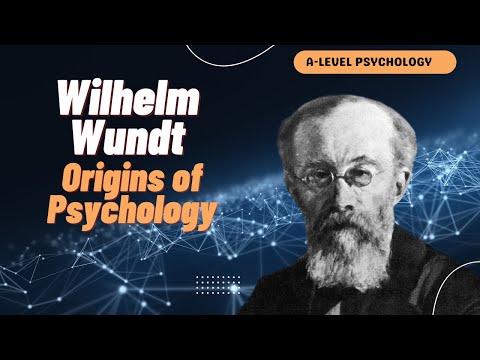
You know that feeling when you’re trying to remember if you shut the door? It’s like a mini existential crisis, right? Well, it turns out folks have been pondering thoughts and feelings like that for ages.
Enter Wilhelm Wundt, the dude who basically said, “Hey, let’s study this stuff scientifically!” Back in the late 1800s, he set up shop in Germany and opened the first psychology lab. I mean, how cool is that?
Before him, psychology was kind of all over the place. Think of it as a jumbled up sock drawer. But Wundt? He wanted to tidy things up a bit. He laid down some serious ground rules for studying the mind.
So grab your mental toolbox! We’re diving into how Wundt’s ideas shaped modern psychology and why they still matter today. You ready?
Wundt’s Legacy: Transforming Psychology and Shaping the Foundations of Modern Science
Wilhelm Wundt is a name that pops up often when you’re diving into the history of psychology. He’s like the cool grandparent of modern psychology, you know? Born in 1832, he basically laid down the groundwork for how we study the mind today. So, what’s his story?
Wundt opened the first psychology lab in Leipzig, Germany, in 1879. Imagine a bunch of curious folks hanging out with lab equipment, trying to figure out how our brains tick! This was revolutionary because before this, psychology was more about philosophy than science. Wundt wanted to make it a proper science, focusing on observable behaviors and experiences.
He introduced introspection, which is like looking within yourself to analyze your thoughts and feelings. Now, it sounds a bit old school compared to today’s methods; but back then, it was groundbreaking! Wundt trained his students to carefully observe their own mental processes. Picture students sitting quietly in a room pondering their own thoughts. Some might call it a little weird, but hey, it was the start of something big!
His approach led to what we now call structuralism. This is all about breaking down mental processes into their basic components. Think of it like taking apart a clock to understand how all those tiny gears work together to tell you time. Wundt believed that by understanding these parts—like sensations and perceptions—we could get a better grasp on consciousness itself.
You see, Wundt didn’t just stop there; he also emphasized the importance of experiments. His work mixed philosophy with empirical research—like adding chocolate to peanut butter! By using experiments, he showed that certain mental processes could be measured scientifically.
And here’s where things get super interesting: even though some later psychologists thought introspection was kind of flaky and moved toward behaviorism (the study of observable actions), Wundt’s ideas were foundational. They opened the door for various branches and schools in psychology that followed—like cognitive psychology and humanistic psychology.
Another biggie from Wundt is his emphasis on cultural psychology. He believed that our minds are shaped by our culture and social environment—a pretty modern idea! By studying different cultures and societies, he thought we could learn about human consciousness as a whole. It’s kind of wild how relevant that thought still is today!
In short, Wundt helped transform psychology from an armchair philosophy into an actual scientific discipline. Without him paving the way with his lab work and theories on introspection and structuralism, who knows how different psychological science would look right now?
So next time someone mentions psychology or talks about understanding minds better—remember Wilhelm Wundt! His impact is woven through modern psychological practices like threads through fabric—you can’t really take one out without changing the whole piece.
The Lasting Impact of Structuralism on Contemporary Psychology and Scientific Inquiry
Okay, let’s talk about structuralism and its lasting impact on psychology and scientific inquiry, especially how Wundt, the father of modern psychology, fits into this picture.
Structuralism is like the granddaddy of modern psychological theories. It kicked off in the late 19th century with Wilhelm Wundt. Wundt believed that to understand the human mind, we needed to break it down into its basic components—kinda like taking apart a watch to see how it works. This was super important because it shifted psychology from philosophy to a more scientific approach.
The thing about structuralism is that it introduced a method called introspection. This involved looking inward and reporting thoughts and feelings. Imagine trying to describe your emotions while you’re feeling them—challenging, right? But it laid the groundwork for later research methods in psychology.
- Contributions to Research Methods: Structuralism encouraged rigorous scientific methods in psychological experiments. Wundt set up labs specifically for this purpose, making observation systematic and reliable.
- Focus on Conscious Experience: It highlighted the importance of conscious experience. Understanding how people perceive things became crucial for later psychologists like William James, who expanded on these ideas with functionalism.
- Foundation for Future Theories: Although structuralism eventually faded out, its focus on breaking down mental processes influenced other schools of thought—like behaviorism and cognitive psychology. Think about how behaviorists measure actions rather than introspections; they still owe a nod to Wundt’s influence!
You know what’s cool? Even though introspection isn’t widely used today due to its subjective nature (everyone’s got different feelings!), it paved the way for more objective methods. Like neuroimaging techniques that map brain activity while people perform tasks or feel emotions!
The lasting impact of structuralism also goes beyond psychology; it’s affected disciplines like sociology and anthropology too by inspiring researchers to look at structures within society instead of just individual behaviors.
If you think about the evolution from structuralism to contemporary methods, you see an amazing journey! Modern psychologists have built upon these early foundations while refining how they study human behavior and thought processes. So yeah, Wundt’s ideas may seem old-fashioned today, but his influence is still felt across various fields of inquiry! Isn’t that something?
In short, structuralism was more than just an academic theory; it marked a shift toward seeing psychology through a scientific lens. And although not all methods from back then hold today, many principles continue shaping our understanding of human nature in profound ways!
Exploring Wilhelm Wundt’s Pioneering Influence on Psychology and Scientific Methodology
Alright, let’s dig into the world of Wilhelm Wundt, the guy who’s often called the “father of experimental psychology.” It’s kind of a big deal because he set up a whole new way of thinking about the mind and behavior.
Wundt’s Big Move
Back in the late 19th century, Wundt was doing something pretty groundbreaking. He established the first psychology lab in Leipzig, Germany, in 1879. This wasn’t just a random choice; it marked psychology as its own scientific discipline separate from philosophy and biology. Before him, understanding how our minds work was all talk—philosophers had opinions but no solid experiments.
The Experimental Method
Wundt believed that to study the mind effectively, you needed to use experiments. He wanted psychology to be seen like physics or chemistry—where you can measure stuff and gather data. So he focused on what he called “introspection,” which is basically looking inward at your thoughts and feelings while also being observed in controlled settings. Picture yourself trying to catch your own thoughts as they flit by like butterflies!
- Structuralism: He formed a school of thought called structuralism which aimed to break down mental processes into their most basic elements. Think of it like taking apart a clock to see how each cog operates.
- Volkerpsychologie: Wundt didn’t just stop at individual minds; he also studied cultures and shared experiences through his concept of Volkerpsychologie, or folk psychology. He argued that social factors play a huge role in shaping human behavior.
A Lasting Influence
His methods influenced tons of psychologists after him. You’ve got people like Edward Titchener who took Wundt’s ideas and ran with them towards America with structuralism being super popular for a while. But then you also have figures like William James who leaned more towards functionalism—a kind of reaction against Wundt’s strict definitions.
Let’s not forget how his work laid ground for later psychological approaches too, such as behaviorism and cognitive psychology. They all stem back to that initial push for rigorous study.
Anecdote Time!
There’s this cool story about how one day Wundt had a student who was freaking out over their introspective results—they were trying so hard to focus on their thoughts that they couldn’t even think! It perfectly illustrates the struggle between wanting to observe your own mind while losing touch with it at the same time—a challenge modern mindfulness folks can probably relate too!
To sum up, Wilhelm Wundt wasn’t just some academic; he was like this spark that lit up an entire field! His push towards viewing psychology as a science through experimentation changed everything we know now about mental processes and human behavior today. So when you think about modern psychological practices, remember there’s a lot going back to his early labs buzzing with curiosity!
You know, sometimes when you dive into the history of psychology, you stumble upon figures who seem to change everything. That’s totally the vibe I get when I think about Wilhelm Wundt. So, grab a comfy seat and let’s unpack this together.
Wundt is often called the father of experimental psychology. And honestly? It’s hard to overstate how much he’s shaped the way we think about studying the mind today. Picture him in his little lab in Leipzig back in the late 1800s, surrounded by instruments that looked like they were left over from a mad scientist movie. He wasn’t just sitting around pondering thoughts; he was measuring them! Can you imagine that? Like, trying to quantify feelings or sensations like they’re numbers on a piece of paper! It sounds a bit bonkers now, but he was all about making psychology a legitimate science instead of just philosophical rambling.
I remember reading about Wundt for the first time and feeling inspired. He made me realize that our thoughts and feelings could be examined scientifically. This was pretty revolutionary! Before him, people operated on gut feelings or philosophical debates. But Wundt introduced methods—like introspection—where trained subjects would report their conscious experiences in response to stimuli. Sure, it wasn’t perfect, and some folks later criticized it for being subjective and unreliable, but it kicked off something big.
One thing that blows my mind is how Wundt distinguished between different branches of psychology: he believed in separating experimental psychology from cultural psychology or social factors. That split laid groundwork for future psychologists to explore both individual mental processes and broader social influences independently. And wow, doesn’t that sound eerily relevant today? We’re all grappling with how our environments shape us while also trying to understand personal choices.
His influence didn’t just stop after his time either; it rippled through generations of psychologists who came after him—from behaviorists who focused on observable behavior to cognitive psychologists exploring thought processes. Even modern neuroscience owes a nod or two to Wundt’s pioneering spirit! His emphasis on empirical evidence set the stage for rigorous experimentation that remains the cornerstone of psychological research today.
When I reflect on Wundt’s work, I can’t help but feel a bit nostalgic—like we’re part of this long journey exploring what it means to be human. His passion for understanding ourselves isn’t lost; it’s alive in every new study we read about today! So next time you come across some research or psychological theories, remember: there’s a little piece of Wundt’s legacy tucked inside all that knowledge—passionately seeking answers about this wonderfully complex human experience we inhabit together.