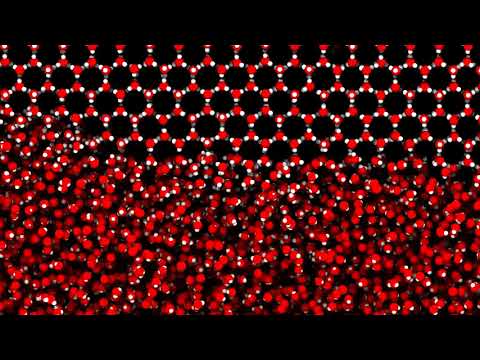
You know that moment when you’re trying to explain something cool, like how molecules look in 3D, but everyone just stares at you like you’re speaking Martian? Yeah, I’ve been there too! It’s kind of funny and just a little frustrating.
So picture this: you’re holding a tiny model of a DNA strand, and your friend asks if it’s some sort of spaghetti. Haha! Not quite! But hey, making science relatable is key, right?
Visualizing 3D chemical structures can be both a game-changer and super fun. When you see how atoms connect with those funky shapes, it all starts to make sense. Suddenly, chemistry feels more like art than a bunch of numbers and letters on a page.
Whether it’s about making drugs or figuring out environmental issues, understanding these structures is huge. So let’s chat about why seeing science in 3D is not just impressive but totally necessary for getting everyone on board with the wonders of chemistry.
Exploring the Importance of 3D Molecular Structures in Scientific Research and Innovation
Exploring the world of 3D molecular structures is like peeking through a magical window into the microscopic universe where everything comes to life. When scientists visualize molecules in three dimensions, it’s not just about making pretty pictures. It’s a critical part of understanding how these tiny building blocks interact with one another and with the world around them.
You see, molecules are dynamic. They don’t just sit still; they twist, turn, and vibrate. Imagine trying to understand a dance by only watching a snapshot. You’d miss out on all those fascinating moves! That’s why creating 3D models is essential—it lets researchers see the full choreography of molecular interactions, which can lead to exciting discoveries in fields like drug design and materials science.
One key aspect here is how the shape of a molecule affects its function. Think of it like this: if you have a key that doesn’t match the lock, no matter how hard you try, it won’t open. Similarly, molecules need to fit together perfectly for reactions to occur. By using 3D structures, scientists can identify how well different compounds might fit together. This has huge implications for developing new medications or even designing materials with specific properties.
Another exciting part of these 3D models is that they help visualize complex systems. For instance, proteins—those amazing little machines in our cells—are often incredibly complex shapes. With 3D representations, scientists can pinpoint how proteins fold and how they might change shape when interacting with other molecules. This knowledge can help unveil mechanisms behind diseases or point towards new therapeutic strategies.
Additionally, researchers often use software and tools that enable them to manipulate these 3D structures easily. Programs like PyMOL or Chimera allow scientists to rotate and zoom in on structures as if they were playing around with virtual LEGO sets! This hands-on approach makes it easier for students and budding scientists to grasp difficult concepts without getting lost in jargon.
Visualization also plays a role in outreach. By presenting science through striking images of molecular structures at public talks or online platforms, educators can inspire curiosity and interest among people who might not otherwise engage with scientific topics. A 3D model can make something abstract feel tangible!
Now, let’s not forget about technological advancements thanks to all this visualization work. Innovations such as CRISPR gene editing took huge leaps forward partly because researchers could visualize exactly what was happening at the molecular level during edits—making risks clear while optimizing effectiveness.
In summary, 3D molecular structures are more than just visually appealing; they’re essential tools for scientific research and innovation. They help us understand interactions at an atomic level while inspiring future generations of scientists by turning complex ideas into accessible visuals that spark curiosity every day!
Exploring Molecular Visualization Techniques: Tools and Methods for Scientists in Chemistry and Biochemistry
Molecular visualization is super cool. It’s like giving scientists a pair of 3D glasses to see molecules in a whole new light, you know? These techniques help researchers in chemistry and biochemistry understand structures and interactions at a molecular level. Here’s a closer look!
Why visualize molecules? Well, seeing is believing! It helps comprehend complex data, identify molecular shapes, and predict how they behave. Imagine trying to bake without seeing the recipe! It’s just not the same.
There are tons of tools and methods out there for this purpose. Some of them are more user-friendly than others, but they all have their merits.
- Ball-and-stick models: These are classic! They show atoms as spheres (the balls) connected by sticks (the bonds). It’s simple but effective for visualizing basic structures.
- Space-filling models: This method illustrates the size of each atom by showing them as spheres that touch each other. You get a good idea of how molecules occupy space!
- Molecular dynamics simulations: This technique takes it up a notch. It simulates how molecules move over time, which helps in understanding their behavior under various conditions.
- X-ray crystallography: While not a visualization tool per se, this method gives precise structural information from crystals and can be turned into 3D models.
- NMR spectroscopy: Like X-ray crystallography, this technique provides detailed information about the structure of molecules in solution.
- ChemDraw and PyMOL: These software programs let you draw chemical structures and visualize them in 3D. They make it easy for chemists to share their ideas with others.
Imagine sitting at your desk in college staring blankly at your textbook with lines of chemical structures jumbling up in your head. Then someone shows you a 3D model on their computer! Suddenly those abstract concepts become tangible—you can actually rotate it and see how everything fits together.
But there’s more to visualization than just looking pretty; it has practical applications too. Researchers use these techniques to design new drugs, create materials with unique properties, or even understand diseases at the molecular level.
However, it’s important to remember that while these tools are powerful, they’re not foolproof. Interpretation can vary based on techniques used or even personal bias—just like when trying to follow directions without realizing you’re missing some steps!
So next time you hear about molecular visualization techniques, think about all those incredible tools helping scientists paint a clearer picture of our world at the tiniest levels. Pretty amazing stuff if you ask me!
You know, when you think about chemistry, it can feel really abstract sometimes. I mean, those tiny atoms and the bonds between them are way too small to see with your eyes. But then you’ve got these amazing 3D models that bring all that complexity to life! It’s like watching a movie without the special effects—kinda flat and not so engaging.
I remember this time in school when we had a lab day focused on molecular models. We were given some colorful balls and sticks to represent different atoms and bonds. At first, I thought, “Why bother?” But as we molded those little pieces into shapes, it clicked for me! I could actually see how molecules formed and how they fit together like puzzles. It made me realize chemistry isn’t just numbers and formulas; it’s a tangible thing.
Now, think about how that experience translates to scientific outreach. When you’re trying to explain chemical structures to someone who’s not a scientist—or even someone just curious—visuals can be game-changers. You can show them what glucose looks like or how DNA spirals around itself in 3D. That kind of imagery sticks in people’s minds way longer than just verbal explanations.
So yeah, there’s something magic about visualizing these structures. You get to see angles, shapes, and even how molecules might react with each other in real life! Plus, with technology breathing life into these models through animations and virtual reality, it becomes so much easier for folks to grasp complex ideas.
But here’s the thing: it’s not just about pretty pictures or flashy animations. It’s about building connections. When people understand what they’re looking at, they’re more likely to get interested in science—and maybe even pursue it further in their lives or careers.
Anyway, whether you’re a chemist sharing your passion or someone just excited by the beauty of the molecular world, remember that seeing is believing! Visualizing 3D chemical structures is one of those tools that can open doors for understanding and curiosity around science. And isn’t that what it’s all about?