Alright, so picture this: you’re at a party, dancing to your favorite song. Suddenly, your heart starts doing the cha-cha when it really should be waltzing. That, my friend, is a bit like what happens in atrial fibrillation!
Crazy, right? It’s not just some minor heart flutter. It’s a whole mix-up in how your heart beats. Like your heart is throwing a party and forgot to send out invitations properly!
Atrial fibrillation is more common than you might think. Millions of people have it without even knowing! Imagine going around with a slightly offbeat heart — could be fun at parties but not so much for health.
What we’ll explore here are the inner workings of this chaotic rhythm. The mechanisms behind it can be pretty fascinating! And guess what? Understanding what’s going on can seriously help us navigate this wild ride.
So grab your favorite drink and settle in! We’re diving into the world of atrial fibrillation and how it shakes things up in our bodies.
Understanding the Pathophysiological Mechanisms of Atrial Fibrillation in Cardiovascular Science
Atrial fibrillation, or AFib for short, is this super common heart rhythm disorder. It’s like when your heart goes all “whoa, chill!” instead of pumping smoothly. Let’s break down what’s actually happening in our hearts that causes this hiccup in rhythm.
First off, let’s talk about the heart’s anatomy. Your heart has four chambers: two atria and two ventricles. The atria are the upper chambers. They’re supposed to fill with blood and then send it to the ventricles below. But with AFib, things get a bit chaotic in those atria.
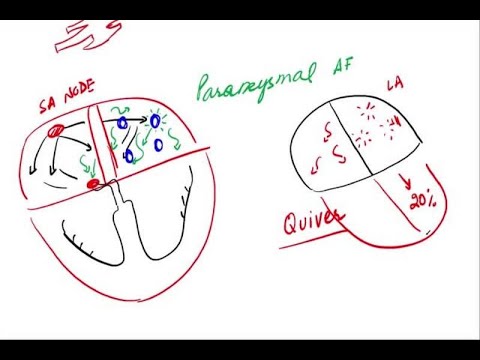
When AFib kicks in, the electrical signals that tell your heart when to beat go haywire. Normally, these signals start from a tiny group of cells called the Sinoatrial (SA) node, which acts like a natural pacemaker. But sometimes extra electrical impulses show up—like uninvited guests at a party—and they can come from anywhere in those atrial muscles.
This leads to rapid and irregular contractions of the atria. Basically, you get a situation where your heart is quivering instead of beating effectively. Just picture Jell-O wobbling—you want it firm but it’s all over the place!
Why does this happen? Well, one big reason is structural changes in the heart tissue. Over time—think age or conditions like high blood pressure—the walls of the atria can stretch and thicken. This makes them more prone to having electrical problems because those signals can’t travel properly through thick tissue.
Another culprit? Inflammation! If you’ve ever had a sore throat or something and felt that irritation—well, your body works similarly inside your heart. Inflammation can disrupt normal signal transmission too.
Then there’s oxidative stress—the fancy term for an imbalance between free radicals (the bad guys) and antioxidants (the good guys) in your body. Too many free radicals can damage cells and tissues in your heart. This stress might make you more susceptible to AFib as well.
You may also want to consider how some lifestyle choices play into this whole thing—a little extra weight around your waistline or excessive alcohol consumption doesn’t help either! These factors can lead to changes that set the stage for AFib.
So what happens during an episode? People often feel their hearts racing or fluttering—and some describe it as feeling like their heart skipped a beat! It’s not just annoying; this irregularity means blood isn’t pumped efficiently which raises the risk for blood clots. Those clots could travel straight up to the brain leading to strokes—which is serious business!
In short, atrial fibrillation results from complex mechanisms involving both electrical disturbances and structural changes within the heart muscle itself:
- Electrical signals misfiring: The SA node becomes less effective due to interruptions.
- Structural remodeling: Changes in atrial size and thickness affect performance.
- Inflammation: Irritation in tissues impacts normal function.
- Oxidative stress: An abundance of free radicals leads to cellular damage.
Atrial fibrillation isn’t just about how fast or slow your heart beats; it’s really about understanding what’s going on inside that pump of yours! So next time someone mentions AFib, you’ll totally know it’s more than just an irregular heartbeat—it’s a whole symphony of chaos playing out right there!
Understanding the Mechanism of Fibrillation: Insights from Cardiovascular Science
So, let’s chat about fibrillation, especially atrial fibrillation. It can sound a bit daunting, but really, it’s just the heart doing its own confusing dance.
Atrial fibrillation (or AFib for short) is basically when the heart’s upper chambers (the atria) start to quiver instead of pump blood effectively. Imagine trying to use a blender that’s switched on but only half the time – you’re going to end up with a lumpy smoothie! That’s kind of what happens in your heart during AFib.
So what triggers this mess? Well, several factors play a role:
- Aging: As we get older, our hearts change. The electrical pathways can become less organized.
- High blood pressure: This puts extra strain on the heart and may lead to structural changes.
- Heart diseases: Things like coronary artery disease or previous heart attacks affect how well the heart works.
- Lifestyle factors: Excessive drinking or not enough exercise can elevate your risk.
- Other health issues: Conditions like diabetes and sleep apnea are common culprits too.
But here’s where it gets really interesting. Fibrillation happens because of something called **electrical dysregulation** in the heart. You’ve got these specialized cells that work as the body’s natural pacemaker, sending electrical signals that tell your heart when to beat. In AFib, those signals go haywire.
Now picture standing in a crowded room with everyone trying to talk at once; it quickly becomes chaos! That is sort of what happens in AFib: chaotic electric signals are firing all over the place instead of one organized beat.
When this chaotic electrical activity takes over, it leads to:
- Ineffective pumping: The atria aren’t able to contract properly which means blood isn’t moving efficiently into the ventricles (the lower chambers).
- Blood pooling: This can increase the risk of clots forming since stagnant blood doesn’t flow as it should.
This pooling phenomenon is actually pretty scary because if a clot breaks free, it could travel up to the brain and cause a stroke! Yikes!
We also need to talk about **symptoms**. Sometimes people feel like their hearts are racing or fluttering (kind of freaky), but other times there are no noticeable symptoms at all. It’s like that surprise pop quiz in class – you never know when it’s going to hit!
Managing AFib usually involves tackling those underlying causes: lifestyle changes, medication adjustments, or even procedures if things get serious. Just think about how much better you’d likely feel by tweaking diet and exercise habits – it’s not all doom and gloom!
So in essence, understanding AFib means grasping how our hearts are designed but also recognizing how easily they can be thrown off course by various factors. It really reminds us just how intricate our bodies are – incredible systems working together!
Understanding Atrial Fibrillation Pathophysiology: A Comprehensive PDF Guide for Researchers and Clinicians
Atrial fibrillation (AF) can feel like a bit of a mystery, right? It’s one of those conditions that, while common, has a lot going on behind the scenes. So, let’s break down how it all works in terms of **pathophysiology**, so you’re not left scratching your head.
First off, what is atrial fibrillation? Well, in simple terms, it’s an irregular heartbeat caused by chaotic electrical signals in the heart’s upper chambers (the atria). Normally, your heart has a natural pacemaker that keeps things ticking along nicely. But with AF, this rhythm gets all jumbled up.
Mechanisms of AF are fascinating. You can think of it like a faulty electrical circuit. There are several key players in this scenario:
- Electrical Remodeling:
- Structural Remodeling:
- Triggers:
- Inflammation:
This refers to changes in the heart’s electrical properties. It’s kind of like adjusting the volume on your radio—sometimes it gets too loud or too soft. In AF patients, there’s often an increase in certain ion currents that makes the heart overly excitable.
This is where the actual physical structure of the heart changes. Think about it: if you keep stretching a rubber band, it eventually loses its shape. Chronic conditions like hypertension or heart disease can lead to enlargement of the atria—which creates more space for those chaotic signals to mess around!
Atrial fibrillation doesn’t just happen out of nowhere; there are often triggers involved. Things like stress, caffeine intake, or even infections can set off an episode. Imagine being at a party where someone keeps bumping into you—it’ll definitely make you lose your balance!
Your body’s response to injury or infection can also play a role here. Inflammation might change how cells behave and how they communicate electrically—which can contribute to that chaotic rhythm.
So, when we talk about **understanding AF**, it’s clear there’s no single culprit; instead, it’s a mix of several factors that come together over time.
You know what’s interesting? There are also different types of atrial fibrillation! There’s paroxysmal (which comes and goes), persistent (which lasts longer), and permanent (when it’s always present). Each type has its own mechanisms and implications for treatment.
And speaking of treatment—understanding pathophysiology helps researchers and clinicians figure out better ways to manage AF. For example:
- Ablation Techniques: These procedures aim to destroy tissue causing abnormal signals.
- Medications: Different drugs target various pathways involved in the condition—from slowing down the heart rate to preventing clots.
In short, getting into the nitty-gritty details about what happens during atrial fibrillation is crucial for anyone working with this condition—whether you’re doing research or treating patients. The more we understand these pathways and mechanisms, the better equipped we are to help people who suffer from this tricky arrhythmia.
And hey! It’s really about making connections—between symptoms and underlying issues—and helping people lead healthier lives! Isn’t that what science is really all about?
Alright, let’s chat a bit about atrial fibrillation, or AFib, as the cool kids call it. Picture your heart as a well-coordinated dance troupe. Each chamber knows its part, like a perfectly synchronized group of dancers. When everything’s working right, it’s like watching a captivating performance—you’ve got rhythm and flow.
But then AFib comes along and messes with that choreography. Instead of those smooth moves, you get this chaotic flailing around. What happens is that the electrical signals in the heart get all out of whack, causing the upper chambers (the atria) to quiver instead of pump effectively. It’s like trying to follow a dance routine with everyone doing their own thing!
It’s interesting to think about how the heart’s electrical system operates. There are specialized cells that generate these signals just like an orchestra conductor directing musicians. But imagine if the conductor lost their sheet music or decided to improvise on a wild whim—total chaos, right? In AFib, various factors like high blood pressure or heart valve issues can throw off that conductor.
When I first learned about AFib’s pathophysiology in school, I remember this story about an older gentleman who had been living with it for years without even realizing how serious it could be. He thought it was just a bit of fluttering now and then! But inside his body, those little shocks were leading to big issues over time—like increasing his risk for stroke! It made me realize how vital it is to understand what’s going on beneath the surface.
Mechanisms behind AFib can be super complex—things like structural changes in the heart muscle or inflammation can play huge roles too. And dealing with AFib isn’t only about treating symptoms; it’s also understanding these underlying causes because let’s face it: if you don’t tackle that messy choreography problem at its source, no amount of medication will bring back that smooth groove.
So yeah, thinking about atrial fibrillation gives you this mix of awe and concern—it really highlights how finely tuned our bodies are and how easily things can spiral out of control when something goes awry. It reminds us all to listen closely to what our bodies are saying because they might just be trying to tell us something important!