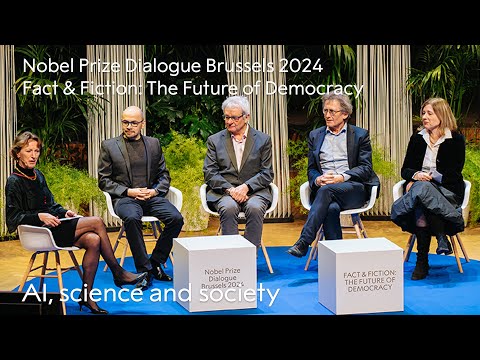
So, picture this: you’re at a party, surrounded by people chatting about everything from their favorite Netflix shows to the latest TikTok trends. Suddenly, someone brings up AI. Instantly, you can feel the room divide into two camps—those who are excited about it and those who’re like, “Wait, what? Isn’t that just robots taking over?”
Honestly, it’s easy to get lost in all the hype and fear. But here’s the scoop: AI isn’t just some sci-fi dream or your techy friend’s obsession. It’s literally transforming how science talks to us and how we interact with the world around us.
Think about it: remember back in school when science felt like this daunting mountain of facts? Well, thanks to AI, it’s more like a friendly guide helping you navigate that mountain. It’s finding cool new ways to explain stuff and make it relatable.
I mean, aren’t we all looking for ways to connect with complex ideas without falling asleep? Like seriously! AI is stepping up and making science part of our everyday conversations. And that’s pretty awesome if you ask me!
Exploring the Impact of Artificial Intelligence on Contemporary Science and Society
Artificial Intelligence, or AI as we like to call it, is reshaping not just how we do science but also how we connect with each other and the world around us. It’s pretty wild when you think about it. Imagine having a super smart buddy who can crunch numbers faster than you can flip through your phone. That’s kind of what AI does in the realm of science!
AI and Research
For starters, research has become a whole lot faster and more efficient thanks to AI. You know all that data scientists collect? It used to take ages to sift through it, but now AI can spot patterns that might take humans forever to find. Like when scientists are looking for new drugs or studying diseases; AI helps them analyze massive datasets quickly, which could lead to breakthroughs in treatments.
Science Communication
But wait, there’s more! The way we share scientific knowledge is changing too. Think about social media – it’s like the modern grapevine for information. AI tools are being used to tailor content so that it gets to the right people at just the right time. This means if you’re really into, let’s say climate change research, algorithms might push information your way, making sure you’re always in the loop.
It’s kind of heartwarming, isn’t it? The idea that someone could stumble upon an article or video they wouldn’t have seen otherwise and suddenly feel informed about something important.
The Ethical Dilemma
However, with great power comes great responsibility—cue Spider-Man music! There are some ethical corners we need to explore here. AI can be biased based on the data it’s trained on. If scientists don’t check their facts or consider the diversity of their data sources, they could unintentionally perpetuate stereotypes or misinformation. You see this a lot in areas like facial recognition tech; if not done right, it can lead down some pretty problematic paths.
A New Age of Collaboration
Even though there are challenges ahead, AI encourages collaboration across disciplines in really cool ways. Let’s say you’re a biologist who doesn’t know much about coding; there are now platforms that let you use AI tools without being a tech wizard! This opens up avenues for partnerships between scientists and engineers that once seemed impossible.
All in all…
AI has its pros and cons—there’s no denying that! It’s making research speedy and outreach more engaging while also presenting tough ethical questions we need to tackle responsibly. So next time you hear about an AI breakthrough or scroll through a science update on social media, think about all those little moments where technology is bridging gaps between complex scientific ideas and everyday folks like us. It’s kinda cool how much we’re all connected now?
The Impact of Artificial Intelligence on Advancements in Modern Science
Artificial Intelligence, or AI, is shaking things up in modern science and outreach in ways that are pretty exciting. It’s not just about fancy robots or self-driving cars. AI is becoming a major player in how we research, communicate, and understand science today.
First off, let’s chat about research efficiency. Traditional scientific research can be a slow process. You know, sifting through mountains of data or conducting lengthy experiments. But AI can analyze huge amounts of information at lightning speed. For instance, researchers use AI algorithms to discover new drugs by analyzing thousands of compounds faster than any human could do. It’s like having a super-smart assistant who doesn’t get tired.
Then there’s the whole idea of predictive modeling. You remember those weather forecasts? Well, imagine applying that kind of predictive power to everything from climate change to disease outbreaks. By crunching numbers and spotting patterns, AI can help scientists anticipate future events and outcomes. So when it comes to battling diseases or managing natural resources, having accurate predictions can make all the difference.
Now, let’s talk about how AI is reshaping scientific outreach. Gone are the days when science was just for those in lab coats with fancy degrees. With the help of AI-driven platforms, scientists can reach out to the public way more effectively. For example, social media bots can share complex scientific concepts with catchy posts or even create engaging content tailored for different audiences—kind of like having a personalized science communicator!
And here’s something cool: AI creates opportunities for collaboration. Scientists from all over the globe can collaborate through shared platforms that use AI to connect ideas! Imagine a researcher in Brazil working alongside another in Japan without ever leaving their labs! It breaks down traditional barriers and fosters innovation across disciplines.
However, along with these advancements come important questions regarding ethics. When using AI in science, you must consider implications like data privacy and bias in algorithms. If an algorithm is trained on biased data, it might lead to skewed results—like misdiagnoses in healthcare applications. So striking that balance between innovation and responsibility is key.
Lastly, we can’t forget how AI influences our understanding of complex systems in nature. Take ecology as an example; by simulating ecosystems through machine learning models, scientists can better grasp interactions between species and environmental changes! It’s like peering into a crystal ball showing us how fragile our ecosystems are.
In summary,
So when you think about science today and what lies ahead—remember that artificial intelligence isn’t just a tool; it’s becoming an integral part of how we explore our world!
Exploring the Impact of AI on Society: Transformations in Science and Beyond
AI is all around us. These days, it seems like you can’t read the news without bumping into something about artificial intelligence. From voice assistants like Siri to those pesky algorithms that know what you want to watch next on Netflix, AI has wormed its way into our lives in ways we might not even notice. But have you ever thought about how it’s shaking up the world of science and outreach?
Think about scientific research for a second. It used to be that scientists would spend years sifting through data by hand. That’s just, wow! Talk about tedious work, right? Now, with AI, we have machines that can analyze vast amounts of data in a fraction of the time. Imagine trying to find a needle in a haystack; now picture having a robot that goes “Hey, there’s the needle!” It’s making discoveries faster than ever.
So yeah, AI is helping scientists identify patterns and make new discoveries in medicine and environmental science. For example, algorithms are now spotting diseases in medical images with incredible accuracy. That means earlier diagnoses and better treatments for patients like you or me.
But let’s not forget about scientific outreach! This is where things get really interesting. With AI tools, researchers can now communicate their findings more effectively to the public. Ever seen those engaging visuals or infographics on social media? You can thank AI for helping create those eye-catching pieces that boil down complex research into digestible bites.
These little digital helpers are available 24/7 to answer questions from curious minds wanting to learn more about science stuff. They’re like your friendly neighborhood librarian but way cooler—and without the shushing!
And then there are personalized learning experiences powered by AI. Imagine an online course tailored just for you! The program figures out your strengths and weaknesses and adjusts accordingly. Sounds nice, right? It actively engages learners who may have felt lost before.
Okay, emotional moment here—think back to when you were in school or struggling with a tough concept; so frustrating! With AI stepping up now, it can help make learning feel more accessible and less lonely for students everywhere.
Now let’s take a quick look at something deeper: ethics. Yep, this one gets complicated fast! As beneficial as AI is becoming, we also need to be asking questions about privacy and bias. Like when algorithms inadvertently favor certain groups over others—yikes! We gotta make sure we’re not leaving anyone behind.
You might also encounter folks who worry about job displacement due to automation—seriously daunting stuff for many workers out there! So while AI is revolutionizing fields and improving efficiency, balancing its impact on human jobs with innovation remains crucial.
In short (or long!), AI’s impact on society is huge. Whether it’s speeding up scientific discoveries or transforming how we share knowledge with one another, it seems we’ve only scratched the surface of what this technology could do.
But remember: as we lean into these advancements—the coolness they bring—reflecting critically on their broader implications keeps us grounded in what really matters: human connection and understanding each other better through science.
You know, it’s really fascinating to think about how AI has crept into our lives, especially in the realm of science and how we share knowledge. I remember this one night when I was having a chat with my nephew about dinosaurs. He’s super curious and asked me a million questions. I struggled to keep up, but then I thought about how cool it would be if he could just talk to an AI that knows everything about T-Rexes or whatever! That kinda made me realize how much potential AI has in igniting curiosity and spreading scientific understanding.
AI isn’t just like a magic genie granting wishes; it can analyze tons of data way faster than we can imagine. So, when scientists want to figure out climate change patterns or the spread of diseases, they can use AI to sift through mountains of information and find insights that would take us ages to discover. It’s like having a super-smart buddy by your side—one that doesn’t get tired or need coffee breaks!
But let’s not pretend there aren’t some bumps on this road. For example, there’s the risk of misinformation. AI can churn out content quickly, but if it’s based on bad data or biases, whoa, we’re in trouble! Remember that time when social media went wild with fake news? Yeah, we don’t want AI adding fuel to that fire. It’s kinda scary thinking how easily things can spiral out of control if we’re not careful.
And then there’s accessibility. Imagine students in remote areas finally getting access to top-notch science resources through AI-driven platforms! They could learn at their own pace and dig into topics they really care about without waiting for the next school trip or a fancy lab visit. Isn’t that amazing? But at the same time, we gotta make sure everyone has access; I mean not everyone has the latest gadgets or high-speed internet.
So yeah, while AI is doing some pretty neat stuff for scientific outreach—like making complex things easier to digest or helping researchers make breakthroughs—it comes with its own set of challenges too. It all boils down to us being responsible with this technology and ensuring it works for everyone rather than leaving anyone behind.
At the end of the day, I guess what resonates is this idea: knowledge should be shared freely and widely so those little sparks of curiosity—like my nephew’s questions—can continue to grow into something really big and impactful!