You know, I once had this friend who thought the spinal cord was just that “thing” you hurt when you fall off your bike. And, well, yes, but there’s so much more to it!
Imagine it as the main highway of your nervous system. Seriously, everything from body movements to feeling sensations zips along this pathway. Pretty wild, huh?
But here’s the kicker: while most of us have a basic idea of what it does, not many really know what goes on inside that column of nerves. It’s a pretty intricate setup down there!
So, let’s break it down a bit. We’ve got the anatomy—like how it’s structured and where everything hangs out. And then there’s physiology, which is basically how all of these pieces work together like a team.
Curious? Let’s untangle this spinal cord mystery together!
Exploring Spinal Cord Anatomy and Physiology: A Comprehensive Scientific Perspective on Neural Function
So, let’s talk about your spinal cord—a super cool part of your body that’s like a highway for signals between your brain and the rest of you. Seriously, it’s fascinating how this bundle of nerves works.
First off, the **spinal cord** itself is this long tube made up of neurons, which are basically the messengers of your nervous system. Picture it as a stack of flexible cables running down your back. It extends from the base of your skull to your lower back and has several regions: the cervical, thoracic, lumbar, sacral, and coccygeal areas. Each region plays its own role in communication.
When you touch something hot—like, let’s say a sizzling pan—your body needs to react fast. That’s where the spinal cord comes into play. The sensation travels through these nerve fibers to the spinal cord and then instantly sends a signal back out to pull your hand away before you even think about it! This reflex action is super quick because it bypasses the brain at first.
Now let’s break down some key parts:
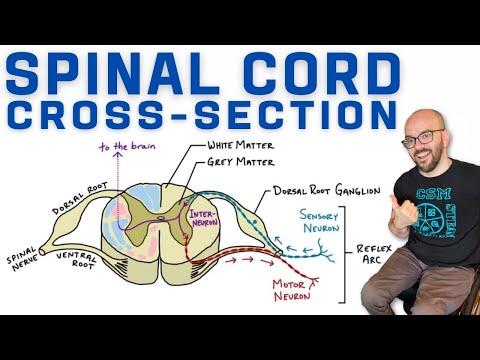
- Gray Matter: This is where all the neuron cell bodies hang out. It looks like an “H” or butterfly shape in cross-section. It’s responsible for processing information.
- White Matter: Surrounding gray matter is white matter, which contains myelinated axons (that means they’re wrapped in a fatty layer). These axons are important for sending signals quickly across long distances.
- Nerve Roots: Each section has nerve roots that emerge from either side before branching out to different parts of the body. Think of them as tree branches extending to help with various functions.
Something that might surprise you is how much diversity there is in these bundles! For example, they carry both **motor** (moving) and **sensory** (feeling) information. So while one set will help you move your arm up when you’re waving hello, another lets you feel the softness of a puppy’s fur when you’re petting it.
And hey, don’t forget about protective features! The spinal cord doesn’t just hang out there freely; it’s cushioned by **cerebrospinal fluid** which provides nutrients and absorbs shock. Plus, bones called vertebrae encase it like armor.
But here’s where things can get serious: if an injury happens to this area—like from an accident—it can be life-changing. Spinal cord injuries can lead to loss of movement or feeling below the injury site because those signals can’t travel up or down anymore.
On top of all this anatomical complexity, there’s also physiology at play! The neurons communicate using chemicals called neurotransmitters that let them send messages across gaps called synapses (which are like small bridges). This communication supports everything from basic reflexes to complex thoughts.
Oh! And here’s something cool—a lot happens even when you’re not consciously aware! Your spinal cord coordinates reflexes without needing input from your brain every single time—just like autopilot on an airplane.
In summary, understanding spinal cord anatomy and physiology reveals how our bodies function deeply on both basic levels (like reflexes) and incredibly complex levels (like coordinating movement). It’s more than just wires running through us; it’s a dynamic system that keeps us connected with our environment!
So next time you think about movement or sensation, remember what’s going on behind the scenes—it’s pretty mind-blowing stuff!
Comprehensive Guide to the Anatomy and Physiology of the Spinal Cord: Downloadable PDF Resource for Scientific Study
The spinal cord is, like, super important in how our body functions. It’s like the main communication highway between your brain and the rest of your body. So, let’s break down some of the cool stuff about its anatomy and physiology!
What is the Spinal Cord?
The spinal cord is a long bundle of nerves that runs down your back, protected by the vertebrae, which are the bones in your spine. It’s pretty fascinating how it starts at the base of your brainstem and goes all the way down to your lower back.
Structure of the Spinal Cord
So, what does it look like? Well, it has several regions: cervical (neck), thoracic (upper back), lumbar (lower back), sacral (pelvic area), and coccygeal (tailbone). Each part serves different body areas and functions.
The Parts You Should Know:
- Gray Matter: This is where most of the nerve cell bodies are. It looks like a butterfly or an “H” shape when you see it in cross-section.
- White Matter: This contains myelinated axons that form nerve tracts. Basically, these are pathways for signals to travel up and down.
- Dorsal Horns: Located on each side of gray matter, these handle sensory information coming from peripheral receptors.
- Ventral Horns: The part that sends out motor signals to muscles.
The Functionality
Now let’s chat about what this thing actually does. The spinal cord’s job is to transmit messages between your brain and your body parts. It handles reflex actions too! Like when you touch something hot; instead of waiting for your brain to process it, boom—you pull away real quick.
Sensory Input: When you touch something or feel pain, sensory neurons send signals up through the spinal cord to your brain.
Motor Output:You ever notice how when you move a muscle? Signals go from your brain down through the spinal cord and out to those muscles via motor neurons.
The Reflex Arc: This is a cool concept worth mentioning! It’s basically a shortcut pathway for reflex actions. When you step on something sharp, sensory neurons send a signal directly to motor neurons without involving the brain first—the result? You jump back right away!
Protection & Nourishment: The spinal cord isn’t just hanging there exposed; it’s nicely cushioned within protective layers known as meninges—three tough membranes—and surrounded by cerebrospinal fluid that helps absorb shocks.
It’s kind of wild thinking about how intricate our bodies are! If you ever get curious about delving deeper into this topic—like what diseases can affect the spinal cord or more on how signals travel—there are tons of resources available online for study. It’s amazing how much we have learned about such an essential part of us!
Understanding Spinal Cord Function: Insights into Neural Pathways and Health Implications in Neuroscience
The spinal cord is like the body’s superhighway for neural signals. It’s a **thin, tube-like structure** that runs from the base of your brain down your back. Its job? Carry messages between your brain and the rest of your body. Basically, it connects everything – from your toes to your fingertips.
Now, let’s break down what this superhighway looks like on the inside. The spinal cord is made up of **nerve fibers and cells**. There are actually two types of pathways here: sensory and motor pathways.
Sensory pathways transmit information from the body to the brain. They help you feel sensations like touch or pain. Imagine you accidentally touch something hot, right? That quick jolt of pain is your sensory pathway kicking in, sending signals straight to your brain so you can react fast!
On the other hand, motor pathways do the opposite. They send signals from your brain to your muscles. If you’re at a concert and want to raise your hands in excitement, guess what? Your motor pathways are hard at work helping you do that!
Now think about it: all these signals travel through specialized bundles called **tracts**. These tracts are organized into different sections along the spinal cord, and each section is responsible for different parts of your body. Pretty efficient, huh?
But it’s not just about physical movement or feeling sensations; there’s also a lot going on with health implications as well! For instance, injuries to the spinal cord can lead to paralysis or loss of sensation depending on where they occur. If someone injures their lower back region, they might lose function in their legs but still be able to move their arms.
There are also certain conditions that affect spinal cord function over time—like multiple sclerosis or amyotrophic lateral sclerosis (ALS). In these cases, nerve cells slowly degenerate which messes with those vital communication lines we talked about earlier.
Another fascinating aspect is how our nervous system has this ability called **neuroplasticity**. It means that after an injury, some nerve connections may reroute themselves over time! This offers hope for recovery in certain situations—your body might find new ways to adapt!
In terms of staying healthy, taking care of our spines should definitely be a priority. Regular exercise strengthens muscles that support our spine while good posture helps prevent strain on those crucial neural pathways.
So yeah, understanding spinal cord function isn’t just for nerds in lab coats; it’s got real-life implications for everyone! From feeling hot coffee spilling on our hands to moving gracefully across a dance floor—it all goes through this amazing structure we often take for granted.
With ongoing research in neuroscience shedding light on how we can further protect and restore spinal cord health—and who knows what future discoveries might come? The journey into understanding continues!
So, you know how the spinal cord is kind of like the main highway for all those signals bouncing around in our bodies? It’s pretty wild! I mean, think about it for a sec: every time you move your arm, feel something hot, or even just wiggle your toes, there’s a whole bunch of nerve signals traveling up and down that spinal cord.
The thing is, the spinal cord isn’t just this long tube of nerves. It’s super intricate with different segments and pathways that work together like a perfectly tuned orchestra. It’s divided into areas like cervical, thoracic, lumbar, and sacral. Each part serves specific functions; the cervical section handles your arms and neck while the lumbar takes care of your legs. It’s almost like these sections have their own jobs but all come together to keep you functioning.
I remember this one time when I got on my bike after a long break. As I rode down the street feeling that rush of wind, I realized how much my spinal cord was doing—sending signals to my brain about balance and movement while I pedaled away joyfully. It made me think about how we often take these things for granted until something goes wrong.
If you’ve ever heard someone talk about reflexes—like when you touch something hot and pull your hand back without even thinking—that’s a cool trick of the spinal cord too! This happens because sensory nerves send information straight to the spinal cord where it quickly triggers a response before even reaching the brain. That little moment of action can save us from burns and other nasty surprises.
And here’s where it gets even more interesting: within that cord are special neurons called interneurons which play critical roles in sending information between sensory inputs and motor outputs. They’re not as flashy as some other parts, but they’re basically busy little workers making sure everything runs smoothly.
It’s kind of magical when you realize how our body communicates through this complex network of fibers. Just picturing those tiny messages zipping along is mind-boggling! So next time you shrug off a little ache or marvel at how easily you can dance or run or play, spare a thought for that humble spinal cord—it’s doing heavy lifting behind the scenes!