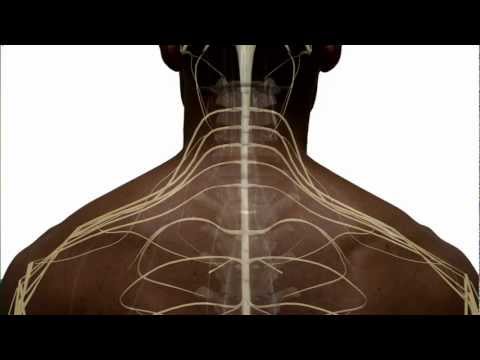
You know that moment when you’re sitting on the couch, binge-watching your favorite show, and you suddenly realize your back has turned into a pretzel? Yeah, I’ve been there more times than I can count!
Well, it got me thinking about that amazing thing called the spinal cord. This little structure is like the body’s internet highway, sending messages back and forth between your brain and the rest of you. Pretty wild, right?
But what’s even cooler is how intricate this whole setup really is. It’s not just a simple tube of nerves hanging out in your back; there’s so much more going on. So let’s unravel some of that spaghetti—figuratively speaking! Trust me, it’ll be an eye-opener.
Comprehensive Guide to the Intricate Structure of Human Spinal Cord Anatomy: Downloadable PDF Resource
The human spinal cord is a pretty remarkable piece of work. Seriously, it’s like the body’s superhighway for signals. It helps your brain communicate with the rest of your body, controlling everything from movement to sensation. Let’s break it down a bit, shall we?
Location and Structure
The spinal cord runs down your back, protected by the vertebrae in your spine. Think of it as a cable running through a protective tube. It’s around 18 inches long in adults but can vary a bit based on height. The spinal cord itself is divided into different sections:
- Cervical Region: This is the upper part of your spinal cord and has eight segments (C1-C8). It controls head and neck movement and arms.
- Thoracic Region: There are twelve segments here (T1-T12), mainly responsible for trunk movement and some sensations in the chest area.
- Lumbar Region: This section contains five segments (L1-L5) and deals with leg movement and sensation.
- Sacral Region: There are five segments (S1-S5) here, involved in pelvic organs and legs.
- Coccygeal Region: This is just one segment (Co1) that connects to the tailbone.
So, if you think about it, each section has its own job to do.
Gray Matter vs. White Matter
Inside the spinal cord, there’s this cool arrangement of gray and white matter. Gray matter looks like an “H” or butterfly shape at its center—this is where you’ll find nerve cell bodies. The white matter, on the other hand, surrounds this gray core and contains myelinated axons—these are like highways for signals traveling up to the brain or down to muscles.
You know that feeling when you touch something hot? That rapid reaction is thanks to reflex arcs involving both gray and white matter. Here’s how it works: sensory information travels up through those white matter pathways but if there’s danger? Your body can skip that trip to the brain for super-fast reflexes!
Nerve Roots
Exiting from the spinal cord are nerve roots on either side: dorsal roots carry sensory signals from the body to the brain while ventral roots send motor signals out to muscles. Think about it like this: if you’re playing catch, sensory nerves tell your brain about where that ball is coming from while motor nerves get your arms moving!
This intricate design means that every part of your body gets precisely what it needs to function smoothly.
Protective Layers
The whole setup sits snugly inside three protective membranes called meninges. They’re like layers of armor! You’ve got:
- Dura Mater: The tough outer layer—kind of like a tough jacket.
- Arachnoid Mater: This middle layer looks sort of web-like; it’s where you’ll find cerebrospinal fluid that cushions everything.
- Pia Mater: The innermost layer wraps closely around the spinal cord itself—think of it as a snug blanket!
This layered protection keeps everything safe from injury.
The Bottom Line
The human spinal cord might seem simple at first glance, but its structure allows for an incredibly complex communication system in our bodies! Each section plays its part; every nerve root carries vital messages; each layer keeps this delicate system safe.
If you ever want more details or visuals about each part or function, you can find plenty of resources online—it’s fascinating stuff! And who knows? Next time you pick up something heavy or jump back after touching something super cold, you’ll think about all those amazing processes happening in your spine!
Exploring the Intricate Anatomy and Physiology of the Human Spinal Cord: A Comprehensive Guide
The human spinal cord is like the body’s very own information superhighway. It’s a long, tubular structure that runs down from the brain, encased in the protective bony vertebrae of your spine. This fascinating part of our anatomy is crucial for communication between the brain and the rest of the body. But what exactly makes it tick?
First off, let’s talk about its structure. The spinal cord is made up of **segments**, usually divided into four regions: cervical, thoracic, lumbar, and sacral. Each segment has a pair of nerves that branch out to various parts of the body. So, if you get a little tingle in your fingers when you touch something hot? That’s your cervical nerves at work.
Next up is its functionality. The spinal cord doesn’t just pass messages; it also processes them! For instance, if you accidentally step on something sharp, the sensory receptors in your foot send signals up to your spinal cord before they reach your brain. This means your body can react faster—like pulling away—before you even think about it. Amazing, right?
Now let’s not skip over something super important: protection. The spinal cord has its own armor—in the form of three protective membranes called meninges. These layers are filled with cerebrospinal fluid (CSF), which acts as a cushion against bumps and jolts. Imagine a jelly-filled donut; that jelly is kind of like CSF—protecting what’s inside!
Also, there are specialized cells in the spinal cord called neurons, which are fundamental for transmitting signals. Neurons communicate with each other through electrical impulses and chemicals called neurotransmitters. Just picture them as tiny messengers racing along pathways to deliver important information.
And let’s not forget about reflexes. You know those times when you pull your hand back from something hot without even realizing it? That’s because of reflex arcs involving sensory neurons and motor neurons connected through interneurons in the spinal cord. It’s rapid! Reflex actions happen so quickly because they bypass the brain initially—funny how our bodies prioritize protection over thinking sometimes!
But here’s where things get really interesting: there are two main types of nerve fibers involved in these processes – **afferent** and **efferent** fibers. Afferent fibers bring sensory information to the spinal cord while efferent fibers carry out commands from the spinal cord to muscles or glands.
In terms of anatomy again, we have an outer layer known as gray matter, shaped like an “H” or butterfly when viewed cross-sectionally—it contains neuron cell bodies and is crucial for processing information. Then there’s an inner region called white matter, which consists mainly of myelinated nerve fibers that carry signals rapidly throughout all parts.
So yeah, why should we care? Well, understanding how our spinal cords work can help us appreciate how vital they are for everyday functions—from moving our legs while walking to feeling warm sunlight on our skin.
In summary:
- The spinal cord connects your brain with your body.
- It has segments named cervical, thoracic, lumbar, and sacral.
- Cushioned by cerebrospinal fluid within protective meninges.
- Made up primarily of neurons transmitting signals.
- Nerve fibers work together for sensory input and motor output.
- Gray matter processes info; white matter carries it swiftly.
Understanding this complex structure really puts into perspective just how intricate yet beautifully coordinated our bodies are! The next time you feel that little tingle or respond before thinking twice—remember all those amazing systems working together inside you!
Exploring the Intricate Anatomy of the Human Spinal Cord: A Comprehensive PowerPoint Presentation in Neuroscience
The human spinal cord is like the body’s central highway. Seriously, it’s crucial for getting information from your brain to the rest of your body. It’s amazing how such a small structure can have such a big impact! Let’s break down what makes up this complex and vital piece of anatomy.
Structure
The spinal cord stretches from the base of your skull down to your lower back. It’s encased in vertebrae—those stacked bones that make up your spine. The spinal cord itself is not just one long tube; it has segments, and each segment corresponds to different parts of your body.
Segments
You’ve got 31 segments in total: they’re divided into different regions. Here’s how it goes:
- Cervical: 8 segments (C1-C8) in your neck region, controlling movement and sensation in the arms and hands.
- Thoracic: 12 segments (T1-T12) that connect to the chest area, important for trunk stability.
- Lumbar: 5 segments (L1-L5) located in the lower back, affecting leg movement.
- Sacral: 5 segments (S1-S5), controlling functions related to the pelvis and lower limbs.
- Coccygeal: 1 segment at the bottom (Co1), which is kind of like a leftover from our evolutionary past!
So, think about this: each part has its own job while working together like an orchestra. Crazy, right?
Gray and White Matter
If you were to slice through the spinal cord, you’d see two main types of tissue: gray matter and white matter. Gray matter looks kind of like a butterfly or an “H” shape; it’s packed with nerve cells that process information. White matter surrounds it, made mostly of myelinated axons—it’s responsible for transmitting signals quickly between different parts.
Nerve Roots
When nerves branch out from this highway, they do so through roots. There are two types: dorsal roots and ventral roots. Dorsal roots carry sensory information—like touch or temperature—to the spinal cord. Ventral roots send motor signals out from the spinal cord to muscles. So basically, one side brings info in while the other sends it out!
Meninges
Don’t forget about protective layers called meninges! They wrap around the spinal cord like a cozy blanket. There are three layers: dura mater (tough outer layer), arachnoid mater (web-like middle layer), and pia mater (the soft layer hugging the spine). Between these layers is cerebrospinal fluid—this stuff cushions your spinal cord from bumps and jolts!
The Role of Spinal Cord Reflexes
Here’s something really cool: reflexes! When you touch something hot, for example, your body reacts before even thinking about it—thanks to reflex arcs that operate on their own without waiting for brain input. That quick jump back happens because sensory neurons send signals directly to motor neurons in your spinal cord.
It’s kind of mind-boggling when you think about how much is happening behind those little reflex actions all day long!
Diseases and Injuries
Unfortunately, it’s not always smooth sailing for everyone when it comes to their spinal cords. Injuries can lead to paralysis or loss of sensation below where damage occurs—like if someone hurts their neck seriously; they might lose function in their arms or legs depending on where it happened.
Conditions like multiple sclerosis can also affect how well messages travel along those nerve pathways due to damage over time.
So basically? The human spinal cord is intricate yet undeniably essential—it coordinates most bodily functions while keeping us safe with its reflexes! Understanding its anatomy helps us appreciate all that we’ve got going on inside us every single day.
You know, the human spinal cord is one of those things that’s easy to take for granted. I mean, we’re so busy living our lives—walking, running, dancing—that we forget about the incredible structure that makes it all happen. Seriously! It’s like this superhighway of nerves sending signals all over your body.
The spinal cord runs down from your brain and connects to all those nerves that branch out to your arms and legs. How amazing is that? It’s kind of like the main cable of a huge electrical system. But instead of wires, it’s filled with bundles of nerve fibers and surrounded by protective layers. And even though it’s only about 18 inches long in adults, it plays a massive role in everything from movement to reflexes.
Here’s something wild: did you know there are different regions of the spinal cord? You’ve got your cervical region at the top (that’s neck stuff), then the thoracic region for your upper back, followed by lumbar and sacral regions lower down. Each part has its own set of functions. It’s like having a well-orchestrated team where each player knows exactly what to do!
I remember once when my younger cousin jumped off a swing and landed awkwardly on his back—it was scary for sure! He was fine in the end, but seeing him hold his back made me think about how delicate yet sturdy our spines are. The spinal cord can get injured instantly but also can heal slowly over time—or sometimes not at all.
Another fascinating thing is how signals travel up and down this intricate structure super quickly. If you touch something hot, bam! Your body knows before you even have time to think about moving your hand away. And that’s thanks to those fast messages zipping along those nerve pathways.
So when you sit there scrolling through this on your phone or squeezing into those tight jeans—don’t forget to give a little love to that incredible spinal cord! It’s doing so much behind the scenes, keeping everything running smoothly while you go about your day. Isn’t it cool how something so intricate can feel like second nature?