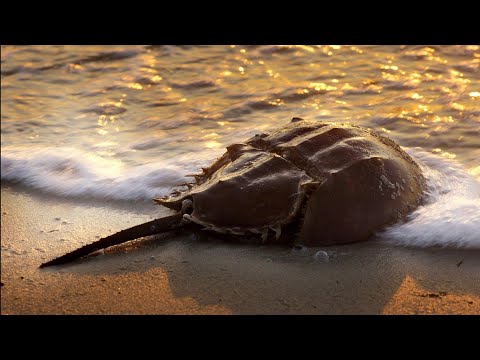
You know what’s super weird? Horseshoe crabs. Seriously, they’re like the dinosaurs of the ocean, but they’re still hanging around today! Imagine a creature that’s been swimming around for over 450 million years. That’s older than trees!
One time, I was at the beach and spotted one of these guys just chilling in the sand. I thought it was some kind of alien artifact or something. I mean, with that hard shell and those crazy eyes on stalks, who wouldn’t think that?
But here’s the kicker: these ancient critters aren’t just interesting for their looks. They play a huge role in science and medicine too! So let’s dive into their anatomy and see why horseshoe crabs are more than just a strange beach find. You ready?
Exploring the Anatomy of Horseshoe Crabs: Insights into Marine Biology and Evolution
Alright, let’s talk about horseshoe crabs—these guys are just so cool! Seriously, they look a bit like something out of a sci-fi movie with their hard shells and spindly legs. But they’re not actually crabs at all; they belong to a totally different group called **chelicerates**, which includes spiders and scorpions. Crazy, right?
So, first things first. Horseshoe crabs have been around for more than **450 million years**. Can you imagine? They’re like living fossils! That means they’ve survived mass extinctions that wiped out the dinosaurs and many other species. It’s like they’ve cracked the code for survival in the ocean.
Now, let’s get into their anatomy because that’s where it gets really interesting. Horseshoe crabs have this tough outer shell called a **carapace**. It protects their soft body underneath and is usually blue or greenish in color. The carapace has this cool, heart-shaped design that kinda makes them look like ancient armor.
Then there are these five pairs of legs! What’s neat is that the front pair is modified into pincers for grabbing food—think small worms or clams on the ocean floor. They use those pincers to shovel food into their mouths, which is located underneath their body.
Horseshoe crabs also have these specialized light-sensitive eyes called **compound eyes** along with simple eyes on top of their shell. These compound eyes give them great vision; they can see movement and light changes around them even in low-light conditions underwater.
And get this: they have blue blood! Yes, you read that right—blue blood! This is due to a copper-containing molecule called hemocyanin (like how our blood uses iron). Horseshoe crab blood is super important in medicine because it helps test for bacterial contamination in medical equipment and vaccines.
Now let’s talk about reproduction because it’s kind of a drama show under the moonlight! When the time comes to mate, males approach females as they come ashore to lay eggs on sandy beaches during high tide. The male will hold onto the female with his pincers while she digs holes to deposit her eggs.
But wait—there’s more! Those eggs are then fertilized by the male as they are laid into those sandy nests. It’s such a wild survival strategy since those little critters have tons of eggs that help ensure some make it past predators.
So if we sum it all up:
- Ancient survivors: Horseshoe crabs are over 450 million years old!
- Unique anatomy: Tough carapace, five pairs of legs, and compound eyes.
- Copper-rich blood: Their blue blood has medical significance!
- Mating behavior: They lay loads of eggs during high tide with an intense drama involved.
Isn’t it wild how these creatures are both prehistoric marvels and modern-day lifesavers? Just thinking about how horseshoe crabs connect past and present makes you appreciate the weirdness of life on our planet—even if it’s sometimes underappreciated by most folks! So next time you hear about horseshoe crabs or see one at the beach, remember there’s a whole amazing world behind that tough exterior!
Exploring the Intricacies of Horseshoe Crab Internal Anatomy: A Comprehensive Scientific Overview
So, let’s chat about horseshoe crabs. These cool creatures are like the aliens of the ocean, hanging out for over 450 million years! Their internal anatomy is something else, full of surprises that help them survive. You’d think they’re just big crabs, but they’re so much more than that.
First off, their **body** is divided into three main parts: the prosoma (that’s the front), the opisthosoma (the back), and the tail spine, or telson. The prosoma holds all their important stuff—the eyes, mouthparts, and legs. Yep! They’ve got a bunch of eyes—up to ten—so they see a lot of what’s going on around them!
Now, jumping into their **digestive system**, it’s pretty neat. They eat by using their mouthparts to grab food—mostly little creatures like worms or mollusks—and then chew it up before swallowing. The food goes through a short esophagus to their stomach where enzymes break it down. Isn’t that wild? Then it heads to the intestine and eventually out through the anus. Simple but effective!
Speaking of effective, let’s not forget about their amazing **blood**! The horseshoe crab’s blood is blue because it has copper in it instead of iron like ours. This blood is super important for medical science! It has special properties that help detect bacterial infections in medical equipment and vaccines. So when they bleed (which happens when we catch them), it’s actually helping humans—how cool is that?
Their **circulatory system**? It’s open! That means instead of blood flowing through veins like ours, it moves freely around organs. They have a heart with two large arteries leading out into that open space where blood bathes all internal organs directly.
And we can’t skip the **nervous system**! Horseshoe crabs have a decentralized nervous system with a brain-like structure called a ganglion. This helps them respond quickly to threats, which is useful when you’re trying to avoid predators.
Finally, let’s talk about reproduction! Male horseshoe crabs have claspers—sorta like extra legs—to hold onto females during mating season. After mating, females lay thousands of eggs in sandy beaches where tiny baby crabs hatch and start life on their own after about two weeks.
In summary:
- Three main body parts: Prosoma (front), opisthosoma (back), telson (tail).
- Unique digestive system: Mouthparts grab food; simple esophagus-stomach-intestine layout.
- Special blue blood: Used in medical testing; crucial for safety.
- Open circulatory system: Blood flows freely around organs.
- Nervous system: Decentralized with quick response capabilities.
- Interesting reproduction: Males use claspers; females lay thousands of eggs.
So there you have it—all these fascinating aspects make horseshoe crabs more than just ancient sea critters; they’re vital players in our ecosystem and beyond! Every time I see one at the beach, I can’t help but think about how remarkable they are inside and out.
The Unique Properties and Scientific Applications of Horseshoe Crab Blood in Biomedical Research
Horseshoe crabs are kind of amazing, aren’t they? I mean, these creatures have been around for over 450 million years! They’re not really crabs, though. They’re more like distant cousins to spiders and scorpions. But what really gets scientists buzzing is their blood. Yes, you heard that right—blood!
The blood of horseshoe crabs is this bright blue color because of a molecule called hemocyanin. This molecule carries oxygen in a way that’s a bit different from how our hemoglobin works. Basically, when oxygen binds to hemocyanin, it turns blue instead of the red we see in our blood.
Now, you might be thinking: why should I care about horseshoe crab blood? Well, here’s where it gets interesting. The blood has unique properties that make it super valuable for biomedical research.
First off, let’s talk about its ability to detect bacteria. Horseshoe crab blood contains cells called amebocytes, which can recognize harmful bacteria and produce a gel-like substance around them. This reaction is so sensitive that it can detect bacterial endotoxins—substances found in the outer layer of certain bacteria—at very low concentrations.
Because of this amazing ability, scientists have developed a test called the Limulus Amebocyte Lysate (LAL) test. This test checks medical equipment and vaccines for unwanted bacterial contamination. Can you imagine getting a vaccine that hadn’t been tested properly? Yikes! The LAL test helps ensure our medicines are safe.
Another cool thing about horseshoe crab blood is its use in researching various health issues. For example, researchers use it in studies related to inflammation and autoimmune diseases. You see, inflammation can be both good and bad; while it’s part of our immune response to heal injuries or infections, chronic inflammation is linked to conditions like arthritis or heart disease.
Plus, there’s ongoing research into how the properties of horseshoe crab blood might help with wound healing or even fighting cancer! Scientists are looking at the amebocytes’ role in healing because they have some impressive capabilities when it comes to repairing damaged tissues.
Now here’s something to think about: every year millions of horseshoe crabs are harvested for their blood. It sounds harsh but stick with me; after extracting their blood — which can be done without killing them — they go back into the wild. However, there are concerns about sustainability and whether this practice could harm their populations in the long run.
So yeah, horseshoe crab blood isn’t just some random fluid; it’s packed with potential and has become vital in the world of medicine and research. It’s pretty wild how something so ancient can still hold secrets that benefit modern science today!
Horseshoe crabs are one of those creatures that you don’t really think about until, bam, you stumble upon them. I still remember the first time I saw one—it was on a beach trip when I was a kid. There it was, this weird-looking creature with a hard shell and these long, spidery legs, kind of like nature’s own little time machine from the age of the dinosaurs! It looked totally freaky, yet so intriguing at the same time.
Now, these guys might not be crabs in the traditional sense since they belong to a different group called chelicerates—yeah, think of them as close relatives to spiders and scorpions. They’ve been around for over 450 million years! Can you imagine? That’s way before a lot of other animals even existed.
So let’s talk anatomy. Horseshoe crabs have this cool carapace, which is like their armor. It protects their softer insides while still allowing them to move about in shallow waters. Underneath that tough shell is an entirely different story. They’ve got gills for breathing—which is pretty essential when you’re living in the ocean—but what really gets fascinating is their blue blood. Yup, it’s blue! And there’s a reason for that: their blood contains a copper-based molecule called hemocyanin that helps transport oxygen. This unique blood also has some superpowers when it comes to detecting bacteria and toxins, which brings me to why they’re such big deals in science.
Scientists use horseshoe crab blood for testing medical equipment because it reacts strongly with harmful substances—like this totally reliable alarm system for anything that could make us sick. It’s kind of astonishing how something that looks so alien can help save human lives!
But what really strikes me about these creatures is how they connect everything—from evolution to modern medicine. They remind us how interconnected life can be and how we rely on seemingly simple organisms for complex solutions in our world. And every time I see their funny shapes along the shoreline or read about them being studied in labs, I can’t help but smile at how incredible nature can be—even if it does come with eight legs and looks like something out of a sci-fi movie!