You know how when you were a kid, you’d lie on the grass at night, staring up at the stars for what felt like forever? Just you and the universe, right? Well, imagine if your eyes could be magically upgraded to see way more than just twinkling lights.
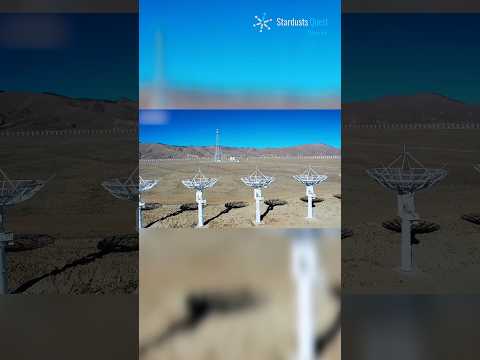
That’s kinda what’s happening with these new fancy telescopes called innovative array telescopes. They’re like the ultimate cosmic version of those telescope toys we all had—but way cooler!
Instead of peering through a single lens, they’re using a whole array of them. It’s like having front-row seats to an interstellar concert where every instrument is playing at once. You get to see things people only dreamed about before— galaxies colliding or stars being born!
So buckle up; let’s explore how these incredible tools are flipping our understanding of the cosmos upside down!
Exploring the Contributions of Grote Reber and His Innovations in Radio Astronomy
Grote Reber was a true pioneer in the field of radio astronomy. He was, like, the first person to build a radio telescope specifically for astronomical purposes back in the late 1930s. Can you imagine that? Before him, people were mainly looking at stars and galaxies with optical telescopes. But he was curious about what else could be out there beyond that visible light.
So here’s the deal: he fashioned his first telescope in his backyard in Wheaton, Illinois. It wasn’t some fancy lab or high-tech facility—just a lot of creativity and determination. His design consisted of a large parabolic dish, which is like a huge satellite dish today, aimed at catching radio waves from space. And guess what? Thanks to Reber’s work, we discovered cosmic phenomena that we couldn’t see with regular telescopes at all!
His major contributions include:
- Creation of the First Radio Telescope: This was groundbreaking because it opened up a whole new way to explore the universe.
- Mapping the Milky Way: Reber created the first map of radio frequency emissions from our galaxy, unveiling how it looked beyond visible light.
- Pioneering Techniques: His methods influenced later developments in radio array telescopes—multiple dishes working together to improve observation and resolution.
You might be asking yourself: why is radio astronomy such a big deal? Well, here’s something cool—lots of astronomical objects emit radio waves instead of visible light. Pulsars and quasars are just two examples! Reber opened our eyes (or should I say “ears,” since we’re talking about waves) to a universe filled with these hidden treasures.
Alongside his individual genius, Reber’s innovations laid down critical groundwork for future advancements. After he set up his telescope, researchers started collaborating and building more sophisticated instruments like **array telescopes**. These systems can observe cosmic sources by combining signals from multiple antennas spread out over large distances.
Let’s put this into perspective: imagine listening to your friend’s voice from across a crowded room; you can hear them better if you bring more friends to listen too and combine what they hear! Array telescopes do something similar when studying radio emissions from space—they collect signals from various dishes over vast areas and stitch them together for clearer results.
But here’s something personal: I remember reading about Reber as an aspiring young scientist and thinking how inspiring it felt that one person could make such substantial leaps with just sheer interest, passion, and homemade equipment! He wasn’t waiting for universities or governments—he just jumped headfirst into exploring the universe from his own backyard.
In turn, his legacy continues through radiotelescopes today that allow us to map distant galaxies and phenomena across billions of light-years away! So next time you hear about exciting discoveries made through innovative array telescopes or any cosmic observation techniques today, know that Grote Reber’s curiosity laid much of the groundwork for where we are now. It’s wild how one person’s passion can ripple through time and space!
Unlocking the Cosmos: The Impact of Advanced Telescopes on Our Understanding of the Universe
The universe is a vast, mind-blowing place, right? Like, when you look up at the night sky, it’s hard to wrap your head around just how much is out there. And that’s where telescopes come in. Over the years, we’ve really leveled up our game in cosmic observation thanks to advanced telescopes. These beauties are helping us unlock secrets of the cosmos we didn’t even know existed!
First off, let’s talk about what advanced telescopes are doing differently. These new tech wonders aren’t just looking at light but also tapping into other parts of the electromagnetic spectrum. You got it—visible light is just one tiny slice of what’s out there! Here’s a quick rundown:
- Radio Waves: Telescopes like the Very Large Array use radio waves to explore cosmic phenomena. They help us study things like pulsars and quasars.
- X-rays: Telescopes such as Chandra focus on X-rays emitted by high-energy regions, giving insights into black holes and supernova remnants.
- Infrared: Instruments like Hubble (yes, it does infrared too) can see through dust clouds that block visible light, revealing star formation areas.
So, why does this matter? Well, for starters, these telescopes broaden our horizon—literally! For instance, using various wavelengths lets astronomers spot galaxies billions of light-years away. Yeah, billion with a “B.” They’re peering back in time to see how galaxies evolved.
And then there’s the **James Webb Space Telescope** (JWST). Oh man! This thing is a game changer. It has a huge mirror that collects more light than its predecessors and can see deeper into space (and thus time). JWST has been making headlines by discovering distant exoplanets and analyzing their atmospheres. Imagine figuring out if other planets could support life because you could actually study their air!
But it’s not all about finding new galaxies or planets; it’s also about understanding what’s going on around us. The data from these telescopes helps scientists piece together cosmic puzzles like dark matter and dark energy—stuff you can’t see but makes up most of the universe’s mass-energy content! That’s pretty wild when you think about it.
Oh! And let me tell you something cool: these advanced telescopes collaborate too! They share data across networks and can even act together as an enormous telescope through techniques like interferometry. This means they combine observations from different locations on Earth or even space to achieve higher resolution images.
You might be wondering about challenges that come with all this awesomeness. Well, yeah—a big one is funding and logistics in building and maintaining such complex machines. Plus, packing science teams together from different parts of the globe isn’t always easy.
But all said and done? Advanced telescopes are fundamentally changing how we view our universe—and ourselves within it. Every discovery they make leads to more questions than answers but isn’t that where the fun lies? It’s an ongoing journey through space where each “aha!” moment propels us forward.
So next time you gaze at those twinkling stars overhead—remember: some seriously brilliant minds are using fancy gadgets to decode those celestial mysteries for us all! Isn’t that something?
Exploring the Arecibo Observatory: A Landmark in Radio Astronomy and Scientific Discovery
The Arecibo Observatory was like a giant ear listening to the cosmos. Located in Puerto Rico, this massive radio telescope played a crucial role in astronomy and atmospheric science for decades. It had a dish measuring 305 meters wide, which is about the size of 20 football fields!
So, what makes this place so special? Well, it was built back in 1960, and for years, it kept providing some amazing insights into our universe. Scientists used it to study everything from pulsars—those cool spinning stars that send out beams of radiation—to detecting planets orbiting other stars. The observatory was also instrumental in researching the Earth’s atmosphere and radar mapping of planets like Venus and Mercury.
But you know what really got my attention? One time, they sent a message from Arecibo aimed at a cluster of stars called M13. That message contained information about humanity! Just imagine that: sending our own little postcard to the universe. How mind-blowing is that?
Now let’s talk about innovation. With advancements in technology, new telescopes have been popping up—like innovative array telescopes that are revolutionizing how we observe space. These bad boys use multiple small antennas working together instead of one giant dish. This is kind of like how you can “hear” better by using both ears instead of just one.
- Increased Sensitivity: Because they combine signals from various antennas, they can detect fainter signals than traditional single-dish telescopes.
- Flexibility: These arrays can be easily reconfigured to focus on different celestial objects or phenomena.
- Wide-field Observation: They can simultaneously observe various objects across large portions of the sky.
All this means we’re able to explore more about distant galaxies and cosmic events than ever before! It’s an exciting time for astronomers with these new tools at their disposal.
Even though Arecibo collapsed in late 2020—super sad day for scientists everywhere—it still stands as a landmark achievement in radio astronomy. Its legacy continues to inspire new generations interested in unraveling the mysteries of the universe.
So there you have it! The Arecibo Observatory wasn’t just an antenna pointing up at the night sky; it was a gateway to understanding our place in this vast universe we call home. And with innovative technologies taking us further than ever before, who knows what we’re going to find next?
Alright, let’s chat about these incredible things called innovative array telescopes. You know, I’ve always thought the night sky was this mysterious realm, full of secrets waiting to be uncovered. I remember when I was a kid, lying in my backyard with my friends, gazing up at the stars and wondering what’s out there. Like, are we really alone? Every twinkling light felt like an invitation to explore. Fast forward to today, and it seems like we’re doing just that!
So, array telescopes are basically groups of smaller telescopes working together as one big telescope. How cool is that? Instead of relying on one single lens to gather light from distant stars and galaxies, they utilize multiple instruments spread out over vast distances. This setup is like having a massive cosmic camera that can capture images with insane clarity and resolution.
What happens is that by linking these individual telescopes through fancy technology—like radio waves or optical signals—they can combine their data to see things way better than before. Imagine trying to hear your favorite band play on a tiny radio versus a booming concert hall with tons of speakers! That kind of upgrade is what array telescopes bring to cosmic observation.
Sure, it sounds pretty technical, but the beauty lies in how it opens up new frontiers for understanding our universe. These innovative instruments allow us to peek into areas we’ve never seen before. Like the time they captured images of black holes—or rather the shadow they cast—showing us something we’d only theorized about! It’s mind-blowing!
But there’s more than just cool images; think about the discoveries waiting for us! From studying cosmic events like supernova explosions to tracking gravitational waves from colliding neutron stars—there’s so much potential here! And just imagining what new insights might unfold gives me goosebumps.
Of course, technology doesn’t come without challenges. The coordination among all those telescopes? It’s no walk in the park—lots of data processing involved, tons of teamwork between scientists across different locations (which sounds pretty awesome if you ask me). But hey, pushing boundaries usually comes with its hiccups.
In a nutshell, innovative array telescopes aren’t just fancy gadgets; they’re gateways to understanding our universe at a whole new level. Who knows what mysteries will be solved or what new questions will arise? So next time you gaze up at those twinkling stars or deep space pictures online, remember: there’s an army of little helpers out there doing some heavy lifting just for you! It feels great knowing that our curiosity leads us this far into the depths of space—seriously inspiring stuff!