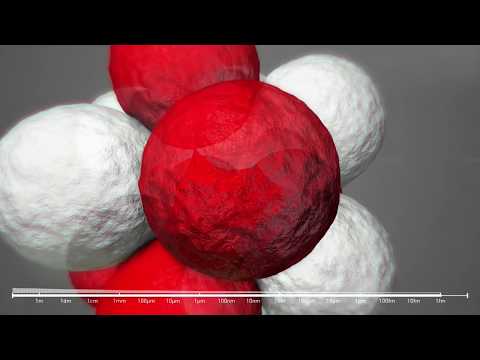
Okay, so picture this: you’re sitting in a coffee shop, and the barista asks you what your favorite element is. You freeze up, right? Like, do I even know any elements besides hydrogen and helium?
But here’s the thing: atoms are everywhere! They’re the tiny building blocks of everything around us. Seriously, even that cup of coffee you’re clutching is full of them.
Now, visualizing these little guys can be kind of mind-boggling. It’s not like you can just whip out a microscope and see them zooming around. That’s where atomic diagrams come in! They’re like the cool comic book versions of atoms.
So let’s take a fun journey through these diagrams together. You’ll see how artists and scientists team up to bring these minuscule stars to life on paper! Ready? Let’s rock this atomic adventure!
Unlocking the 2 8 8 18 18 32 Rule: A Scientific Perspective on Effective Information Processing
Hey, let’s talk about something that can seem a bit tricky at first, but, you know, it’s actually super interesting once you get into it: the 2-8-8-18 rule. This rule is all about how electrons are arranged in atoms and plays a huge role in chemistry and understanding atomic behavior.
So, what’s this rule all about? Basically, it’s a way of describing how many electrons can fit into the different energy levels or shells around an atom’s nucleus. You can think of these shells like layers of an onion or even floors in a building. Each layer can hold a certain maximum number of electrons.
Now, let’s break down that rule:
- First shell: This one is closest to the nucleus and can hold up to 2 electrons.
- Second shell: Moving outward, the second shell holds up to 8 electrons.
- Third shell: It’s similar to the second; it can also house up to 8 electrons for elements up to atomic number 20.
- Fourth shell and beyond: As you get into higher energy levels like the third one after atomic number 20, things get a bit wild. The rule suggests they can hold up to 18 electrons initially, eventually expanding further.
Got that? Cool!
Now, think of it this way: these shells influence how atoms interact with each other. When atoms come together—like when hydrogen meets oxygen to create water—they form bonds based on how many electrons are in their outer shells. Atoms wanna be stable – usually by having their outermost shell filled with electrons – which is why they might share or transfer them during chemical reactions.
Let me throw in a fun little story here. Imagine being at school where everyone wants to sit at lunch with their friends. If everyone has only a few friends (electrons) sitting right next to them (the first shell), it gets crowded fast! But as you go further out (to the second or third shell), there’s more room for friendships (more electrons). Some kids might even act differently based on who’s sitting next to them—like being extra friendly because they want enough people (electrons) around them. That’s exactly how atoms behave during bonding!
Now here’s where visualizing comes into play. When you draw atomic diagrams—like Bohr models—you start placing those little dots or circles representing protons and neutrons at the center as your nucleus. Then, add those noodles of colors outside for each electron layer according to our nifty little rule! It helps you see at a glance how many friends your atom has hanging out around its central mass.
And don’t forget about this important aspect: when you’re looking at bigger elements with more complex structures or higher atomic numbers, things start getting slightly more complicated due to sub-shells and orbitals that also help determine electron placement! So while the basics lay down nice rules like the 2-8-8-18 structure for organization’s sake, beyond that there are some wild twists waiting for those who dive deeper!
Basically, understanding this whole electron arrangement thing is key not just for chemists but really anyone who’s curious about how matter interacts at its most fundamental level—it’s like seeing nature’s blueprint!
So yeah, remember this: knowing why atoms choose to bond in particular ways opens up so much doorways into chemistry and physics. And who knew counting could actually lead us on such an exciting journey?
Exploring the Possibility of Observing Atomic Motion: A Scientific Inquiry
So, let’s talk about the wiggly world of atoms. You know those tiny particles that make up everything around us? Yeah, those! Observing atomic motion is like peeking into a dance party where no one really knows the choreography. It’s tricky but super exciting.
When we think about atoms, we usually imagine them as these fixed little balls. But that’s not quite right. Atoms are constantly in motion—bouncing around, vibrating, and doing their thing. The challenge is that they’re incredibly small. For reference, one hydrogen atom is about 0.1 nanometers wide. That’s like trying to track ants on a soccer field from outer space!
Now, scientists have developed some pretty nifty tools to visualize this atomic dance. One of the most famous techniques is called STM (Scanning Tunneling Microscopy). This tool uses a sharp tip to scan the surface of materials at an atomic level. Imagine sliding a needle across your favorite vinyl record and picking up its grooves; STM does something similar but with atoms!
Then there’s another technique called Atomic Force Microscopy (AFM). This one uses tiny forces between the tip and samples to create images of surfaces at the atomic scale. It’s like using your fingers to feel the texture of something but on a super teeny-tiny scale.
You might be wondering why observing atoms matters anyway. Well, understanding atomic motion helps us grasp how matter behaves under different conditions, which has applications in fields like chemistry and materials science—basically everywhere!
Think about it: when you heat up something, its atoms start moving faster. This can change its state from solid to liquid to gas! If we could visualize this better, we could improve things like energy efficiency in engines or even develop new materials.
However, even with all this technological wizardry, there are limitations. Principles from quantum mechanics come into play here too—it turns out that at such small scales, uncertainty reigns supreme! So sometimes we can only observe probabilities rather than definite positions.
In conclusion—wait… I mean to wrap it up here—exploring atomic motion opens up so many doors for scientific discovery! Every little wiggle and shake brings us closer to understanding the universe on a fundamental level. Isn’t it amazing? The more we learn about these tiny particles, the more we can do with what they create!
Exploring Erwin Schrödinger’s Perspective on Atomic Theory: Insights from Quantum Mechanics
So, let’s have a chat about a super interesting figure in quantum physics: Erwin Schrödinger. You might have heard his name pop up a few times in your studies. He’s most famous for that whole cat-in-a-box thing, but there’s way more to him than just that. He actually had some profound ideas about atomic theory that reshaped how we think about tiny particles.
The cool part here is Schrödinger’s wave equation. Basically, he proposed that instead of thinking of electrons as little balls zooming around the nucleus like planets around the sun, we could visualize them more like waves. What does this mean? Well, it suggests that electrons exist in cloud-like distributions, which gives us a way to talk about where they might be at any given moment but without pinning down their exact location.
- This wave function, denoted by the Greek letter psi (Ψ), describes the probability of finding an electron in a particular space.
- So instead of saying, “The electron is here,” we say, “There’s a 70% chance it’s in this cloud.” It’s all about probabilities!
This shift from particles to waves has some serious implications. For one thing, it means that at the atomic level, things can be pretty weird. Like, take the idea of superposition. This concept suggests that particles can exist in multiple states at once until we measure them. Remember Schrödinger’s cat? That was his quirky way of illustrating how strange quantum mechanics can be!
The impact on atomic diagrams is huge too! Traditional models usually depicted well-defined paths for electrons. But with Schrödinger’s approach, these diagrams became more like fuzzy clouds where it’s hard to pinpoint exact locations but easier to understand potential behaviors.
- You might see diagrams now showing electron “orbitals”—these are literally shapes representing different areas where you’re likely to find an electron.
- This helps chemists better predict how atoms bond together and interact with each other.
Schrödinger also worked on the idea of quantization—the idea that certain properties only come in discrete chunks or levels. Imagine you’re climbing steps; you can’t just stop anywhere on the staircase; you need to be on one step or another. In terms of energy levels for electrons around an atom—this means they can only occupy specific energy states.
If you ever pondered why metals conduct electricity but rubber doesn’t—that’s partly due to these energy levels! Electrons need just enough energy to jump from one level to another and contribute to conductivity.
So basically, thanks to Schrödinger and his ideas from quantum mechanics, our view on atoms shifted dramatically! It moved us from simple models that didn’t quite cut it anymore into this fascinating realm where uncertainty reigns supreme—yet provides an incredible framework for understanding chemistry and physics today.
You see? Quantum mechanics isn’t just some abstract theory; it’s got real-world applications impacting everything from technology to healthcare and beyond! It allows us not only to visualize atoms differently but also offers insight into their behavior and interactions with each other—and all those tiny little details shape our entire universe!
You know, when you think about atoms, it’s easy to get lost in all that scientific jargon. Like, we’re talking about tiny particles that make up everything around us. I mean, that’s pretty mind-blowing, right? The journey into visualizing atoms and atomic diagrams is not just a nerdy trip through science; it’s like stepping into a universe full of potential.
I remember sitting in my high school chemistry class, feeling completely overwhelmed by the periodic table and all those symbols. I mean, who could keep track of them all? But then the teacher started showing us pictures of atoms. Suddenly, it felt like I was looking at a tiny solar system! Electrons whirling around a nucleus—whoa! That visual really helped me grasp what was going on at such a small scale.
So let’s break this down a bit more. Atoms are usually depicted in diagrams that show their structure—like those classic models you might have seen with circles representing protons and neutrons snuggled up in the center while electrons zip around them. It’s similar to how planets orbit the sun but on a super minuscule scale! Those diagrams are much more than just pretty pictures; they help scientists understand how different elements interact with each other.
And here’s where it gets even cooler: the way we visualize atoms has evolved over time. Early models showed electrons in fixed paths like little train tracks (which is pretty limited when you think about it). But now we use quantum mechanics to show electron clouds instead—like fuzzy zones where you might find an electron hanging out. It feels way more realistic because it captures the uncertainty of where those little guys might be hanging out at any moment.
But there’s also something oddly comforting about these diagrams. They remind us that while we’re dealing with super complex concepts, at the heart of everything is this simple building block. It connects us to everything else! Just picturing those tiny particles helps bridge abstract concepts with reality.
Honestly, diving into atomic diagrams feels like pulling back the curtain on reality itself. Each diagram tells a story about interactions or reactions or even how materials behave under different conditions. So next time you’re breezing past your chemistry notes or scrolling through social media and see an atom illustration pop up—take a second to appreciate not just its beauty but what it represents.
Visualizing atoms is like having a backstage pass to understanding our world better; it’s powerful stuff! So yeah, don’t underestimate those little diagrams—they’re gateways into understanding both science and life itself.