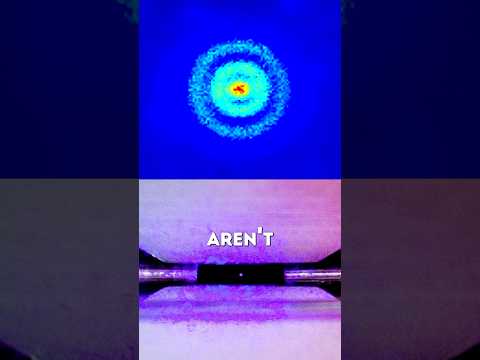
You know that feeling when you lose a piece of popcorn in the couch, and it’s like a scavenger hunt to find it? Well, imagine searching for tiny atoms instead!
Yeah, they’re out there doing their thing all around us. But they’re super small. Like, mind-blowingly small. You could fit billions of them on the tip of a single hair. Crazy, right?
So what’s the deal with these atomic figures anyway? They’re not just numbers in a textbook. They help us grasp the micro world we can’t see but are totally part of our daily lives.
Maybe you remember that moment when you first learned about atoms in school—it was like magic! Visualizing these tiny guys changes everything about how we understand science.
And trust me, once you start seeing things from this perspective, it’ll blow your mind!
Exploring the Five Scientific Atomic Models: A Comprehensive Guide to Atomic Theory
Atomic theory is one of those mind-bending topics that totally changes how we think about the universe. To get into this, let’s take a stroll through the five main atomic models that scientists have used over the years. Each of them helped us understand what atoms are and how they behave. So, here we go!
First up is Democritus’s model. This dude was around in ancient Greece and had this wild idea that everything in the universe is made of tiny, indivisible particles, which he called “atomos.” He couldn’t prove it back then, but hey, thinking outside the box counts for something, right? Imagine trying to convince people that things were made of invisible pebbles—pretty bold!
Next comes Dalton’s atomic model, from the early 1800s. Dalton was a bit more scientific about it. He proposed that atoms are solid spheres and introduced the idea of different atoms for different elements. Like, oxygen atoms are not like gold ones at all! It was like he opened a door to an unseen world, letting folks realize that everything has a foundational element.
Then we have Thomson’s plum pudding model, which emerged after he discovered electrons in 1897. He imagined atoms as a positively charged “pudding” with negatively charged “plums” (electrons) scattered throughout. It’s like if you mixed up some chocolate chip cookie dough and thought “Hey! Those chips represent electrons!” But later experiments said “Not so fast!”
After Thomson came Rutherford’s model, born from his famous gold foil experiment in 1909. He shot alpha particles at a thin sheet of gold and expected them to pass straight through based on Thomson’s idea. Instead, some bounced back! Surprising? You bet! This led him to propose that atoms have a tiny nucleus at their center surrounded by mostly empty space—a bit like having a marble in the middle of a stadium.
Finally, we got Bohr’s model, which came out in 1913. Bohr took Rutherford’s nucleus and added energy levels where electrons could orbit around it, sort of like planets around the sun but with some funky rules about where they could actually be found at any given time. This gave us a better look at atomic structure and explained why elements emit light in specific colors when heated.
To wrap it up—each model brought us closer to understanding what really makes up matter around us:
- The initial ideas from Democritus showed us there is more than meets the eye.
- Dalton helped categorize these ideas into distinct elements.
- Thomson shaped our understanding of charges within atoms.
- Rutherford revealed there’s more going on inside than just fluff.
- Bohr finally added layers to how electrons behave.
So as you can see, atomic models aren’t just dry facts; they’re like stepping stones that let us dive deeper into science’s micro world! Each scientist built on the last one’s work until we reached our current understanding—it’s all connected! Isn’t it fascinating how each leap forward changed our perspective?
Exploring Atomic Structures: Can Microscopes Reveal Atoms to the Naked Eye?
Alright, so let’s chat about something super cool: atomic structures and whether those nifty microscopes can actually let us see atoms with our own eyes. It’s mind-blowing, right? I mean, atoms are like the tiniest building blocks of everything around us, from the air we breathe to that cozy couch you’re probably sitting on. But can we actually catch a glimpse of them?
The short answer is no, not really. Our naked eyes just aren’t built to see things that small. Atoms are measured in picometers – that’s one trillionth of a meter! Just think about that for a second: it’s like trying to spot a grain of sand from across a football field. So microscopes are our best friends here!
Now, here’s where it gets interesting: regular optical microscopes won’t cut it. They use light, which means they have limits on how small they can see. The thing is, light waves are way too big compared to atoms! That’s why scientists turned to electron microscopes. These bad boys use electrons instead of light waves and can zoom in much further.
Electron microscopes can actually show us individual atoms! Like, seriously cool stuff! But there’s still a catch: while they can give you detailed images of atomic structures, those images aren’t visible in the same way you’d see something under a regular microscope. You don’t just look through an eyepiece and say “hey, look at those atoms!” It’s more complex.
- TEM (Transmission Electron Microscopes): These can get super close to observing atomic arrangements inside materials.
- SEM (Scanning Electron Microscopes): These provide surface details but don’t quite show individual atoms as clearly as TEM does.
You might be thinking—so why can’t we build a crazy microscope that lets us see them directly? Good question! It has a lot to do with how we interact with little particles like electrons and photons; any attempt to observe them often changes their behavior. Picture trying to sneak up on someone playing hide and seek—if you make noise or get too close, they’ll spot you right away!
I remember the first time I learned this in class. The teacher brought an actual electron microscope and wowed us with images showing the arrangement of atoms in different materials. It was jaw-dropping! But there was also this underlying realization—it made me think about how much is happening around us all the time at levels we cannot directly perceive.
In summary, while microscopes, especially electron ones, allow scientists to visualize atomic structures in amazing detail, seeing them with the naked eye remains out of reach for now. But hey, that just makes it even cooler when science finds new ways to explore these tiny wonders!
Exploring Atomic Science Through the Eyes of a Boy: A Journey into the World of Atoms
Imagine a curious boy, let’s call him Timmy. One day, while playing with his building blocks, he starts to wonder what everything around him is made of. He picks up a block and thinks, “What’s inside this?” That curiosity is where our adventure into atomic science begins!
Atoms are like tiny building blocks of matter. Everything you see—your toys, the trees outside, even you—is made up of atoms. But here’s the kicker: you can’t see them with your naked eye. They are super small! In fact, if you lined up a million atoms side by side, they would only stretch about a centimeter long. Can you imagine?
So what exactly is an atom? Well, think of it as a mini solar system. You’ve got the nucleus in the center—the sun of our tiny world—made up of protons and neutrons. And then zipping around it are electrons, like little planets orbiting their sun. The protons have a positive charge, neutrons are neutral, and electrons carry a negative charge. It’s this dance between them that holds everything together.
One day Timmy learns about the periodic table. Wow! This huge chart displays all known elements in one spot. Each element is made up of different types of atoms. For instance:
- Hydrogen
- Oxygen
- Carbon
: The simplest atom with just one proton and one electron.
: Essential for breathing; it has eight protons and eight electrons.
: The very backbone of life; it has six protons and six electrons.
As he studies more about these elements, Timmy feels like he’s opening treasure chests filled with knowledge! Each element has unique properties that make it special.
But wait! There’s more to this atomic tale. Sometimes these atoms stick together to form molecules. Think about water—it’s made from two hydrogen atoms and one oxygen atom (H₂O). When these little guys team up, they create something completely new that helps sustain life on Earth.
Timmy’s journey doesn’t stop there; he learns that not all atoms are stable. Some can break apart in a process called radioactivity, which sounds scary but is actually part of nature too! This happens when an unstable nucleus loses energy by emitting radiation.
Now picture this: Timmy’s eyes widen when he hears about scientists using powerful microscopes to visualize atoms and molecules! Tools like electron microscopes help researchers see these minuscule structures in amazing detail. It’s almost like peeking into another universe where tiny things have gigantic impacts!
It was then that Timmy realized that understanding atomic science is no small feat—it’s like unlocking secrets hidden within everything around us! Every time he picks up his blocks or rides his bike or even holds hands with his best friend at school—he now knows there are countless atoms working together behind the scenes to make those moments happen.
And so our little friend discovers that atomics isn’t just about numbers or charts; it’s about connecting dots between the microscopic world and everyday life. With every new thing he learns, his excitement grows because he knows he’s just scratched the surface of something incredibly profound.
And by now? You might wish to explore atomic science yourself! After all, these tiny building blocks shape every aspect of who we are and how we live in this big ol’ universe!
You know, when I was a kid, I remember reading about atoms and thinking they were these tiny little dots that just floated around. But then I stumbled upon some pictures of atomic structures. Seriously, it blew my mind! Atoms are like little solar systems, with electrons zipping around the nucleus just like planets orbiting the sun. That’s when I realized just how massive and intricate our universe is, even at the tiniest level.
Now, let’s get into atomic figures. These are visual representations that help us understand what we can’t see with our eyes alone. Take the classic models of atoms; they provide a kind of roadmap for understanding how everything connects—from hydrogen to uranium. They’re not just pretty pictures; they illustrate complex concepts that help scientists communicate ideas effectively.
Imagine looking at a diagram of carbon atoms in a diamond. You’d see those elegant structures connecting in a way that explains why diamonds sparkle so beautifully—each bond is crucial for that shining luster. It’s this visualization that can bring a sense of wonder to something so microscopic yet so significant in our daily lives.
But here’s the thing: while these figures can simplify what’s happening on an atomic level, they sometimes oversimplify too much! Like, our brains might process them as “the complete picture” when there’s so much more going on underneath the surface. So it’s cool to look at these illustrations and learn from them, but it’s also important to remember they’re not entirely accurate portrayals of reality.
And you know what? When you think about how much science relies on visualization to make the invisible visible—it gets pretty profound! From helping us grasp chemical reactions to understanding energy transfers in physics, these images affect everything from medicine to technology.
At the end of the day, atomic figures paint a picture that’s as beautiful as it is informative. They remind me that there’s always more than meets the eye—both in science and in life itself. What do you think? Isn’t it wild how much we can learn from something so small yet incredibly powerful?