So, imagine you’re at a party. Everyone’s talking about the latest trends, and you’re hanging out with a guy who insists he can predict what the weather will be like next week based on how his dog acts. Kinda wacky, right? But that’s how scientists used to think about atoms too!
Seriously! Back in the day, folks had some pretty wild ideas about what atoms looked like and how they worked. Some thought they were tiny little blocks; others figured they were something like miniature solar systems. Fast forward to today, and things have changed a lot.
Now we’ve got atomic models that would blow your mind—like super high-tech versions of those old school theories. These innovations are not just nerdy science stuff; they’re actually shaping modern chemistry in ways you wouldn’t believe. Curious? Stick around!
Evolution of the Atomic Model: A Modern Perspective on Atomic Structure in Scientific Advancements
Alright, let’s chat about the evolution of the atomic model. It’s a topic that’s got some serious history, and it really shows how science grows and changes over time. The atomic model represents our understanding of what atoms look like and how they behave. It started way back in ancient Greece with guys like Democritus, who basically said, “Hey, everything is made up of tiny particles.”
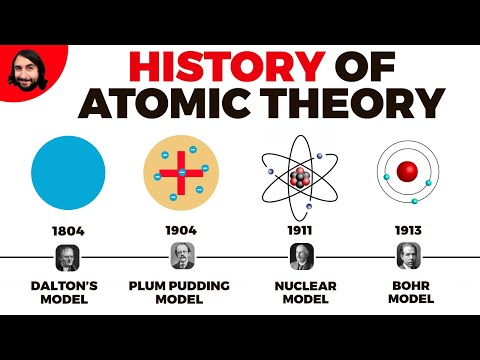
Fast forward a few centuries to John Dalton in the early 1800s. He was all about the idea that atoms are solid spheres, kind of like marbles. So cool, right? His model was pretty basic but laid a foundation for understanding chemistry. He outlined some key ideas:
- All matter is made of atoms.
- Atoms of a given element are identical.
- Chemical reactions involve rearrangements of atoms.
Then came along J.J. Thomson in 1897 with his discovery of electrons. He showed that atoms weren’t just solid blobs! He proposed the “plum pudding” model where electrons were scattered throughout a positively charged sphere—imagine chocolate chips in cookie dough! But soon after, Ernest Rutherford decided to poke around further.
Rutherford’s famous gold foil experiment changed everything in 1909. When he fired alpha particles at gold foil and saw them bouncing off at odd angles, he realized there was something else going on inside atoms—like a mini solar system! He proposed that atoms had a dense nucleus surrounded by orbiting electrons.
This lead us to Niels Bohr in 1913. Bohr took Rutherford’s idea and said, “Let’s make it more specific.” He introduced energy levels for electrons to orbit around the nucleus—it was revolutionary! You could think of these levels as rungs on a ladder where electrons could be found at particular energies.
But wait—science didn’t stop there. Along comes quantum mechanics in the 1920s with guys like Schrödinger and Heisenberg bringing their A-game. They said instead of fixed paths for electrons, we should talk about probabilities and clouds where you might find an electron—a huge shift in thinking!
- The electron doesn’t have a precise location but exists within a probability cloud.
- This laid the groundwork for modern quantum chemistry!
The current atomic model we use today combines all these ideas into what we call the quantum mechanical model. It paints a picture of an atom as having intricate energy levels filled with electrons buzzing around in probability clouds! And here’s where it gets even cooler: this understanding allows scientists to predict chemical behavior with amazing accuracy.
This journey through atomic models really highlights how scientific thought evolves over time—like layers on a cake building up delicious complexity! As new tools and technologies emerge, our models get refined; things keep changing as we learn more about nature itself.
You know what? This isn’t just fun history; it impacts modern chemistry deeply! Our advancements—from new materials to pharmaceuticals—rely on this evolving picture of atomic structure every day!
Exploring the Connection Between Atomic Models and Chemistry: A Comprehensive Overview
Alright, let’s chat about atomic models and how they totally changed the game in chemistry. So, the basic deal here is that atoms are like tiny building blocks of everything around us. We can’t see them, but they’re all over the place—like in our food, air, and even our bodies. Pretty wild, huh?
First off, let’s talk about the early models. Back in the day, people thought atoms were just solid balls. Democritus kicked things off by suggesting that everything was made of these tiny indivisible pieces. Later on, we had John Dalton who put forward a more structured idea—he believed atoms were like tiny spheres that combined in specific ways to make different materials.
Then came J.J. Thomson in the late 1800s with his famous “plum pudding” model. Imagine a fluffy pudding with plums scattered throughout—that’s how he envisioned electrons (tiny negatively charged particles) hanging out inside a positively charged ‘pudding.’ It was kind of revolutionary at the time!
But hold on a second! In 1911, Ernest Rutherford came along and blew everyone’s mind by saying that atoms have a nucleus—a super small but dense center packed with protons—and electrons float around it. It’s like having a mini solar system where planets (electrons) orbit the sun (the nucleus). This was huge because it showed there’s more structure to an atom than anyone thought.
Fast forward to Niels Bohr who took Rutherford’s idea further. He proposed that electrons move in specific orbits around the nucleus, sort of like how planets orbit around the sun but not exactly—you know? They have certain energy levels where they chill out before jumping up or down based on how much energy they grab or lose.
Now we get into quantum mechanics, which is basically where things get really trippy! With figures like Heisenberg and Schrödinger doing their thing, we learned that instead of fixed orbits, electrons exist in clouds of probability—we call these “orbitals.” Imagine trying to find your friend at a party without knowing if they’re by the snacks or maybe over by the music—harder than it sounds!
So why does all this matter for chemistry? Well, when you understand atomic models better, you can figure out how elements bond together to create compounds. Like think about water—H2O! The way hydrogen and oxygen atoms share electrons creates this awesome molecule that’s critical for life as we know it.
Also, modern chemistry relies heavily on these atomic models for everything from creating new materials to figuring out reactions in living organisms. Chemists use them to predict behavior during reactions. If you’ve ever mixed baking soda and vinegar and seen it fizz up—that’s chemistry happening because those atomic interactions are taking place!
In summary:
- The earliest models thought atoms were solid balls.
- Thomson’s plum pudding model introduced electrons within a positively charged ‘pudding.’
- Rutherford’s nucleus idea changed everything by placing mass at the center.
- Bohr showed fixed electron orbits, helping us understand excited states.
- Quantum mechanics revealed electron clouds, changing how we view atom behavior.
And yeah—this entire journey through atomic theory has shaped modern chemistry profoundly! Each model built upon another until we reached our current understanding that helps drive technological advances today. So next time you’re whipping up some cookies or mixing drinks at a party, realize there’s some epic science behind those simple reactions happening right before your eyes!
Exploring the Five Major Atomic Models in Scientific History
Alright, let’s talk about the **five major atomic models** that have shaped how we view the building blocks of matter. It’s a journey through time, from ancient ideas to modern chemistry. So, buckle up.
1. Dalton’s Model (1803)
John Dalton was the first to propose that atoms are tiny, indivisible particles. Imagine them like little spheres bouncing around! Dalton thought these atoms combined in specific ratios to form compounds. So, if you have oxygen and hydrogen, you could end up with water. This model laid the groundwork for future scientists to explore further.
2. Thomson’s Plum Pudding Model (1897)
Then came J.J. Thomson who discovered electrons while experimenting with cathode rays. He proposed a model where atoms were like a pudding with positively charged “dough” and negatively charged “plums” (the electrons). Can you picture it? Instead of solid balls, he imagined something more squishy and mixed together! However, this model didn’t explain everything — especially how atoms stay neutral despite having charged parts.
3. Rutherford’s Nuclear Model (1911)
Ernest Rutherford shook things up when he conducted his famous gold foil experiment. He fired alpha particles at gold foil and observed that some bounced back! This led him to suggest that atoms have a small, dense nucleus at the center surrounded by electrons orbiting around it — kind of like planets around the sun. It was revolutionary because it introduced the idea of a nucleus containing protons and neutrons!
4. Bohr’s Model (1913)
Niels Bohr took Rutherford’s idea a step further by quantizing those orbits! He said electrons can only be in certain energy levels or “orbits” around the nucleus—like rungs on a ladder where they can jump up or down based on energy changes but can’t be found in between those rungs. This helped explain why atoms emit light when heated; they’re like little fireflies jumping between energy levels!
5. Quantum Mechanical Model (1926)
Finally, we reach the quantum mechanical model introduced by scientists like Schrödinger and Heisenberg. Instead of fixed paths for electrons, this model describes them as existing in fuzzy “clouds” around the nucleus called orbitals—think of them as probabilities rather than precise locations! Electrons act more like waves than little dots flying around randomly.
These five models reveal how our understanding has evolved based on new discoveries and technologies over time—not only reshaping chemistry but also impacting fields like physics and biology! Each one built upon its predecessor while trying to solve unanswered questions about matter.
So there you go! From little bouncing spheres to fuzzy clouds of probability, these atomic models give us insight into what makes up everything around us—pretty mind-blowing stuff if you think about it!
You know, thinking about atomic models is like looking through a telescope at the universe of chemistry. It’s wild how our understanding has evolved over time. I mean, there was a point when the atom was thought to be just a tiny, solid ball—like a marble or something. But now? Now it’s so much more complex and fascinating.
I remember this one time in high school, my chemistry teacher did this cool demonstration where he used marshmallows and toothpicks to show how atoms connect to form molecules. It was like building with Lego bricks, but instead of toys, we were creating tiny representations of the substances all around us. In that moment, everything clicked for me. I realized these little atoms were the building blocks of everything—everything we see and touch!
Fast forward to today, and innovations in atomic models are really shaping how we approach chemistry. Modern techniques like quantum mechanics have turned our understanding upside down! Instead of just picturing electrons whizzing around the nucleus like planets around the sun—which is kinda neat but still simplistic—we get to see them as existing in probabilities and clouds.
And don’t even get me started on things like the quantum dot model that helps with tech advancements in displays or solar cells! Those little innovations spark changes across entire industries, impacting how we think about energy consumption or developing new materials. It’s kind of unbelievable when you think about it.
Plus, there’s something incredibly inspiring about seeing science evolve from simple ideas into complex theories that align with reality. Each breakthrough builds on the last—like those marshmallow atoms turning into something way more intricate than just snacks used for learning.
So yeah, atomic models do more than explain what matter is; they open up entire realms for exploration and innovation. Chemistry isn’t just some dry subject; it’s alive and constantly changing! And honestly? That makes me feel pretty excited about what’s still out there waiting to be discovered.