So, let’s talk about atoms for a sec. You know, those tiny building blocks of everything? I once spilled my coffee on a textbook trying to learn about them. That morning, I had no idea I’d be juggling caffeine and complex science concepts at the same time!
Atoms are wild! They’re like little universes packed into your coffee cup, your phone, and even in the air we breathe. Seriously, without atoms, there’d be no you, no me, and definitely no coffee.
Ever wonder how these teeny-tiny particles have such a huge impact? Well, hang tight. We’re diving into the basics of atomic structure—it’s cooler than it sounds! Get ready to explore the quirks of these microscopic wonders that make up our world.
Exploring the Fundamentals of Atomic Structure: Key Concepts in Science
So, let’s talk about atomic structure! It’s one of those topics that sounds a bit complex, but I promise it’s super interesting once you break it down. I remember the first time I learned about atoms. It felt like being handed a tiny keychain that opened the door to understanding everything around me. You know? Like realizing that every single thing in the universe is made up of these teeny-tiny particles.
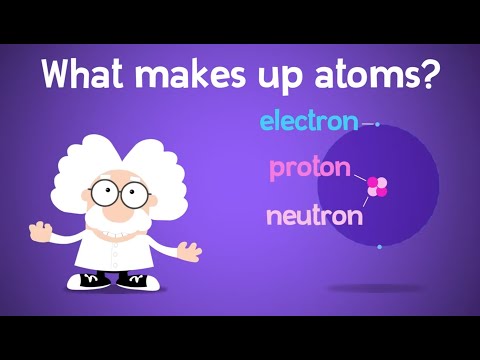
At its core, an atom is the basic unit of matter. Think of it as a building block for everything you see and touch. But what does it consist of? Well, here’s where it gets fun! Atoms are made up of three main particles:
- Protons
- Neutrons
- Electrons
Let’s start with protons. These guys are positively charged and live in the nucleus at the center of the atom—sort of like how a sun sits at the core of our solar system. Then we have neutrons, which are neutral (no charge). They hang out with protons in the nucleus and help keep everything stable.
Now onto electrons! These little guys are negatively charged and they zip around the nucleus in what we call “electron shells.” Imagine them like planets orbiting their sun. The neat thing is that they occupy specific areas or energy levels around the nucleus, and this arrangement determines how atoms interact with each other. Super cool, right?
You might be wondering how many protons an atom has to determine what kind of element it is. Each element on the periodic table has a unique number of protons known as its atomic number. For example, hydrogen has one proton, while oxygen has eight! That’s why hydrogen is light and oxygen makes up water—it’s all about those little protons!
So here’s another interesting point: when atoms bond together, they can form molecules. This happens when electrons from different atoms interact with each other to create new connections. Think about water again—two hydrogen atoms bond with one oxygen atom to make H2O. Voilà! You’ve got water!
But wait—there’s more! Not all atoms behave in exactly the same way due to something called isotopes. Isotopes are versions of an element that have different numbers of neutrons but the same number of protons. For example, carbon-12 (with 6 neutrons) and carbon-14 (with 8 neutrons) are both forms of carbon but behave slightly differently.
Understanding atomic structure isn’t just about knowing stuff; it’s also fundamental for fields like chemistry, physics, and even medicine! Just think about how this knowledge helps scientists develop new technologies or medicines.
So there you go: a quick tour through atomic structure! You’ve got your protons, neutrons, electrons—the whole shebang—and now you know how these tiny particles shape our world in big ways! Pretty amazing when you break it down like that, huh?
Exploring the Modern Concept of Atomic Structure in Contemporary Science
So, let’s chat about atomic structure. It’s, like, the foundation of everything around us. Just picture this: when I was a kid, I was obsessed with building things with Legos. Each piece represented something small but essential, coming together to create something much bigger—just like atoms do!
At its core, an atom is the smallest unit of matter that retains the properties of an element. Basically, atoms are made up of even smaller particles: protons, neutrons, and electrons. So let’s break these down because they’re super interesting.
- Protons: These little guys hang out in the nucleus and have a positive charge. They determine an element’s identity—like whether it’s hydrogen or oxygen. The more protons there are, the heavier and more unique that atom is.
- Neutrons: Also found in the nucleus, neutrons are neutral—no charge at all! They play a role in keeping protons together since like charges repel each other (think magnets!). The number of neutrons can change without turning into a different element; these variants are called isotopes.
- Electrons: Now we get to the flashy ones! Electrons circle around the nucleus in defined paths—or shells—with a negative charge. They’re responsible for all sorts of chemical reactions because they interact with other atoms to form bonds.
So you see? Atoms aren’t just static things sitting around; they dance and interact constantly!
Now onto something wild: quantum mechanics! This is where things get really funky. Electrons don’t move in neat little circles but rather exist in fuzzy “clouds” called orbitals. Think about it as a blurry zone where you might find an electron hanging out instead of pinpointing it precisely. It’s kind of like those mystery boxes on game shows—you know the prize is inside but figuring out exactly where can be tricky.
And here comes another twist: atomic structure isn’t just a one-and-done situation! Modern science tells us that there are also **quarks**—the particles that make up protons and neutrons! Crazy, right? Quarks come in different types called flavors (up, down, charm… yes, it’s as tasty as it sounds!), and they combine to form our protons and neutrons.
Oh! And let me not forget about how this all ties into technology today. Understanding atomic structure has led to developments such as semiconductors used in electronics or advancements in medicine like MRI scans—which utilize principles derived from atomic characteristics.
Just think about everything happening at such tiny scales that affects our everyday lives! When you hold your phone or sip your coffee—yeah—that’s atomic magic at work!
In short, atomic structure plays a critical role in understanding matter and interactions on both massive and minuscule scales. By grasping these concepts today, you lay groundwork for pretty much every scientific innovation out there tomorrow! So next time you’re putting together a LEGO set—or even just looking at your surroundings—remember: everything is built from atoms working together! Isn’t science just awesome?
Understanding the 2 8 8 18 18 Rule: A Scientific Perspective on Effective Communication and Learning Strategies
Okay, let’s break this down! The 2 8 8 18 18 Rule is a way to understand how electrons fill up in atoms. So, when you look at an atom, it’s like a little solar system. You’ve got the nucleus in the center, which is basically the sun. Then, whizzing around that nucleus are electrons—the planets! They’re what we focus on here.
The numbers in the rule refer to how many electrons can fit into each “energy level” or shell surrounding the nucleus.
So let’s look at what those numbers mean:
- First shell: Can hold up to 2 electrons.
- Second shell: Can hold up to 8 electrons.
- Third shell: Also fits 8 electrons, until it gets full with higher energy levels.
- Fourth shell: Can accommodate 18 electrons.
- Fifth shell: Like the fourth, also holds 18 electrons.
You know how when you’re packing a suitcase for vacation? You try to fit as much as possible but you can’t go overboard or things get messy? That’s similar to how these electron shells work. They have limits, and if you add more than they can handle without rearranging everything, it just doesn’t fit!
This arrangement is crucial because it helps determine how atoms behave—their chemical properties and interactions with other atoms. Imagine a party where every guest (atom) only brings a certain number of friends (electrons). If one atom has reached its limit of friends invited (like filling that first or second shell), it might be less likely to bond with others. Kind of like keeping things exclusive!
The cool part? These rules help us understand elements in nature and how they react with each other. For example, all those juicy colors in fireworks come from atoms getting excited and then releasing energy as light when they fall back down to their comfy shells.
The detailed understanding of electron configuration, which this rule highlights, also plays a role in fields like materials science and chemistry innovations. Think about batteries: knowing how those pesky little electrons behave helps scientists invent better ones!
A little side note—sometimes people mix up these electron shells with orbitals, which are more specific shapes where you’re likely to find an electron hanging out. Just keep that in mind; it’s all about perspective!
The next time you’re looking at something simple yet profound like an atom’s structure or maybe even enjoying some fireworks on July 4th, remember the 2-8-8-18-18 Rule— it’s not just numbers; it’s a window into understanding our universe better!
You know, when I was in school, the whole idea of atoms just blew my mind. Like, these tiny things making up everything around us? It felt like magic. So, let’s chat about the basics of atomic structure—it’s way cooler than it sounds!
First off, atoms are like the building blocks of everything. Imagine them as little Lego pieces that come together to create houses, cars, and even you! Each atom has a nucleus at its center, which is kind of like the sun in our solar system. It’s made up of protons and neutrons—those little guys are tightly packed together and hold most of the atom’s mass.
Protons have a positive charge (like when you feel all warm and fuzzy inside) while neutrons don’t have any charge at all. Around this nucleus, you’ve got electrons zipping around at crazy speeds. They’re negatively charged and occupy different energy levels or “shells.” Think of them like planets orbiting the sun—just way smaller and much faster!
So why does any of this matter? Well, understanding atomic structure is super important in modern science because it lays the groundwork for everything from chemistry to physics. For instance, how atoms bond with each other gives rise to different materials we see in our everyday lives—like metals, gases, or even your favorite snack!
Let me tell you a quick story: I once tried to fix an old radio with my dad. We thought we’d just poke around inside it like pros! As soon as we opened it up, a spring flew out and landed on my nose—talk about an unexpected reaction! Turns out that much like electrons in their orbits can get excited (and cause all sorts of reactions), we also unleashed some chaos ourselves.
So yeah, by learning about atomic structure not only do we understand how things work on a small scale but we also get insights into various scientific fields and real-life applications—from medical advancements to nanotechnology! It’s incredible what these tiny particles can do.
In short? The fundamentals of atomic structure might seem old-school but they give us keys to unlocking many mysteries in science today. And honestly? That’s pretty awesome if you ask me!