You know, I once tried to explain atomic structure to a friend over coffee. I went all in, talking about protons, neutrons, and electrons like I was some kind of science wizard. And there I was, totally buzzing with excitement, while he just stared at me wide-eyed like a deer in headlights. Classic.
But here’s the thing: atoms are not just boring little particles floating around. They’re like tiny worlds of their own! Seriously, these little guys are responsible for everything around us—from the air we breathe to that yummy pizza you love.
So when we dive into atomic structure, we’re stepping into a universe filled with quirks and surprises. You might be thinking it’s complicated—like calculus or assembling IKEA furniture without the manual—but it doesn’t have to be awkward. Let’s break it down together!
Exploring the Impact of Atomic Theory on Modern Science and Technology
Alright, let’s talk about atomic theory. You know, that big idea that changed the game in science and technology. It all started way back in the early 19th century. John Dalton was one of the first to suggest that everything around us is made up of tiny particles called atoms. And, like, this was revolutionary!
So what does atomic theory really mean? Well, it means that matter isn’t just a random collection of stuff; it’s all about these super small building blocks! Each atom has its own characteristics, like mass and charge, which determine how they interact with each other. Isn’t it wild to think there are literally trillions of atoms in a single drop of water?
Understanding Atomic Structure is crucial for modern science. It helps us grasp why substances behave as they do. For example:
Now here’s where things get super interesting: technology! I mean, just think about how many gadgets you use daily. They’re mostly possible because we understand how to manipulate atoms.
Take semiconductors, for instance. These materials are fundamental for electronics like computers and smartphones because they can control electrical currents at the atomic level! Isn’t it mind-blowing that tiny changes in an atom’s arrangement can lead to massive tech advancements?
Also, let’s not forget about medicine! Nuclear medicine, which includes techniques like PET scans or cancer therapies using radiation, hinges on our understanding of atomic behavior. When doctors target specific areas with atomic particles, it can actually save lives.
You might remember studying the periodic table in school? It’s not just a list; it’s a treasure map of elements! Each element’s position tells us something about its properties and how it reacts with other elements.
Speaking of reactions—ever seen fireworks? That dazzling display comes from atoms releasing energy when they change forms during reactions! There’s some serious science behind those pretty explosions!
In summary, atomic theory has woven itself into the fabric of modern science and technology more than we often realize. The ability to understand and manipulate these tiny particles has paved the way for countless advancements—from our health to our tech-driven lifestyles.
So next time you’re scrolling through your phone or watching a movie on your tablet, take a moment to appreciate the astonishing journey from those early thinkers who first proposed atoms to our hyper-connected world today! Science rocks!
Evolution of Atomic Structure Theory: Key Developments and Impacts in Modern Science
Alright, let’s chat about the evolution of atomic structure theory. It’s one of those wild rides through science that’s really important for understanding everything around us. Basically, it all starts with some serious thinkers and their pretty clever ideas.
In ancient times, you had folks like Democritus kicking things off. He was one of the first to suggest that everything is made up of tiny particles called atoms. Can you imagine? This dude basically predicted a lot of what we know today without any fancy equipment! He thought atoms were indivisible and varied in shape and size. But here’s the kicker—his ideas didn’t really get traction back then.
Fast forward a bit to the early 19th century. We meet John Dalton, who gave us a clearer picture. Dalton proposed that each element consists of its own kind of atoms, all identical in mass and properties. That was a game changer! His atomic theory laid the groundwork for modern chemistry. It’s like he handed scientists a brand new toolbox.
Then came along J.J. Thomson in 1897 with his discovery of the electron. He used cathode ray tubes to show that atoms weren’t indivisible after all; they had subatomic particles! Thomson suggested the “plum pudding model”, where electrons were scattered throughout a positively charged “soup.” This was super cool, but it didn’t last long.
The real breakthrough happened when Ernest Rutherford stepped into the spotlight around 1911. He did this famous gold foil experiment where he shot alpha particles at a thin sheet of gold. To everyone’s shock, some particles bounced back! This led him to propose that atoms have a dense core called the nucleus surrounded by electrons swirling around it—like a mini solar system!
This model set off more questions than answers though—like how those electrons stay so organized yet not spiral into the nucleus due to attraction? That’s where our buddy Niels Bohr came in during 1913 with his modified version of Rutherford’s model. Bohr suggested that electrons travel in fixed orbits at certain distances from the nucleus, which helped explain how they maintain energy levels without crashing into each other.
The deeper we go into this rabbit hole, you know things get even crazier! Enter quantum mechanics in the early 20th century—a total mind-bender! Scientists like Werner Heisenberg and Erwin Schrödinger flipped everything on its head with concepts like uncertainty and wave functions. Instead of fixed paths, they said electrons exist in probability clouds where we can only predict their location sometimes—not super intuitive, right?
You see, these developments have massive implications for modern science. The way we understand atomic structures helps us grasp fundamental concepts in chemistry and physics today. Take physics; particle accelerators smash atoms together to discover new particles all based on these theories!
- This journey from indivisible solids to complex quantum systems shows how thorough questioning leads to breakthroughs.
- The models inform fields beyond just chemistry—think materials science or even biology!
If you think about it, our understanding of atomic structure has shaped not just science but technology too—from computers to medicine—the ripple effects are enormous! So next time you hear about an atom or something on TV, just remember: it took centuries and tons of curiosity to piece together what looks so simple now.
Buckle up because as science advances, who knows what more exciting twists await us regarding atomic theory?
Unlocking Atomic Structure: Key Insights into Modern Science and Its Complexities
Let’s talk about atomic structure, shall we? You might be thinking, “What’s the big deal about atoms?” Well, they’re like the tiny building blocks of everything around us! From the air we breathe to that pizza you love—yep, it all starts at the atomic level.
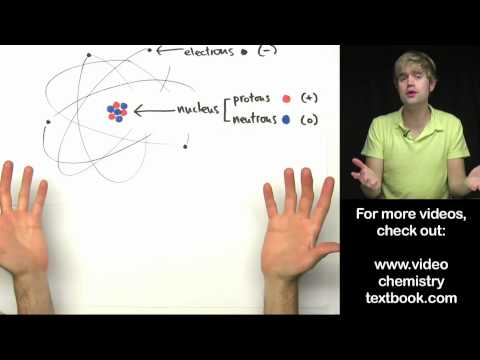
Atoms are made up of three main particles: protons, neutrons, and electrons. Protons are positively charged, neutrons have no charge (they’re neutral), and electrons are negatively charged. So, picture a little nucleus at the center of an atom that’s packed with protons and neutrons. Then, you’ve got electrons zipping around that nucleus in what we call ‘orbitals’. Sounds like a cosmic dance party, right?
The number of protons in an atom defines what element it is. For example, if you have 1 proton, voila! You’ve got hydrogen. If you add another proton for a total of 2—you’re looking at helium. Elements can combine to form molecules through chemical bonds. This is where things really get interesting. Let’s say two hydrogen atoms join with one oxygen atom—you get water! And just like that, life as we know it exists.
Now, let me tell you something cool: there are different versions of elements called isotopes. These happen when atoms have the same number of protons but different numbers of neutrons. Think about carbon-12 and carbon-14. They both have six protons but differ in neutrons. This difference makes one radioactive (carbon-14), useful for dating ancient artifacts!
You know how sometimes people say “like attracts like”? Well, in chemistry—or atomic structure terms—we have something similar called valence electrons. These are the outermost electrons and play a vital role in how atoms interact with each other. Atoms want to be stable which means they often bond with other atoms to fill their outer shells—this is how we get different molecules.
There’s also a fancy term called quantum mechanics. This area dives into how particles behave on an atomic scale and it gets pretty trippy. Electrons don’t follow clear paths; instead, they exist in probabilities—which can make predicting their location kind of like playing hide-and-seek with them!
The significance of understanding atomic structure isn’t just for nerdy scientists; it affects our everyday lives too! Take technology, for instance—smartphones rely on semiconductors made from silicon atoms! Knowing how these atoms interact helps create smaller and faster devices.
No joke—unlocking this intricate world has revolutionized medicine too! MRI machines work based on atomic behavior to produce images of our insides without needing invasive procedures.
A personal anecdote here: I once got so fascinated by this stuff during high school chemistry class that I started building model kits for various molecules. It became this fun hobby where I’d mix colors for different elements and create 3D representations just to see how they linked up—kind of like Lego but way cooler!
In short, understanding atomic structure helps us grasp everything from basic chemistry to complex technologies shaping our future. It’s like peeking behind the curtain at the elemental forces that govern our universe—and that’s seriously exciting!
You know, when you think about atoms, it might seem like just a bunch of tiny particles floating around. But honestly, there’s so much more going on beneath the surface. I remember this one time in high school chemistry class, we were doing an experiment with balloons and static electricity. We rubbed the balloons on our heads, and they stood up all wild and crazy! That moment really hit me—our hair was being affected by unseen forces at the atomic level. Like, how cool is that?
So let’s chat about atomic structure for a sec. Atoms are made up of three main players: protons, neutrons, and electrons. Protons hang out in the nucleus (which is basically the core of the atom), while neutrons keep them company there—think of them as supportive pals in a tiny club. Electrons are zipping around outside that nucleus in what we call orbitals. They’re like hyperactive kids running around a playground!
But here’s where things get interesting: it’s not just about who is where; it’s about how these particles interact with each other. The forces that bind protons and neutrons together are super strong—like a cozy family unit. Meanwhile, electrons can be pretty picky about their friends; they form bonds with other atoms to create molecules.
Now, let’s talk about why this matters today? Modern science is diving deep into atomic structures to understand everything from materials for tech gadgets to medicine that can zap cancer cells away without harming good cells too much! It feels surreal to think that understanding atoms can lead to life-saving innovations or even help us build more sustainable technologies.
And if you’re into energy stuff, those atomic interactions are key for nuclear power too—just one small atom can release immense energy! It kind of blows my mind how something so tiny plays such a huge role in everything around us.
But yeah, it can get complicated pretty quick! The deeper you dig into quantum mechanics—the science behind those tiny particles—the crazier it becomes. Electrons don’t just sit still; they make weird movements as if they’re playing hide-and-seek with us!
So next time you see or touch something seemingly simple—a piece of wood or your phone—remember there’s this vibrant world of atoms at work underneath. Each one interacts in ways that shape our universe and technology as we know it right now! Who knew understanding atomic structure could feel like peeking into the secret life of everything?