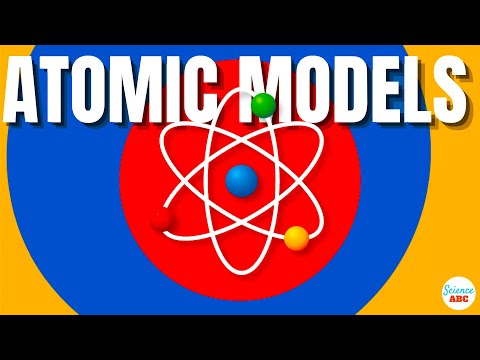
So, picture this: you’re in high school, and someone says “calcium.” You might think about milk or maybe your bones, right? But hold on! What if I told you calcium is more than just a nutrient? It’s actually a superstar in the atomic world.
I remember sitting in class, doodling away while my teacher was explaining atomic models. Honestly, I just couldn’t wrap my head around those blurry pictures of atoms. Then, bam! My friend sat next to me and said something that blew my mind: “Atoms are like tiny solar systems!”
That’s when it clicked for me. Atoms aren’t just something to memorize; they’re fascinating little worlds of their own! So let’s chat about some of those cool, innovative calcium atomic models today. They’re not only helping students get a grip on science but also making it fun and interesting. Sound good?
Exploring the Latest Advancements in Atomic Models: A Comprehensive Overview
Alright, let’s talk about atomic models and how they’ve evolved over the years. You know, back in the day, scientists had some pretty crazy ideas about what atoms looked like. I mean, they didn’t even have the fancy technology we do now! Every time a new discovery was made, it flipped their understanding upside down. It’s like trying to put together a puzzle but losing pieces along the way.
So, first off, let’s touch on the classic Dalton model. John Dalton was like the grandpa of atomic theory. He thought that atoms were tiny spheres—like little marbles that couldn’t be broken down into anything smaller. This was revolutionary at his time in the early 1800s. Still, as you can imagine, it wasn’t quite accurate.
Then came along J.J. Thomson, with his “plum pudding” model around 1904. Picture a chocolate-chip cookie where the dough represents positively charged goo and the chocolate chips are negatively charged electrons scattered inside. Sounds delicious, right? But again, this model didn’t hold up once Rutherford came along with his gold foil experiment.
- Rutherford’s nuclear model: He discovered that atoms have a dense nucleus at their center surrounded by mostly empty space! Can you imagine how mind-blowing that must’ve been?
- Bohr’s model<!–: Later on in 1913, Niels Bohr introduced energy levels or shells where electrons orbit around the nucleus like planets around the sun. Much cooler than just floating around randomly!
- The quantum mechanical model: Fast forward to modern times. With advancements in quantum physics, scientists now understand that we can’t pinpoint where an electron actually is—only where it might be at any given time.
This brings us to all those innovative calcium atomic models popping up in science education! Calcium is this awesome element found in your bones and teeth—super important stuff! Educators are leveraging advanced models to really help students grasp complex concepts.
For instance, some teachers use 3D visualizations. Imagine holding a tablet showing calcium atoms moving and bonding in real-time! This makes learning so much more relatable and engaging rather than just reading from a textbook.
You might also stumble upon simulations online where you can build your own models of calcium atoms! It’s pretty cool because you get to see how adding or removing electrons changes everything about the atom’s behavior.
The bottom line? Atomic models have come such a long way from Dalton’s marbles to sleek digital representations we see today. Each step brought us closer to understanding who we are on a molecular level—and that’s nothing short of amazing! Seriously, it gives me chills thinking about how far we’ve come!
Revolutionizing Science Education: Innovative Calcium Atomic Models in Modern Curricula (PDF)
So, calcium, right? It’s that element we often hear about when discussing strong bones and teeth. But, did you know it also plays a huge role in modern science education? That’s where innovative atomic models come into play.
Now, let’s talk about the traditional way of teaching calcium’s atomic structure. Most folks are familiar with the classic model: a nucleus surrounded by electrons buzzing around it like bees around a flower. But recent educational shifts are pushing for more engaging and understandable ways to represent this little guy.
Schools are starting to use 3D models and interactive simulations. Imagine being able to manipulate a virtual calcium atom on your tablet! You can see how its electrons move or how it reacts with other elements. This hands-on approach helps students grasp complex concepts much quicker than just looking at pictures in textbooks.
And here’s the kicker: visual learning is super effective for most people. By seeing things in action, students can learn not just about calcium but also about how atoms interact overall. Like, when you mix things together or see reactions happening in real-time.
Plus, there’s an emotional aspect here too! I remember helping my younger cousin with his science project once. We used a simple model of an atom made from candy—gumdrops for protons and marshmallows for neutrons while toothpicks were the electrons zipping around them. Seeing him light up when he got it was priceless!
Incorporating these innovative techniques leads to greater understanding and retention of knowledge. When students can relate abstract ideas to concrete experiences, they’re more likely to engage deeply with scientific concepts.
Now let’s break down some key points:
With everything shifting toward more interactive content, educators have the amazing opportunity to inspire future scientists not just through theory but through practice as well! So, integrating these innovative calcium atomic models, along with other elements of chemistry education, could totally revolutionize how we teach science today. And who knows? Maybe one day those kids will be inventing even cooler ways to understand the universe!
Exploring the 3D Model of the Calcium Atom: A Comprehensive Guide to Atomic Structure in Science
The calcium atom is one of those building blocks of life that we often take for granted. When you think about it, it’s pretty wild how such a tiny thing plays such a huge role in our bodies and the world around us. So, let’s break down its 3D model and atomic structure in a way that feels friendly and straightforward.
First off, every atom, including calcium, has three main particles at its core: **protons**, **neutrons**, and **electrons**. Picture the protons and neutrons hanging out together in the nucleus, while the electrons zip around them in spaces called orbits or shells. In calcium’s case, it has 20 protons and 20 neutrons packed tightly into that nucleus. It’s like a little party going on inside!
Now, here’s where it gets interesting—calcium has **two electrons** in its outer shell. This means it’s pretty reactive! It loves to bond with other atoms to form compounds, which is why you find calcium in everything from bones to toothpaste to your favorite leafy greens. The structure helps explain why calcium behaves the way it does chemically.
If we visualize this atom as a 3D model—imagine a small sphere for the nucleus surrounded by several layers of circles representing the electron shells. You’d see some lively movement as those electrons zip around like little planets orbiting a sun! This dynamic motion is crucial for understanding how atoms interact.
Another cool aspect of modeling atoms today is using technology. Innovative software can create super detailed 3D models that allow students to virtually explore atomic structures. They can rotate them, zoom in, and really grasp how the parts work together—making learning more interactive and less textbook-ish.
So when we say “atomic structure,” we’re referring to how these particles are arranged and how they interact with each other. In simple terms:
- Nucleus: Where protons and neutrons chill out.
- Electrons: The fast-moving buddies zooming around.
- Electron shells: Layers where electrons hang out.
Understanding these components helps you see why calcium is essential—it helps muscles contract, makes bones strong, and even plays a part in nerve function! Without an understanding of atoms like this one, it would be tough to appreciate all the science behind our health or even everyday materials.
In classrooms nowadays, modern educators often use interactive models to teach concepts like these. Imagine being able to manipulate a digital model of a calcium atom while learning about its role in biology or chemistry—that’s next-level engagement!
To sum up: exploring models like those of calcium atoms makes science accessible and fun—not just for students but anyone curious about how the world ticks! So next time you bite into some broccoli or feel your muscles flex after exercise remember—it all comes down to some seriously funky little atoms doing their thing!
So, let me tell you about calcium. It may not seem like the most exciting element at first glance, but it’s actually super important. Calcium is what gives our bones strength and is even involved in how our hearts beat! I remember this one time in school, we were trying to see if we could build a model of a calcium atom using nothing more than candy. We had gummy bears for protons and some sour worms for electrons. It was messy, sure, but wow, did it make everything feel real!
Now, when we talk about innovative atomic models in education, it’s all about making those tiny particles come alive for students. Traditional diagrams can be a bit dull and hard to grasp. You know? But with 3D models or interactive simulations, you can literally spin the calcium atom around and see how those protons and neutrons sit snugly in the nucleus while the electrons zip around outside like hyperactive kids on a playground.
And let’s not forget about technology! With virtual reality (VR) stepping into classrooms, some students are getting the chance to dive into atoms as if they were mini astronauts exploring a new world. Imagine putting on those VR goggles and seeing those electrons buzzing around in real-time! That kind of experience sticks with you—you don’t just memorize facts; you feel them.
But there’s another layer to this whole thing too—it’s about making science relatable. Like when teachers connect calcium to everyday things—like milk or cheese—students start seeing the relevance of what they’re learning. This sparks curiosity and creates a space where asking questions feels natural.
In modern education, innovative atomic models aren’t just fancy tools; they’re gateways into understanding bigger concepts that surround us every day. So yeah, while it might be “just” calcium we’re talking about now, these fresh approaches can turn learning into something vibrant and exciting! It’s amazing how something so small can expand our view of the world completely.