You know that moment when you’re at a concert, and the bass hits you right in the chest? It’s like your whole body just feels the music. Well, that’s not just your ears doing their thing; it’s your brain getting in on the action too!
Here’s a fun thought: your ears might pick up sounds, but it’s your brain that turns them into the songs you love or those annoying notifications from your phone. Crazy, right?
So, let’s chat about how this all works. You’ve got sound waves dancing through the air, and then BAM! Your brain goes to work making sense of it all. It’s like having a tiny DJ inside your head remixing everything you hear.
Stick around as we unpack how this wild process happens. Trust me, it’s pretty neat!
The Neuroscience of Hearing: Understanding the Brain’s Role in Sound Perception
The Neuroscience of Hearing is a fascinating topic, one that lets us peek into how our brains interpret sounds. You might think hearing is just our ears doing their job, but hold on—it’s way more complex than that.
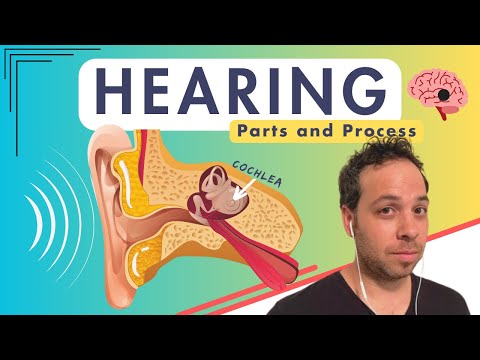
When a sound hits your ear, it creates tiny vibrations in the air. These vibrations travel down through a series of structures in your ear: first to the eardrum, then to small bones called ossicles, and finally to a spiral-shaped structure known as the cochlea. Inside the cochlea are hair cells that convert those vibrations into electrical signals. But here’s where things get cool: it’s really our brain that does all the magic with those signals.
Once those electrical signals reach your auditory nerve, they take a fast track to the brainstem first and then up to your thalamus. The thalamus acts like a bus station, directing the information to different parts of your brain where it can be processed further.
Then it heads to the auditory cortex, located in the temporal lobe of your brain. This part is key for interpreting what you’re hearing. For example, it’s responsible for recognizing melodies when you listen to music or distinguishing between different voices when you’re chatting with friends.
There’s also something called sound localization. Ever tried figuring out where that sudden sound is coming from? Your brain uses timing differences—how quickly sound reaches one ear compared to the other—to determine direction. This nifty trick helps you figure out if someone is sneaking up behind you or if a car is zooming down the street.
You know what’s amazing? The brain can even adapt to changes in hearing! If you’ve ever worn headphones for too long and then taken them off only to feel weird about all sounds being too loud? That’s because your auditory cortex gets used to certain levels of sound exposure over time.
And did I mention how emotions tie into this? Sounds can evoke feelings—think about how a sad song can make you tear up or how upbeat music makes you wanna dance! That’s because auditory processing isn’t isolated in just one area; it interacts with emotional centers like the amygdala too!
So yeah, our brains play this incredible role in not just hearing but understanding and experiencing sound on so many levels. It’s like orchestrating an entire symphony where every note resonates both physically and emotionally within us.
Isn’t it cool how much work goes into something we often take for granted? Just think about all those little processes happening every second when you hear everything from birds chirping outside to laughter ringing through your living room!
Exploring the Auditory and Memory Functions of the Brain: Key Areas Involved in Hearing and Recall
The brain is an incredible machine, you know? It does a lot more than just keeping our hearts beating and lungs breathing. One of its coolest jobs is helping us hear sounds and remember them. So, let’s dig into how our brains pull off this amazing feat.
When we hear something, sound waves enter our ears and get transformed into signals. These signals head straight to the auditory cortex, which is like the brain’s sound processing center. Imagine it as a concert hall where all the sounds come in, and they’re sorted out into different categories—like music, speech, or background noise.
Now, right next door to the auditory cortex is the hippocampus. This area plays a crucial role in memory formation. It’s kind of like a library where our memories are stored. When you hear a song that reminds you of your childhood, it’s not just because of the melody but also because your hippocampus pulls up those sweet memories associated with it.
But here’s where it gets really interesting: the connection between hearing and memory isn’t just random. The auditory cortex communicates with the hippocampus to help us make sense of what we hear based on what we’ve already experienced. If you heard a bell ringing as a kid every time you got ice cream, that sound might bring back happy memories whenever you hear it again!
Another key player in this whole process is the amygdala. This part of the brain handles emotions. Think about it: when something triggers an emotional response—like hearing your favorite song from high school—it can make those memories even stronger thanks to the amygdala’s influence.
So here are some important points to remember:
- The auditory cortex processes sounds.
- The hippocampus helps form and recall memories.
- The amygdala connects sounds with emotions.
But wait! There’s more! Our brains are also pretty good at adapting. If you lose your hearing or have trouble processing sound, other parts of your brain can step in and help out by forming new connections. It’s like when a smooth road suddenly has potholes; your brain finds another way to get around.
Now let’s think about aging for a moment. As people get older, they might notice changes in their ability to hear or remember sounds clearly. Some parts of their auditory system may not work as efficiently anymore. This might lead to difficulties remembering conversations or identifying familiar voices because those brain areas aren’t firing like they used to.
In essence, our abilities to hear and recall are deeply intertwined thanks to various parts of our brains working together smoothly as a team. It really shows how amazing human brains can be when handling something as complex as sound perception!
So there you have it! Understanding these processes helps us appreciate how vital these mechanisms are for daily life—from enjoying music to having meaningful conversations with friends over coffee. Pretty cool stuff if you ask me!
Exploring Auditory Perception: Insights and Implications in Psychological Science
Ever thought about how you hear and process sounds? It’s like your brain is a mini audio engineer. Auditory perception is all about understanding how we interpret sounds around us. It’s not just about the ears picking up vibrations; it’s also heavily influenced by the brain’s clever tricks.
When sound waves hit your ears, they create tiny vibrations that travel through three little bones in your middle ear. These bones are called the ossicles—sounds fancy, right? They amplify those sound waves and send them directly to your inner ear, or cochlea, where those vibrations turn into electrical signals. Your auditory nerve then sends these signals to your brain for processing.
Think of it like this: imagine you’re at a crowded party, and you hear someone call your name across the room. Your ears pick up that sound, but it’s your brain that figures out who is talking and where they are. This **ability** to separate individual sounds from background noise is called auditory scene analysis. Pretty cool, huh?
- Localization: Ever notice how you can tell where a sound is coming from? Your brain uses cues from both ears, like time differences and volume levels, to locate sounds in space. It’s like having built-in 3D hearing!
- Cognitive Processing: Sometimes our brains play tricks on us. If you’re feeling anxious at night and hear a creak in the floorboards, your mind might imagine it’s something scary lurking in the shadows! Our perceptions can be shaped by our emotions and past experiences.
- Sensory Integration: Sounds don’t exist in a vacuum; they interact with other senses too! Walking through an art gallery while listening to an audio guide changes how you perceive both the artwork and the narration.
- Loudness Perception: The loudness of sound isn’t just about intensity; our brains adjust based on context. A loud concert feels different than loud machinery because of our expectations and experiences.
You might wonder how this relates to psychology. Well, auditory perception affects everything from communication skills to emotional responses. For example, understanding speech involves more than just hearing words; it requires picking up on tone and rhythm—something we learn over time.
This has real-life implications too! People with hearing difficulties often miss out on crucial parts of conversation or music enjoyment. But thanks to audiology advancements, there are tools now to help people experience sounds more fully again.
The fascinating part? Research continues diving deeper into how our brains perceive sound under various conditions—like emotions or environments—and what it all means for psychological health. So next time you’re jamming out to your favorite playlist or catching up with friends at a cafe, remember there’s so much more happening behind the scenes within your brain!
Auditory perception isn’t just about hearing—it’s a complex blend of biology and psychology that shapes our every experience with sound.
You know, it’s pretty wild when you think about how we hear things. Like, there’s so much going on inside your head—literally! When sound waves come rushing toward us, they don’t just roll right in and hang out for a while. Instead, they go through this incredible journey to get processed by our brains.
Imagine sitting at a concert, surrounded by friends and the excitement in the air. The moment that first note hits, it’s not just your ears that perk up; it’s your whole brain lighting up like a Christmas tree! You’re hearing the music, feeling the beat in your chest, and maybe even recalling a memory of that song from last summer. All of this happens because your brain is working overtime to decode those sounds. It separates melodies from background noise and echoes from voices. Isn’t that mind-blowing?
So here’s the scoop: Sound travels as vibrations through air (or water or even solids). When these vibrations reach your ear, they wiggle tiny hair-like structures in your cochlea. This is where things start getting interesting. These little hairs convert those vibrations into electrical signals that zip off to the brain via the auditory nerve. Your brain then interprets those signals as recognizable sounds—music, laughter, or even someone calling your name across a crowded room.
What really gets me is how every person experiences sound differently because of their unique auditory pathways and past experiences. Like that time I heard an old tune playing at a café and was instantly transported back to my childhood—the smell of cookies baking in my grandma’s kitchen and laughter all around. That emotional connection? Totally crafted by my brain weaving together memories with sound.
But let’s not forget about hearing loss! It can be really tough when people struggle to hear what’s going on around them. Our brains adapt remarkably well; they can fill in gaps if one part isn’t functioning right anymore. Still, it makes you appreciate all those tiny nuances we often take for granted—the subtle differences between sounds and how our brains piece everything together.
So next time you’re listening to music or having a chat with friends over coffee, take a second to think about all that’s happening behind the scenes in your noggin’. It’s like an orchestra of neurons playing their own symphony every single time we hear something!