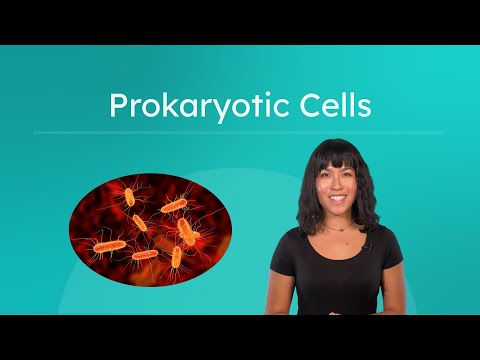
So, picture this: you’re at a party, and someone casually mentions that there are more bacteria in your body than there are people on Earth. Seriously! Mind-blowing, right?
Now, let’s talk prokaryotic cells. These little guys are like the unsung heroes of the biological world. They’re everywhere! From your morning yogurt to the soil in your garden, they’re literally living it up all around us.
You might think they’re just tiny blobs of stuff, but oh man, they’re way more interesting than that! Trust me. There’s a whole universe inside those small structures that shapes our lives in ways we often overlook. Let’s dig deeper into this amazing world together!
Exploring the Distinctive Features of Prokaryotic Cells in Cellular Biology
Prokaryotic cells are like the tiny superheroes of the cellular world. These little guys are everywhere, from the soil in your backyard to the guts of animals. They’re super small, usually only a couple of micrometers in size! But don’t let their size fool you—prokaryotes are complex and play essential roles in ecosystems and human health.
First off, let’s talk about their structure. Unlike eukaryotic cells (which are the more complex ones with membranes and organelles), prokaryotes don’t have a nucleus. Instead, they have a single circular strand of DNA floating around in the cell. It’s kind of like keeping your important documents on your desk instead of filing them in a cabinet. This DNA controls all their functions and reproduction.
They also have some other cool features. Their outer layer is made up of a cell membrane and often a rigid cell wall, which helps maintain their shape and protect them from harsh environments. The cell wall is mostly made of peptidoglycan—a complicated polymer that gives bacteria their structure. It’s worth noting that not all prokaryotes have this, but many do!
Moving on to diversity, prokaryotic cells come in two main flavors: bacteria and archaea. Bacteria are what most people think of when they hear “germs” or “microorganisms.” They can be beneficial or harmful depending on what they’re doing—like how some help us digest food while others can make us sick.
Archaea, on the other hand, are like the less popular cousin at family gatherings—they live in extreme environments such as hot springs or salt lakes where most organisms can’t survive. They thrive under conditions that would put other life forms into survival mode! Seriously, these guys have been found living at temperatures above boiling point or super salty areas where nothing else would dare go.
Speaking of survival, these little cells can reproduce really quickly! Under ideal conditions, some bacteria can double every 20 minutes. Imagine if we could reproduce that fast—our world would look totally different! This rapid division is mainly through a process called binary fission, where one cell splits into two identical cells.
Another fascinating aspect is how they exchange DNA—yes! It’s not just about splitting; they also share genes through various methods like transformation and conjugation. Transformation is when one bacterium takes up genetic material from its environment, while conjugation involves direct transfer between bacteria via specialized structures. It’s like sharing secrets that help them adapt to new challenges.
Now let’s touch on metabolism. Prokaryotic cells exhibit incredible versatility when it comes to harnessing energy sources. Some are autotrophic, meaning they produce their own food using light (like plants) or chemical reactions (chemosynthetic). Others rely on consuming organic materials to get by—these are called heterotrophic organisms.
Finally, many prokaryotes form communities known as biofilms. Picture this: tiny microbes sticking together on surfaces (like rocks in a stream or inside pipes) creating protective layers against environmental stressors and even antibiotics! Biofilms can be both good and bad; they play important roles in nutrient cycling but also cause issues like plaque buildup on teeth.
In wrapping this up, exploring prokaryotic cells opens up an entire universe beneath our feet—or even within our own bodies! These tiny powerhouses show us that life comes in many forms and constantly adapts for survival against all odds as we continue to learn more about their importance in biology every day.
Exploring the Evolutionary Origins: Why Scientists Support Prokaryotes as the First Life Forms
Look, when it comes to figuring out where life on Earth kicked off, scientists are all in on the idea that prokaryotes are the pioneers. It’s a pretty big deal because these little guys—like bacteria and archaea—are thought to be the first life forms ever. Crazy, right?
What exactly are prokaryotes? Well, they’re simple organisms that don’t have a nucleus. You know how we humans have cells with all sorts of parts neatly tucked inside? Prokaryotic cells are like the bare-bones version of that. They’ve got their DNA floating around in the cell, rather than being wrapped up in a protective nucleus. This makes them really adaptable and tough.
Why do scientists think they came first? Here’s where it gets interesting. Prokaryotes have been around for about 3.5 billion years! That’s ages ago compared to eukaryotes, which includes all plants and animals and popped up much later on this timeline of life. The oldest fossils we’ve found? Yup, those are prokaryotic!
But wait, there’s more! Prokaryotes can thrive in some of the most extreme places you can imagine—think boiling hot springs or super salty lakes—that suggests they were well-suited for early Earth’s harsh conditions. It’s like they packed their bags and got ready for a wild ride!
Their role in evolution is massive. These organisms were crucial for developing complex forms of life because they helped shape Earth’s atmosphere by producing oxygen through photosynthesis millions of years ago. Yep, without them cranking out oxygen in the ancient oceans, we probably wouldn’t be here chatting.
And here’s another cool thing: they’re still everywhere. If you look closely—like really closely—you’ll see that there are more prokaryotic cells on Earth than there are stars in our galaxy! They’re also important players in ecosystems today and help with everything from breaking down waste to keeping our guts healthy. Kind of makes you appreciate those tiny bacteria, huh?
To wrap things up (not that I’m putting a bow on it or anything), scientists backing prokaryotes as the first life forms is about understanding our roots. They’re not just tiny dots under a microscope; they’re part of an epic story stretching back billions of years! So next time you hear about prokaryotes, just remember—they’re not just old-school; they’re essential to every living thing we see today!
You know, prokaryotic cells are kind of like the little underdogs of the scientific world. They’re tiny, living in all sorts of environments—like hot springs, deep oceans, and even inside our guts! It’s wild to think about how these minuscule entities play such huge roles in everything around us.
When I was a kid, I remember my science teacher showing us a simple animation of a bacterium. I was amazed to see this little blob moving around, doing its thing. And it hit me: these guys have been around for billions of years! They were here long before dinosaurs roamed the Earth. How cool is that? Just thinking about how resilient they are makes you appreciate the complexity of life.
So here’s the scoop on prokaryotic cells: they’re typically unicellular and lack a nucleus. Instead, their DNA hangs out freely in the cell’s cytoplasm. Unlike eukaryotic cells (which all have those fancy nuclei), prokaryotes just kinda keep things simple and streamlined—perfect for their hustle in various environments.
And get this: they come in all shapes and sizes! Some are spherical, like little balls (cocci), while others can be rod-shaped (bacilli). There are even spirals (spirilla)! It’s like nature’s own art show. But what’s really mind-blowing is how they’ve adapted to survive against the odds—think extreme heat or intense acidity.
The thing is, without these tiny champions, life as we know it would be totally different. They contribute to nutrient cycling and help with decomposition—basically cleaning up after everything else! Plus, some even form symbiotic relationships with plants or animals that can be pretty crucial for ecosystems.
I guess when we look at them closely, it’s easy to underestimate their importance because they’re so small and simple compared to our own cells. But they remind us that complexity isn’t always about size; sometimes it’s about how you fit into a much bigger picture. Crazy thought, right? So next time you hear someone say “bacteria,” maybe give them some credit for being essential players on this Earth stage? They’re more than just germs; they’re literally part of life itself!