You know those tiny little creatures that live in crazy places, like hot springs or even inside your gut? Well, they’re called prokaryotes. And even though you can’t see them with your naked eye, they’re doing some seriously wild stuff all the time.
So here’s a fun fact: prokaryotic cells, like bacteria, don’t have a fancy nucleus. But what they do have is a pretty cool cell membrane. It’s like their personal force field! This membrane controls what gets in and out of the cell. Pretty neat, huh?
But let me tell you—this isn’t just about keeping things in or out; it’s way more complicated than that. The structure of these membranes is crucial for how these little guys function in a big way.
Grab your favorite drink and settle in. We’re going to unfold the mysteries of prokaryotic cell membranes together!
Exploring the Structure and Function of Prokaryotic Cell Membranes in Cellular Biology
So, let’s chat about prokaryotic cell membranes. You might be wondering what that even means. Well, prokaryotes are these tiny organisms like bacteria that don’t have a nucleus. Their cell structure is pretty simple compared to us, but it’s super effective.
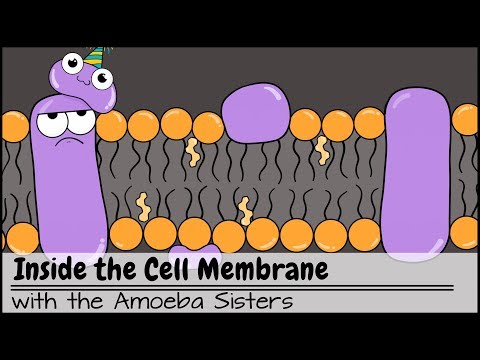
First off, the cell membrane is like the bouncer of a club. It controls what goes in and out of the cell. This membrane is made up of a double layer of lipids, which are basically fats. Picture a stack of pancakes — that’s kind of how they’re arranged, with heads and tails facing outward. The heads love water, but the tails… not so much.
- Fluid Mosaic Model: This concept suggests that the membrane isn’t just a static wall; it’s more like a dance floor where proteins and lipids move around within it. Imagine people mingling at a party!
- Proteins: These guys hang out in or on the membrane and serve different purposes — think of them as doormen or bartenders who help substances get through the bouncer (the membrane). Some proteins act as channels or pumps to transport materials.
- Selective Permeability: The membrane is picky about what gets to enter or exit. Small molecules like oxygen can slip through easily, while larger or charged particles need special help from those proteins we just talked about.
Now here’s where it gets cool: prokaryotic membranes can also be involved in energy production! Yep, they pull off some impressive moves to generate energy from sunlight or chemical reactions. For instance, some bacteria have specialized regions in their membranes where they capture light energy—like little solar panels!
But wait! There’s more! The composition of these membranes varies depending on the environment these bacteria live in. In harsh conditions—like extreme heat or salt concentration—the membrane might alter its structure to keep everything intact and functioning properly.
Oh, and let’s not forget about the cell wall! Although it’s not part of the membrane itself, it’s often found right outside it in prokaryotes. It provides additional support and protection. Think of it as an extra layer of security beyond our bouncer friend.
So next time you hear about prokaryotic cell membranes, remember they’re not just barriers; they’re dynamic structures playing vital roles in cellular life! It’s pretty amazing how small things can have such big functions – it really gives you perspective on life at a microscopic scale!
Exploring the Presence of Cell Membranes in Prokaryotic Cells: Implications for Microbiology
So, let’s talk about cell membranes in prokaryotic cells. Image this: tiny organisms that are the building blocks of life, yet they come wrapped in a pretty simple package. Prokaryotic cells, which include bacteria and archaea, are actually quite fascinating in their own right.
Firstly, the cell membrane serves as a barrier, right? It controls what goes in and out of the cell. You can think of it as a security guard at a club—only certain people (or molecules) get access! The membrane is primarily made up of phospholipids, which are like little building blocks that create a flexible layer. This structure lets the membrane be fluid but still strong enough to keep everything inside.
If you were to zoom way in on these membranes—and I mean really close—you’d see that they contain proteins scattered throughout. These proteins have various roles, such as transport or signaling. For example:
- Transport Proteins: They help move substances across the membrane.
- Receptor Proteins: They receive signals from outside and tell the cell what to do next.
The thing is, these membranes aren’t just passive barriers; they’re super active players! In prokaryotes, they also take care of energy production through processes like cellular respiration. Even without mitochondria (which are absent in prokaryotes), they manage to generate ATP—basically the energy currency of all living things—right there in their membranes!
You might be asking yourself: “What’s the big deal?” Well, understanding how these membranes work has significant implications for microbiology. Say you’re studying antibiotic resistance. Knowing how bacterial membranes protect them can lead to better treatment strategies against infections since antibiotics often target these very structures.
A quick personal story here: I remember getting super sick once during a camping trip and finding out later it was due to bacteria that had learned how to evade my immune system. Those clever little guys had some serious tricks up their sleeves thanks to their membranes!
Moreover, those rigid layers can help researchers figure out ways to manipulate them for biotechnology applications too! Think about using bacteria for things like bioremediation or producing biofuels—all because of what happens at that tiny boundary between life and its environment.
So yeah, when it comes down to it, prokaryotic cell membranes might look simple at first glance but don’t be fooled! They’re key players in microbe survival and adaptation. And every time we learn something new about them? It’s like opening a new window into understanding life itself.
Exploring the Three Essential Roles of Prokaryotes in Biological Science
Prokaryotes are like the tiny superheroes of the biological world. Seriously, these little guys are everywhere! They’re essential to life on Earth, and understanding their roles can change how we think about biology. Let’s break it down into three key roles.
1. Decomposers: First off, prokaryotes play a massive role in decomposition. When plants and animals die, the nutrients in their bodies need to return to the soil somehow, right? Well, that’s where prokaryotes come in. They help break down complex organic materials—like dead plants or animal waste—into simpler substances. This process not only cleans up the mess but also enriches the soil with nutrients, making it fertile for new growth.
Example: Think about composting at home. If you toss banana peels and grass clippings into a pile, bacteria start breaking those down so they can become rich compost for your garden.
2. Nitrogen Fixation: Next up is nitrogen fixation. Plants need nitrogen to thrive; however, most of that nitrogen is in the atmosphere and isn’t usable by them directly. Enter prokaryotes again! Certain bacteria can convert atmospheric nitrogen into forms that plants can absorb through their roots.
Example: Legumes like peas and beans have these awesome little bacteria living in nodules on their roots called Rhizobium. These guys work magic to turn that gaseous nitrogen into something usable for plants.
3. Symbiosis: Lastly, let’s talk about symbiosis! Prokaryotes have formed partnerships with various organisms—humans included—to help us out in major ways. The human gut is teeming with trillions of bacteria that digest food we can’t process ourselves.
Example: That feeling when you eat yogurt? Yeah, those live cultures are working hard to maintain a healthy balance in your gut flora.
So there you have it! Prokaryotes are incredibly versatile players in our ecosystems as decomposers, nitrogen fixers, and symbiotic partners. They keep life running smoothly at a microscopic level while interacting with everything from soil systems to our own biology! It’s pretty amazing when you think about it; the tiniest life forms have such big impacts on health and the environment.
So, let’s talk about prokaryotic cell membranes. They’re like the bouncers of the microscopic world, but instead of keeping out rowdy party guests, they control what gets in and out of the cell. Pretty neat, huh? If you think about it, these tiny membranes are super crucial for life itself.
Prokaryotic cells, which include bacteria and archaea, don’t have a flashy structure like eukaryotic cells do. They’re simpler but in a way that makes them incredibly tough and adaptable. Their membranes are composed mainly of a bilayer made up of phospholipids—imagine them as little balloons that have a water-loving (hydrophilic) head and a water-fearing (hydrophobic) tail. This arrangement creates a barrier that keeps the insides in and the outsides out.
But here’s where it gets interesting. These membranes aren’t just passive barriers. They’re like smart filters! Thanks to proteins embedded within them, they can actively transport nutrients in and waste products out. Some of these proteins act like gates that only open when specific conditions are met. It’s kind of like having a secret code to get through to the VIP area at a concert.
I remember once I was hiking with friends when I inadvertently stepped into some mud—and wow! Did I regret it? My shoes were caked with muck, making every step heavier. Well, similarly, if prokaryotic membranes aren’t functioning properly—or if there’s too much junk outside—they can struggle to maintain their environment. That’s essential for things like nutrient uptake and waste disposal.
And here’s another cool thing: some prokaryotes can even modify their membranes based on their surroundings! For instance, if they find themselves in super salty water or extreme heat, they might tweak their membrane structure to stay alive and kickin’. It’s like how we bundle up when it’s cold outside; they adjust to keep everything cozy inside.
So yeah, these membranes might be tiny compared to us humans—or even cells with more complex structures—but don’t let their size fool you. Their role is fundamental to life on Earth! Just think about how something so simple can be so remarkable—a real testament to how intricately designed nature is!