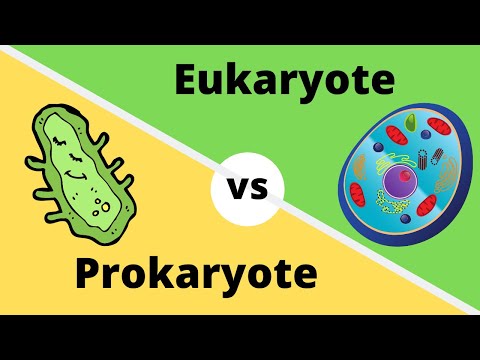
You know how when you’re at a party and there are always those two groups of people that just can’t help but clash? Like, on one side you’ve got the chill, laid-back crowd just enjoying their snacks. And on the other, there’s this super intense group debating the meaning of life? Well, cells are kind of like that in the microscopic world.
You’ve got your prokaryotic cells – simple and carefree – and then there are eukaryotic cells, all fancy with their organized little structures. It’s wild to think about how both types play such huge roles in life, even though they’re totally different!
So let’s chat about them. It might sound technical at first glance, but trust me, it’s way more fun than it seems!
10 Key Differences Between Prokaryotic and Eukaryotic Cells: A Comparative Analysis in Cell Biology
Sure! Let’s break this down in a casual way, so you can totally understand the differences between prokaryotic and eukaryotic cells. They might seem like just cells, but they’re like two different worlds of life. Here’s what sets them apart:
1. Size Matters
Prokaryotic cells are usually smaller than eukaryotic ones. Think of a prokaryote like a tiny little apartment—efficient and compact. Eukaryotes, on the other hand, are more like spacious homes with lots of rooms.
2. Nucleus or Nah?
Prokaryotes don’t have a nucleus. Their genetic material floats around in the cell, kinda like confetti at a party! Eukaryotes do have a nucleus, which is where all their important DNA lives—like a safe for your most valuable things.
3. Cell Structure
The walls of these cells are different too. Prokaryotic cells often have rigid cell walls made up of peptidoglycan—think of it as their protective shield. Eukaryotic cells might have cell walls (like plants do), but they’re made of cellulose or chitin.
4. Organelles: The Cell Machinery
Eukaryotes come packed with organelles—tiny structures that each have specific jobs, kinda like employees in an office. Prokaryotes? They lack these fancy organelles; everything happens in one open space.
5. Reproduction Style
When it comes to reproducing, prokaryotes usually divide by binary fission, which is like splitting yourself in two—simple as that! Eukaryotes go through mitosis or meiosis, which can be more complicated and takes longer.
6. Genetic Material
Prokaryotes mainly have one circular chromosome that carries all their genetic info—super streamlined! Eukaryotes have multiple linear chromosomes contained within that protective nucleus—we’re talking about organized chaos here!
7. Diversity and Adaptability
Prokaryotic organisms are incredibly diverse; some love extreme environments like hot springs or deep ocean vents (they’re tough cookies!). Eukaryotes tend to be more specialized and often rely on specific environments to thrive.
8. Ribosomes Size
Ribosomes are where proteins are made, right? Well, prokaryotic ribosomes are smaller than those in eukaryotes—they’re 70S compared to 80S in eukayrotes (don’t worry if this sounds complex; it’s just a size thing!).
9. DNA Shape and Packing Up
Prokaryoic DNA is not wrapped around histones (proteins that help coil DNA). Instead, it hangs out freely as plasmids—a bit wild and free-spirited! In contrast, eukayrotic DNA is tightly wound around histones making it much more organized.
10. Cell Division Process
So when prokaryotic cells divide? It’s quick and easy—and no drama! For eukayrotic cells? It involves more steps that ensure everything is neatly duplicated before the split happens.
So there you go—a rundown on what makes these two types of cells tick! Each has its strengths and quirks which allow life to be so diverse on our planet. Isn’t it amazing how much variety there is just under the microscope?!
Key Differences Between Prokaryotes and Eukaryotes: A Comprehensive Comparison Table
Alright, let’s chat about prokaryotes and eukaryotes. Yeah, it sounds like a mouthful, but hang tight! These two types of cells are the building blocks of life and understanding them is pretty cool.
Prokaryotes are like the original cell design. They’re simple and small, usually around 0.1 to 5.0 micrometers in diameter. Think bacteria! They don’t have a nucleus or any membrane-bound organelles. Their DNA floats around in the cell, almost like it’s on a little vacation without a strict plan.
On the flip side, we’ve got eukaryotes. These guys are more complex and bigger, typically 10 to 100 micrometers in size. You know what? They have a well-defined nucleus that houses their DNA and lots of tiny organs called organelles—like little factories running different jobs inside the cell!
So here’s some stuff to chew on:
- Cell Structure: Prokaryotes are generally unicellular (one cell), while eukaryotes can be multicellular (lots of cells) or unicellular—even plants and animals fall under this category!
- Nucleus: Prokaryotic cells lack a nucleus; their DNA is in a region called the nucleoid. Eukaryotic cells have that fancy nucleus surrounded by a nuclear membrane.
- Size: Prokaryotes are smaller than eukaryotes—like tiny ants compared to bigger cats!
- DNA Structure: In prokaryotes, DNA is circular and not associated with proteins (kind of free-floating). Eukaryotic DNA is linear and packed with proteins called histones.
- Organelles: Prokaryotes don’t have membrane-bound organelles (no mitochondria or Golgi apparatus). Eukaryotic cells? Oh boy, they have all that jazz—mitochondria for energy production, ribosomes for protein synthesis, you name it!
- Asexual Reproduction: Most prokaryotes reproduce through binary fission—a simple split into two. Eukaryotes can do both sexual and asexual reproduction which adds some diversity!
You might wonder why we should care about these differences? Well, imagine you’re having lunch at school. Knowing if your friend brought an apple (eukaryote) or some sweet candy (prokaryote) could totally change how you feel about trading snacks!
Also, many diseases come from *prokayotic* bacteria—understanding them helps us figure out how to deal with infections while preserving our own eukaryotic human cells.
In short: prokaryotes are the basics of life with their simplicity; eukaryotes take it to another level with complexity! There’s beauty in both designs, right?
Understanding the Key Differences Between Prokaryotic and Eukaryotic Cells: A Comprehensive PDF Guide
So, let’s break down the differences between prokaryotic and eukaryotic cells. This is a pretty fundamental concept in biology, and getting it straight can really help you grasp more complex topics later on. It’s like learning the rules of a game before diving into the actual play.
Okay, first off, what are these cells? Well, think of them as the building blocks of life. You’ve got your prokaryotic cells, which are generally simpler and smaller. They’re like your basic tools—effective but straightforward. On the other hand, eukaryotic cells are more complex and larger, kind of like multi-tools that come with different features.
Structure: One major difference is in their structure. Prokaryotic cells don’t have a nucleus or any membrane-bound organelles. Instead, their genetic material floats around in the cytoplasm. You could picture it as a free-spirited party where everyone mingles freely! In contrast, eukaryotic cells have a nucleus that houses their DNA safely away from everything else—think of it as having a VIP section at that same party.
- Nucleus: In eukaryotes, DNA is wrapped up neatly inside this protective box called the nucleus.
- Cytoplasm: Prokaryotes just have this gooey stuff called cytoplasm where all the action happens without any barriers.
Size: Size matters here too! Prokaryotic cells are usually much smaller—like 0.1 to 5 micrometers—while eukaryotic ones can range anywhere from 10 to 100 micrometers or even bigger! That’s like comparing a tiny pebble to a large beach ball.
- Examples: Common examples of prokaryotes include bacteria and archaea; they’re super diverse and found almost everywhere! Eukaryotes include plants, animals, fungi—you name it!
Circular vs Linear DNA: Another key difference lies in how they store their genetic info. Prokaryotes typically have circular DNA molecules while eukaryotes have linear chromosomes packed snugly into their nuclei.
- Diversity: Eukaryotic organisms can form multicellular structures (like your skin or leaves), whereas prokaryotes mostly live solo as unicellular organisms—or sometimes gang up together in colonies!
Reproduction: When it comes to reproduction, prokaryotes tend to reproduce quickly by binary fission—a fancy term for just splitting into two! Eukaryotes usually go through mitosis or meiosis for reproduction which is way more intricate—it’s like turning a simple recipe into an elaborate dish with multiple steps!
- Asexual vs Sexual: While many prokaryotes reproduce asexually (one organism makes another), eukaryotes often reproduce sexually mixing genes from two parents.
If you’ve ever had that overwhelming feeling of trying to organize your closet full of clothes versus just tossing everything in one big box without care? That’s kind of how these two types of cells operate! Eukaryotic ones are all about organization while prokaryotics keep things chill and loose.
The takeaway? Both cell types play crucial roles in our ecosystem—you wouldn’t want one without the other! Understanding these differences helps you appreciate life at its most fundamental level; all those little quirks give rise to everything we see around us.
If you think about it next time you see bacteria or even plants around you…it kind of blows your mind how diverse life really is beneath the surface! So there you go: prokaryotes may be simple but they’re essential partners with their eukaryotic cousins!
Okay, let’s chat about cells. You might not think of them as especially fascinating at first glance, but they’re like the tiny cities that make up all living things. There are two main types of cells: eukaryotic and prokaryotic.
Imagine two neighborhoods. On one side, there’s the organized, high-rise apartments—those are the eukaryotic cells. They’ve got all sorts of specialists inside: they have a nucleus (that’s like the city hall where plans get made), organelles (like factories and power plants), and everything is compartmentalized to keep functions neat and tidy. These guys can be complex, too! Think plants, animals, fungi—you name it.
Then you have the prokaryotic side—like a bustling little town with no formal structure. These are typically smaller and simpler, like bacteria. They don’t have a nucleus; instead, their genetic material floats around like free-spirited graffiti in an alleyway. Their efficiency is impressive. They may lack organization but they’ve been thriving for billions of years!
I remember a time when I got curious about bacteria after I read an article about how some can survive in extreme conditions, like super hot or really acidic environments. It was hard to believe that something so small could be so resilient! It made me think about how life finds a way in even the harshest spots on Earth.
Eukaryotes can do some pretty spectacular things too, though! Take plants for example—they photosynthesize thanks to chloroplasts, turning sunlight into energy. Meanwhile, us humans are eukaryotes as well; our systems are all intricately designed to work together.
So what’s cool about comparing these two types of cells? Well, it kind of shows how life has evolved differently based on needs and environments over time! And who knows? Understanding these differences can help scientists figure out new ways to combat illnesses or even develop new technologies based on biological processes.
It’s wild how such tiny structures play massive roles in life as we know it! Life’s complexity really shines through when you take a closer look at these microscopic marvels.