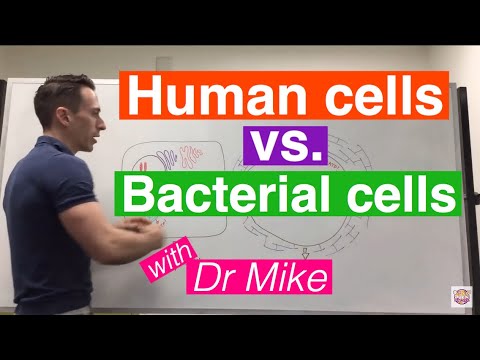
You know, I was once sitting in a café with a friend, and they started explaining how all life on Earth breaks down into two main cell types. I thought, “Wait, what? There’s more than one kind of cell?”
I mean, we owe a lot to cells. They’re like the tiny building blocks of life that make everything tick! But honestly, did you ever stop to think about what makes eukaryotic cells different from prokaryotic ones?
It’s kind of mind-blowing when you realize that these little guys are doing their thing in totally different ways. They’re like two different teams with their own playbooks! So grab your coffee and let’s chat about all the cool stuff these cells do and how they work. Trust me, once you dig into it a bit, it gets pretty interesting!
Comparative Analysis of Prokaryotic and Eukaryotic Cell Functionality in Cellular Biology
Sure thing! Let’s break down the differences between prokaryotic and eukaryotic cells in a chill way, right?
So, first off, what are these two types of cells? Well, both are basically the building blocks of life. Think of them as different styles of construction.
Prokaryotic cells are like simple one-room studios. They’re smaller and lack a fancy setup. They don’t have a nucleus or any membrane-bound organelles. Instead, their DNA floats around in the cytoplasm—kind of like scattered papers on your desk! Most bacteria and archaea fit into this category.
On the other hand, eukaryotic cells are more like spacious apartments with all the amenities. They’ve got a nucleus that holds their genetic material safe and sound. Plus, they have various organelles—like mitochondria and endoplasmic reticulum—that perform specific functions to keep things running smoothly.
Now let’s talk about **cell structure**:
1. Nucleus:
Eukaryotic cells have a well-defined nucleus where DNA hangs out safely inside a membrane. Prokaryotes? No such luck! Their DNA is just chilling in the cytoplasm.
2. Size:
Prokaryotes are super small—typically around 0.1 to 5 micrometers across. Eukaryotes are much larger, ranging from about 10 to 100 micrometers.
3. Organelles:
Eukaryotic cells boast numerous organelles like mitochondria (energy factories), Golgi apparatus (packaging centers), and lysosomes (waste disposal). Prokaryotes are much simpler; they might have ribosomes for protein synthesis but that’s pretty much it.
Next up is **cell division**:
In eukaryotes, cell division happens through processes called mitosis or meiosis, which ensure that genetic material is evenly distributed between daughter cells. Prokaryotes divide through a simpler method called binary fission—think replicating like photocopying your homework!
Now let’s dig into **functionality**:
1. Metabolism:
Both cell types need energy to survive but handle it differently. Eukaryotic cells can use cellular respiration or photosynthesis based on their type (plants vs animals). Prokaryotes can be super versatile—they can do anaerobic respiration or even photosynthesis!
2. Reproduction:
Prokaryotes usually reproduce asexually and can do it at lightning speed—some divide every 20 minutes under good conditions! Eukaryotes often engage in sexual reproduction which takes longer but promotes genetic diversity.
3. Genetic exchange:
Eukaryotes shuffle genes around during sexual reproduction while prokaryotes often share genes through processes like conjugation (just imagine them swapping notes!).
And let’s not forget **adaptability**! Prokaryotic cells can adapt to extreme environments—like hot springs or deep-sea vents—which makes them incredibly resilient survivalists.
Oh! I remember this moment during my biology class when we were studying these two cell types—a classmate pointed out how cool it was that bacteria could thrive in places so harsh that even we humans would struggle to survive. It really hit me then how diverse life is at all levels!
To wrap things up: both prokaryotic and eukaryotic cells play vital roles on our planet but do so in different ways based on their structure and functionalities.
In summary:
- Prokaryotic Cells: Small, simple, no nucleus.
- Eukaryotic Cells: Larger, complex structures with many organelles.
- Cell Division: Binary fission for prokaryotes; mitosis/meiosis for eukaryotes.
- M metabolism: Eukarya has more specialized metabolic pathways while prokarya shows remarkable versatility.
So yeah, there you go! This whole world of cells is pretty amazing when you take a closer look at what each type does!
Exploring the Five Common Features of Prokaryotes and Eukaryotes in Biological Science
So, let’s chat about cells. You’ve got two major types in the biological world: prokaryotes and eukaryotes. They’re like the classic odd couple of the microscopic universe. On one hand, you have prokaryotes, which are simpler and usually smaller. Think bacteria! On the other hand, eukaryotes are more complex and larger, like your cells or those of plants and animals.
Now, despite their differences, they actually share some common features that are pretty cool to explore. Here’s a rundown on five of these characteristics:
- Cell Membrane: Both prokaryotic and eukaryotic cells have a cell membrane, which is kind of like a bouncer at a club. It decides what gets in and out of the cell!
- Cytoplasm: Inside both types of cells is cytoplasm. This jelly-like substance fills up space and contains all the organelles doing their thing.
- Genetic Material: They both have DNA! In prokaryotes, it’s often a single circular piece (like a loop), while in eukaryotes it’s packed away inside a nucleus (which is basically a little safe for the DNA). You can picture it as being more organized.
- Ribosomes: These tiny structures are where proteins get made. Yup! Both cell types need ribosomes to carry out vital processes using genetic information.
- Metabolic Pathways: They both do metabolism! That means they can convert energy and materials into what they need to survive—kind of like how we need food to function.
Thinking back to my school days, I remember being completely dazzled when I first learned about cells under a microscope. The complexity was mind-blowing! Just two main categories housing so many organisms doing everything from making yogurt to forming trees? It just blew my young mind.
So yeah, even though these two cell types vary widely in structure and functionality—like that one friend who just can’t stop talking versus the quiet one—they share crucial building blocks that connect them in this vast tree of life we all belong to!
Exploring the 10 Key Differences Between Prokaryotic and Eukaryotic Cells in Cellular Biology
Alright, so let’s chat about cells for a sec. It might sound a bit boring at first, but hang on—there’s a lot going on in the world of cells! You’ve got two main types: prokaryotic and eukaryotic cells. Both are crucial to life, yet they’re like two different worlds with some key differences.
1. Nucleus: The Control Room
Prokaryotic cells don’t have a nucleus. Instead, their genetic material is floating around in the cytoplasm. On the flip side, eukaryotic cells have a shiny, well-defined nucleus that keeps their DNA neatly tucked away.
2. Size Matters
Typically, prokaryotic cells are way smaller than eukaryotic ones. Think about it like this: a prokaryote is like a tiny pebble compared to an eukaryote that’s more like a big boulder!
3. Organelles Galore
Eukaryotes are decked out with various organelles—like mitochondria and chloroplasts—that perform specific functions. Prokaryotes? Not so much. Their organelles are pretty basic and don’t have membranes surrounding them.
4. Cell Wall Differences
Most prokaryotes have cell walls made of peptidoglycan, which helps maintain their shape. Eukaryotes can have cell walls too—like plants with cellulose—but animals don’t sport cell walls at all.
5. Reproduction Styles
Prokaryotes mostly reproduce through something called binary fission—basically splitting in half! Eukaryotes go for mitosis or meiosis; these processes are more complex and involve lots of steps.
6. Genetic Material Structure
The DNA in prokaryotic cells is circular and often found in plasmids, which can be swapped between bacteria—a kind of genetic party! Eukaryotic DNA is linear and organized into chromosomes contained within the nucleus.
7. Ribosomes: Protein Factories
Both types have ribosomes for making proteins, but they’re different sizes! Prokaryotic ribosomes are smaller than those found in eukaryotic cells.
8. Movement Mechanisms
You’ll often find that prokaryotes use flagella for movement—it’s like having little tails! Eukaryotes manage movement through cilia or larger flagella that are more complex in structure.
9. Metabolic Pathways
Prokaryotes often thrive in extreme environments—like hot springs or salt lakes—thanks to unique metabolic pathways that do things differently from eukaryotes!
10. Complexity Levels
Last but not least, think about complexity: eukaryotes can form multicellular organisms like you and me (humans!), while prokaryotes usually hang out solo or make simple colonies together.
So there you go! It’s wild how these two types of cells work so differently but also support life as we know it! Imagine how each one contributes to the vast tapestry of life on Earth—it’s pretty mesmerizing when you think about it!
You know, when you start thinking about cells, it’s kind of mind-blowing how tiny they are yet how crucial they are to life. I remember sitting in biology class, feeling overwhelmed by all those diagrams of cells on the wall. Eukaryotic and prokaryotic cells, right? They seemed so different but also kind of similar in a weird way.
So here’s the scoop: eukaryotic cells are like the fancy apartments of the cell world. They have all these compartments inside called organelles—like little rooms that do specific jobs. You’ve got your nucleus right there, keeping all the DNA safe and sound, and then mitochondria that are basically powerhouses making energy. All these structures work together to keep everything running smoothly.
On the flip side, prokaryotic cells are more like tiny studios with just what you need—no frills! They don’t have a nucleus; instead, their DNA floats around in a region called the nucleoid. Bacteria are prime examples of these simple dudes. It’s astonishing how something so straightforward can survive and even thrive in some pretty wild environments.
What really strikes me is how both cell types manage to function so well despite their differences. Eukaryotes can create complex organisms like plants and animals because they’ve got that extra compartmentalization going on. Meanwhile, prokaryotes are like survival experts; they can multiply quickly and adapt swiftly. Just think about bacteria living in extreme conditions! It’s fascinating to see how life has found ways to exist in various forms.
I guess it really hits home when you realize that every living thing comes from these tiny building blocks, whether it’s a massive oak tree or a single-celled bacterium floating around in a pond. Life finds a way, doesn’t it? And whether you’re looking at something simple or complex, there’s beauty in how it all works together behind the scenes.
So next time you hear someone talk about cells or biology stuff, just remember: while eukaryotic and prokaryotic cells may seem worlds apart on paper (or in class), they’re both essential parts of life’s incredible tapestry—and somehow connected at their core!