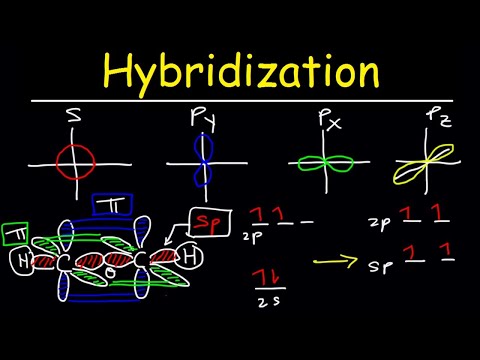
You know that moment when you’re watching a rom-com, and the characters just can’t seem to get their signals straight? Well, that’s kind of what happens in molecular chemistry with pi bonds and sigma bonds! I mean, it’s all about connections, right?
So, let’s break it down. Imagine two people trying to hold hands. That’s a sigma bond—nice and strong! But then there are those flirty side hugs that just feel… well, a bit less committed. That’s your pi bond for ya!
In molecular terms, these two types of bonds are the real MVPs when it comes to holding molecules together. One’s all about strength and stability while the other brings some flair. Curious? Stick around as we dig into the world of bonds!
Exploring the Strength of Sigma Bonds vs. Pi Bonds in Chemical Bonding
When it comes to chemical bonding, you’ll often hear about two main types of bonds: **sigma (σ) bonds** and **pi (π) bonds**. Like, these two are super important in understanding how atoms connect to form molecules. So, let’s break them down a little.
Sigma Bonds are the first type we usually talk about. Imagine them as the strongest hug between two atoms. They form when two atomic orbitals overlap linearly. Basically, it’s like a cozy embrace where the electron density is highest directly between the nuclei of the bonded atoms. This overlap can occur from different orbitals like s-s, s-p, or p-p combinations.
On the other hand, we have Pi Bonds. These bonds come into play when there’s already a sigma bond holding two atoms together. Think of them as extra layers that make things more complex and interesting! Pi bonds form when two p orbitals overlap side-to-side. This arrangement isn’t quite as strong as a sigma bond because the electron density lies above and below the bond axis rather than right between the nuclei.
You might be wondering, “Why does all this matter?” Well, it really shapes how molecules behave. For instance:
- Stronger Connections: Sigma bonds are generally stronger than pi bonds due to how they overlap.
- Molecular Shapes: The presence of pi bonds can lead to different shapes in molecules (like double or triple bonds).
- Bonding Flexibility: Sigma bonds allow for rotation around the bond axis while pi bonds don’t.
Let’s take an example with ethylene (C2H4). In ethylene, each carbon atom is joined by one sigma bond and one pi bond. The sigma bond allows for some rotation around it but that extra pi bond? Nope! It locks those carbon atoms in place, leading to a flat structure known as a planar molecule.
When you think about it emotionally—imagine trying to dance with someone who makes your feet stuck to a certain spot versus being able to twirl freely; that’s kind of like what sigma and pi bonds do for molecular flexibility!
To summarize: Sigma bonds are all about strong connections allowing for some mobility, while pi bonds add complexity and restrict motion in certain scenarios—making chemistry both exciting and intricate!
Understanding Sigma and Pi Bonds in Lewis Structures: A Comprehensive Guide to Molecular Bonding in Chemistry
Understanding Sigma and Pi Bonds in Lewis Structures
When you’re looking at molecules and how they hold together, you can’t skip over the **sigma (σ)** and **pi (π)** bonds. These two types of bonds are fundamental in understanding molecular bonding in chemistry. So let’s break them down a bit, alright?
First things first, what’s a **sigma bond**? Basically, it’s the strongest type of covalent bond formed when two atomic orbitals overlap head-on. Imagine two people shaking hands – that’s how these bonds work! This overlap happens along the axis connecting the two nuclei. For instance, in a hydrogen molecule (H₂), each hydrogen atom shares its single electron directly with another hydrogen atom, creating a sigma bond.
On the flip side, we have **pi bonds**. These arise when there’s a side-to-side overlap of p orbitals. Think about it like two people standing next to each other with their arms outstretched—if they try to hold hands like that, it’s way less effective than shaking hands! Pi bonds can only form when there’s already a sigma bond in place because they need that initial stability from the sigma bond to exist.
Now let’s throw this into some examples to clarify things:
- Ethylene (C₂H₄): In this molecule, each carbon atom forms a sigma bond with another carbon atom. But it also forms an additional pi bond between them through side-to-side p orbital overlap. So we get one σ bond and one π bond per carbon-carbon connection.
- Acetylene (C₂H₂): Here it’s even more interesting—each carbon is triple-bonded to another carbon. What’s going on is that there’s one σ bond and two π bonds between the carbons! They’re really holding onto each other tightly.
So why do these bonds matter? Well, they play crucial roles in determining how molecules react chemically and their shapes. Sigma bonds allow for rotation around the bonded atoms since they’re aligned along the axis connecting them. On the other hand, pi bonds lock those atoms in place due to their sidewise nature.
To sum things up: sigma bonds are your strong handshake connections that allow free movement between atoms, while pi bonds are more about keeping everything firm and stable but limit movement due to their orientation.
And there you go! Now you’ve got a grip on what sigma and pi bonds are all about—how they form and why they’re so important in chemistry. Keep this in mind as you explore molecular structures; it’ll make understanding them way easier!
Understanding Sigma and Pi Bonds: A Comprehensive Guide to Molecular Bonding in Chemistry
When you start digging into chemistry, you stumble upon all sorts of funky terms. Two big players in the world of molecular bonding are sigma (σ) bonds and pi (π) bonds. These guys are the real MVPs when it comes to holding atoms together in molecules. Let’s break it down, yeah?
Sigma Bonds
First up, let’s talk about sigma bonds. Picture them as the strong glue in your school project. They form when two atoms share a pair of electrons and overlap their atomic orbitals directly. You know how when you hug someone, you wrap your arms around them? That’s what sigma bonds do—but with electrons!
Here are some key points to keep in mind:
- Formation: They form from the head-on overlap of orbitals.
- Types of Orbitals: Can involve s and p orbitals.
- Single Bonds: Every single bond between atoms is a sigma bond.
An example? Think about hydrogen gas (H2). Each hydrogen atom has one electron, and they share those electrons to form a stable H2. So, bam! That’s a sigma bond at work.
Psi Bond
Now, let’s dive into pi bonds. If sigma bonds are all about that direct hug, pi bonds are like the extra arms that come around from the side. They form when two atomic orbitals overlap sideways over a sigma bond. It sounds a bit wacky, but it works!
Check out these details:
- Formation: They come into play after a sigma bond is formed.
- Types of Orbitals: Involve only p orbitals.
- Doubles and Triples: Pi bonds usually exist in double or triple bonds along with sigma bonds.
A cool example would be ethylene (C2H4). In this molecule, each carbon forms one sigma bond with another carbon atom plus one for each hydrogen atom. To connect those carbons even tighter, they also share an additional pair of electrons sideways—enter pi bond!
Sigma vs. Pi: The Showdown!
Now that we’ve met our contenders, let’s talk about their differences:
- Strength: Sigma bonds are generally stronger than pi bonds.
- Torsion and Rotation: Sigma bonds allow for rotation around the bond axis; pi bonds don’t allow this due to their sideways overlap.
- Molecular Geometry: Sigma bonds define the overall shape of the molecule; pi bonds add complexity without changing shape drastically.
Think of it like this: if you’re trying to dance with someone while holding hands (sigma), it’s easy to spin around. But if you’re also trying to hug from behind (pi), well… things get tricky.
Understanding these types of bonding can really help illuminate how different molecules behave! Knowing whether there’s more σ or π character can tell you stuff about molecule stability or reactivity too.
So next time you’re chatting about molecules or working on your chemistry homework, remember those funky twists and turns that σ and π bonding take! Science is pretty awesome when you peel back its layers!
Alright, let’s chat about pi bonds and sigma bonds in molecular chemistry. You might be thinking, “Whoa, that sounds heavy,” but it’s actually super interesting once you get into it!
So, here’s the lowdown on what these bonds are all about. Sigma bonds (σ) are the ones that form first when two atoms come together. They’re the strong foundation of a molecule. Imagine them as the sturdy walls of a house; they hold everything together. These bonds happen when atomic orbitals overlap directly between the two nuclei—like you taking someone’s hand for a comfy walk.
Now, pi bonds (π) come into play later, usually when we’re talking about double or triple bonds. Think of pi bonds as the extra decorations on that house—pretty important but not as strong as those solid walls! They form when p-orbitals overlap sideways. So it’s like having two friends leaning against each other while trying to balance your coffee cups. It looks cool but can be a bit wobbly.
Here’s where it gets real: you know how some people just click better than others? Well, sigma and pi bonds have chemistry too! Sigma is all about that single connection and stability—the good old trusty friend who always has your back—while pi brings in some flair but can also lead to complications if things get too crowded.
I remember a time in high school when we were doing some group science projects. We each had our own strengths; some of us were great at research (the sigma types), while others had wild ideas that could either fly high or crash dramatically (the pi types). It made me realize how essential both kinds of energy are in any kind of collaboration.
In essence, these two types of bonds represent how atoms can work together—sum it up like this: sigma is your reliable anchor, and pi adds that quirky twist that keeps things exciting and dynamic! So next time you’re sketching out molecules or just chilling with chemistry concepts, think about how those interactions mirror friendships and teamwork in real life. Isn’t chemistry just amazing?